

Restaurante Preta Maria
RESTAURANTE PRETA MARIA
Estudio Guto Requena
ARCHITECTS
Estudio Guto Requena
AUTHORS
Gabriela De Matos, Mateus Fraga
ARCHITECTURE TEAM
Barbara Fischer, Mariana Chemin, Priscila Almeida, Rodolfo Torres, André Thurler, Camila Marques, Daniel Viana E Ludovica Leone
ELECTRICAL PLUMBING AND FIRE SAFETY DESIGN
I2n Engenharia
ACOUSTIC DESIGN
Akkerman Alcoragi Acústica Ideal
LANDSCAPE DESIGN
Benedito Abbud - Arquitetura Paisagística
AUTOMATION DESIGN
Due
PROJECT MANAGEMENT
Cte
KITCHEN DESIGN
Etko Solutions
CONSTRUCTION
Arbait
ACCESSIBILITY DESIGN
Pimenta Associados
LIGHTING DESIGN
Foco Luz E Desenho
MANUFACTURERS
Atelier Tudubambusa, Casa Paulo Alves, Cremme, Due, Donatelli Tecidos, Dramalux, E Stones, Ecosapiens Taipa, Estudio Sergio Matos, Estúdio Filipe Fonseca, Global Toldos, Manufacta Marcenaria, Protecnica
HVAC DESIGN
I2n Engenharia
PHOTOGRAPHS
André Klotz
INTERNAL DINING AREA
135 M²
COVERED TERRACE
15 M²
GARDEN AREA
105 M²
AREA
2744 ft²
YEAR
2026
LOCATION
Bela Vista, Brazil
CATEGORY
Restaurant
English description provided by the architects.
An architectural project that celebrates Afro-Brazilian culture: this is the foundation of Preta Maria restaurant, designed by Estudio Guto Requena in collaboration with architects Gabriela de Matos and Mateus Fraga.
Based on an Afrofuturist approach that breaks away from colonial representations of Africa, the project seeks to celebrate the experience of Africans in Brazil through architecture, art, technology, cuisine, and other forms of expression.
Bamboo, rammed earth, stone, and high-tech resources such as parametric design come together in a composition that combines innovation, affection, and ancestry.
Led by chef and activist Bela Gil, Preta Maria offers a culinary journey through countries such as Nigeria, Benin, Ivory Coast, Angola, and Mozambique, highlighting foods from the African diaspora in Brazil.
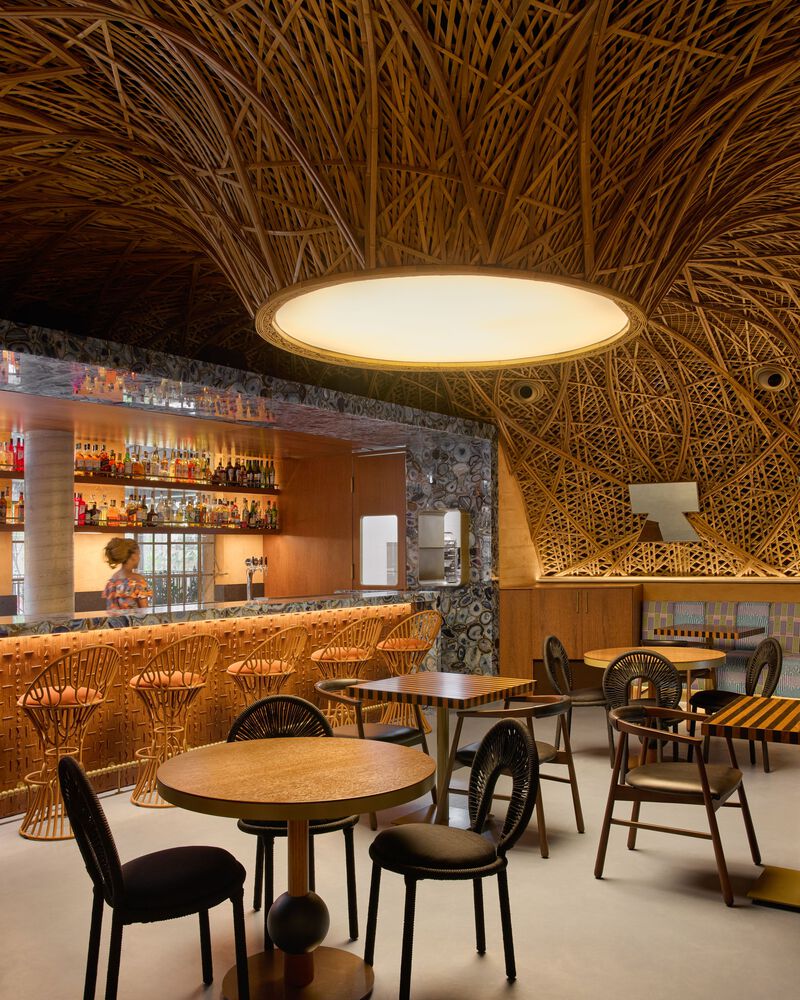
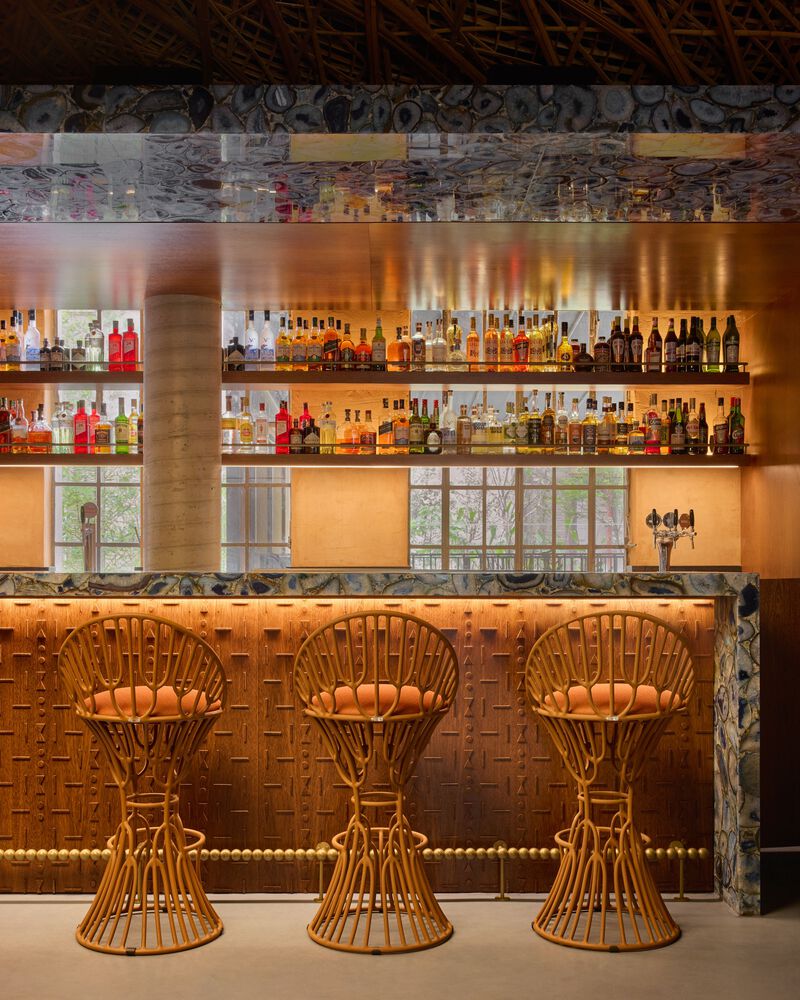
Ancestral and technological, the architectural project translates the meaning of sankofa — an African ideogram represented by a bird turning its head backwards, or by two juxtaposed and mirrored curves reminiscent of a heart — by reclaiming knowledge from the past to project the future from the present. This symbolism is particularly powerful in Brazil, a majority-Black country with the largest Black population outside the African continent.
Part of a global contemporary Afrocentric architecture movement, the restaurant presents itself as an affirmation of identity — a space created to celebrate, share, and disseminate Afro-Brazilian culture beyond architecture and design, reclaiming ancestral knowledge while engaging with contemporary African references.
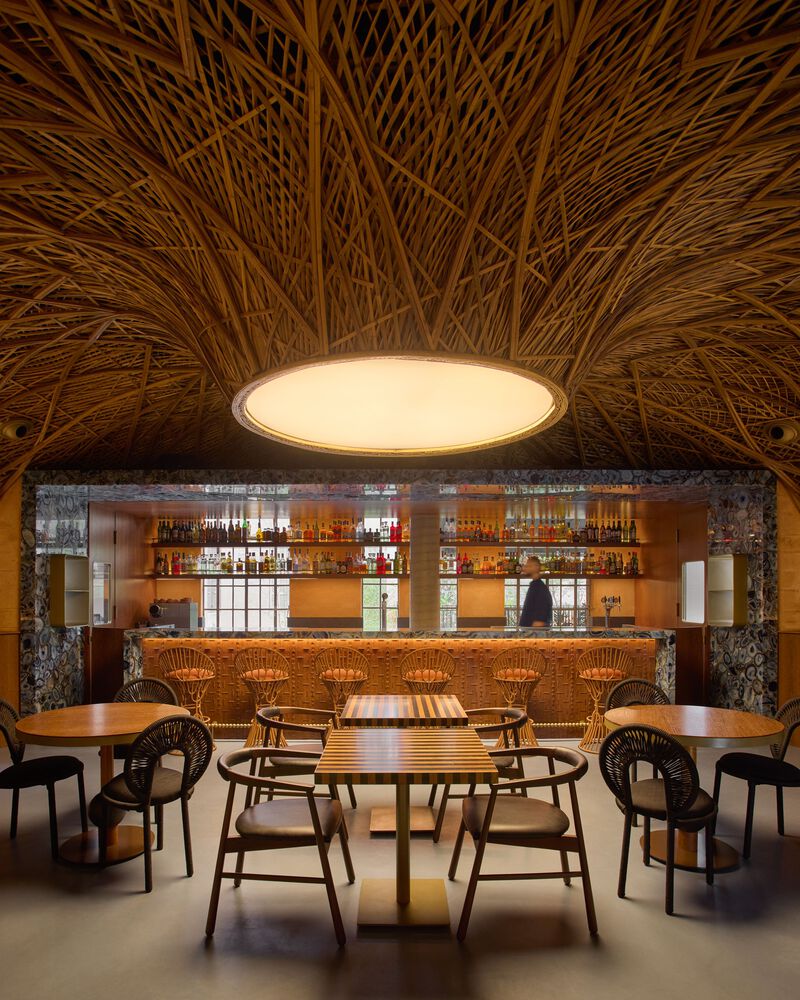
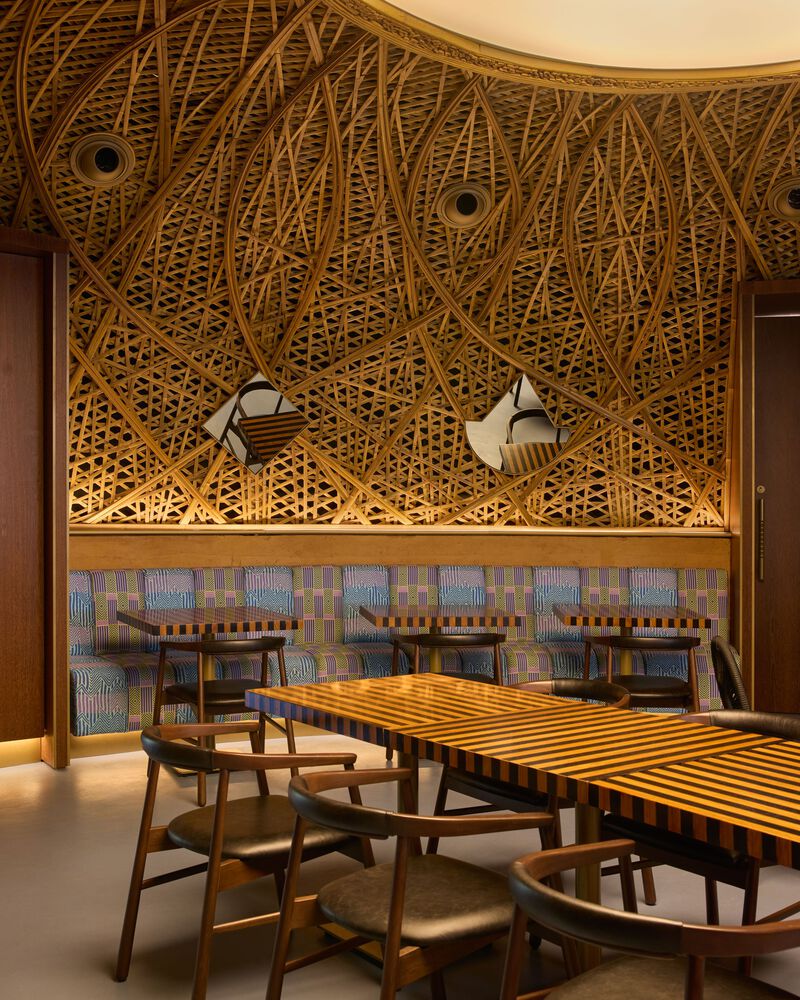
The Afrofuturist approach proposes a new way of thinking about architecture through the collage of ancestral and technological fragments, bringing past and future together.
THE PROJECT
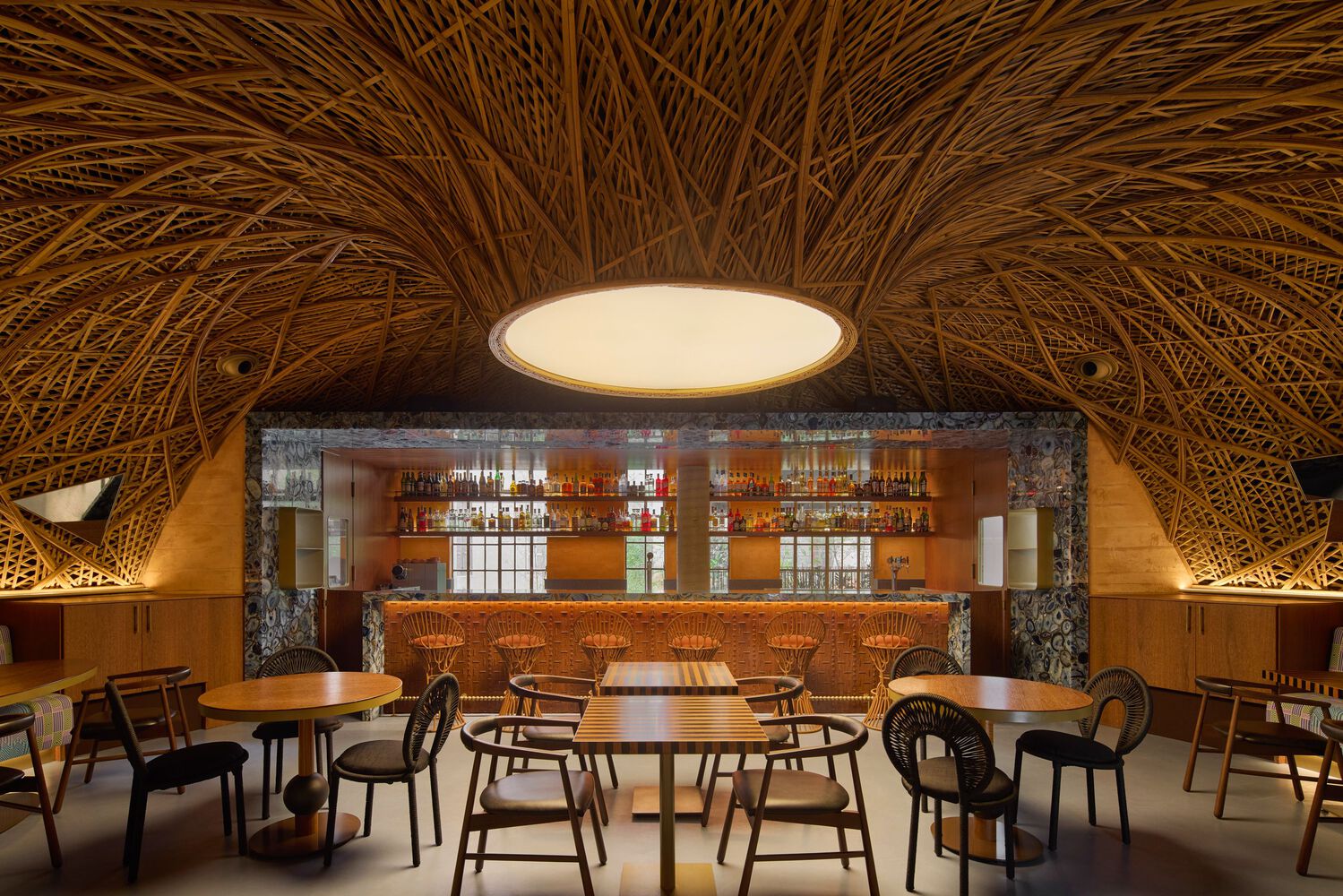
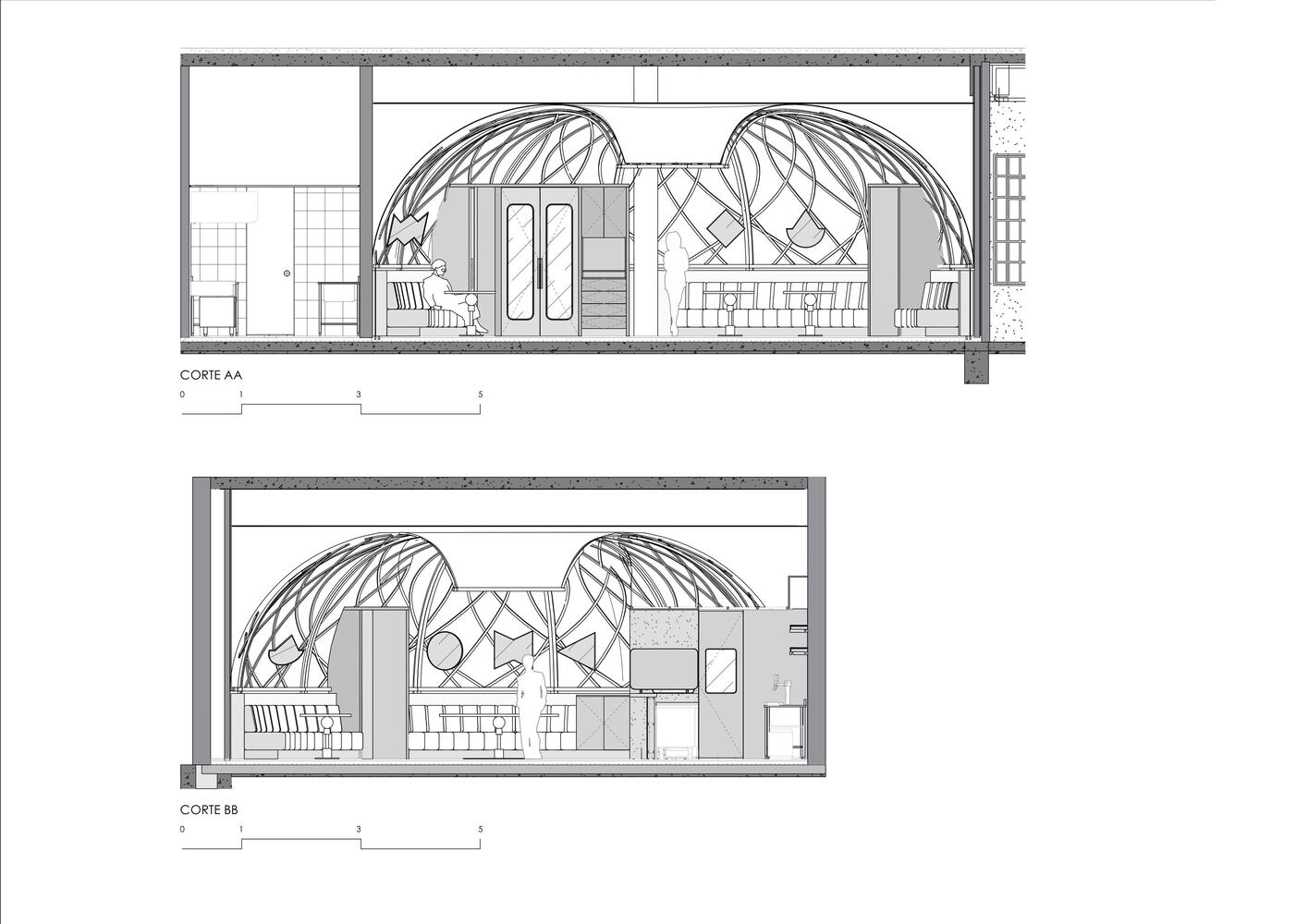
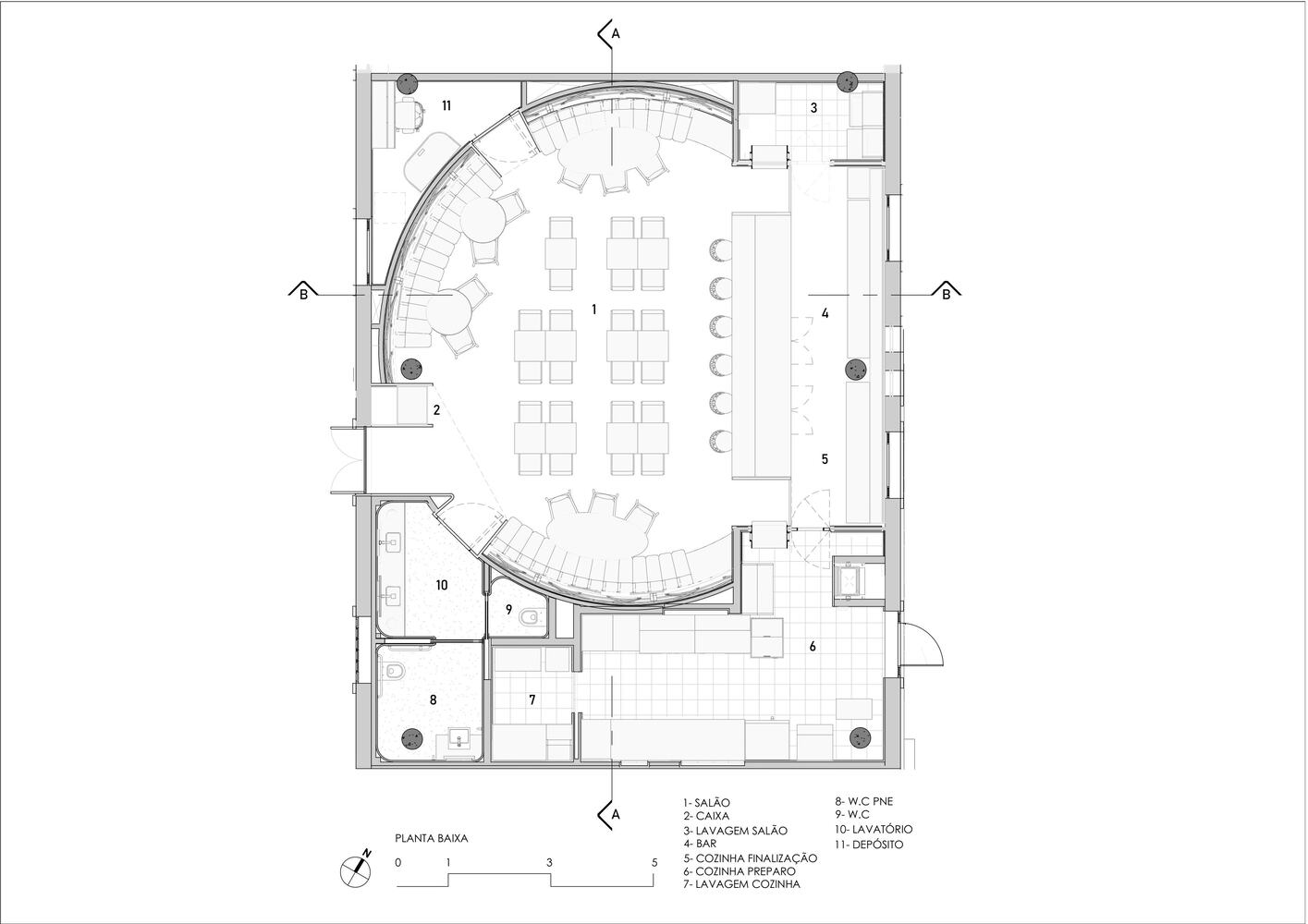
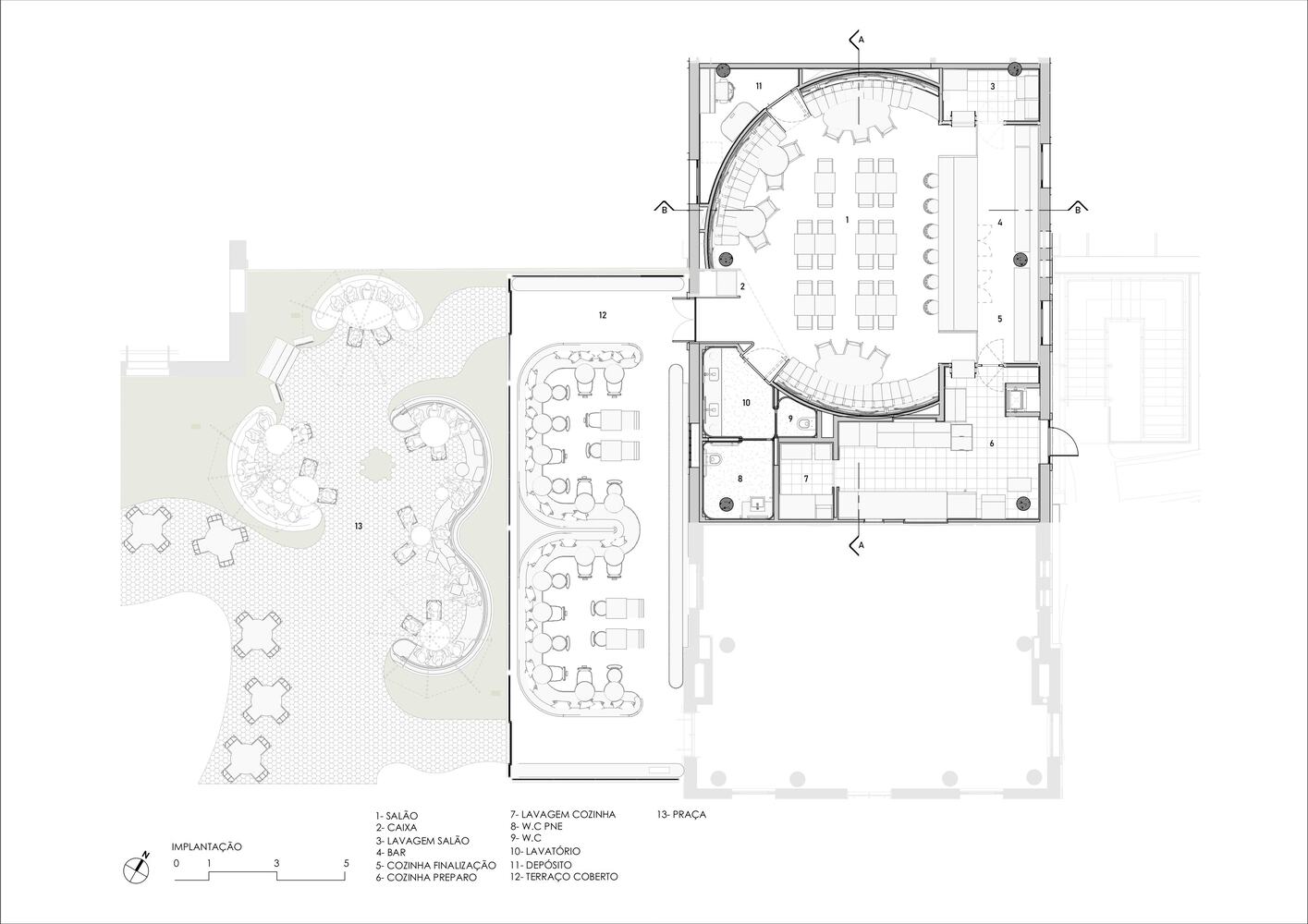
The interior dining area was conceived as a large circular space representing the roda — a relational dynamic found in various Afro-Brazilian cultural expressions, including Candomblé, Umbanda, capoeira, jongo, encantaria, and samba.
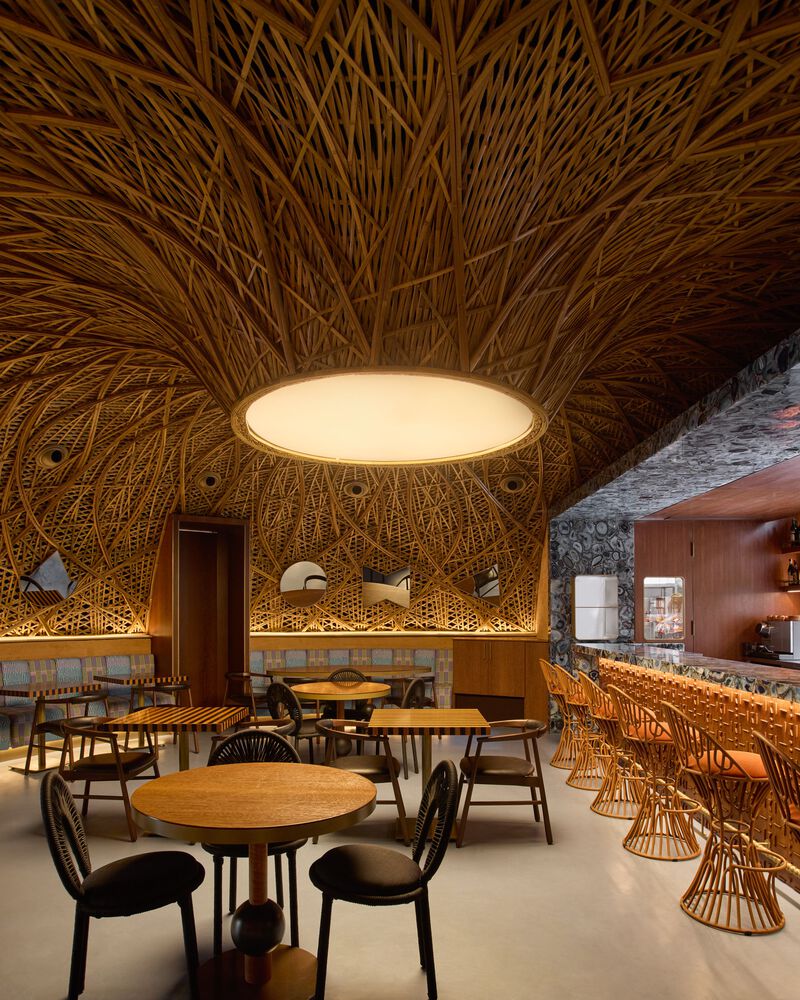
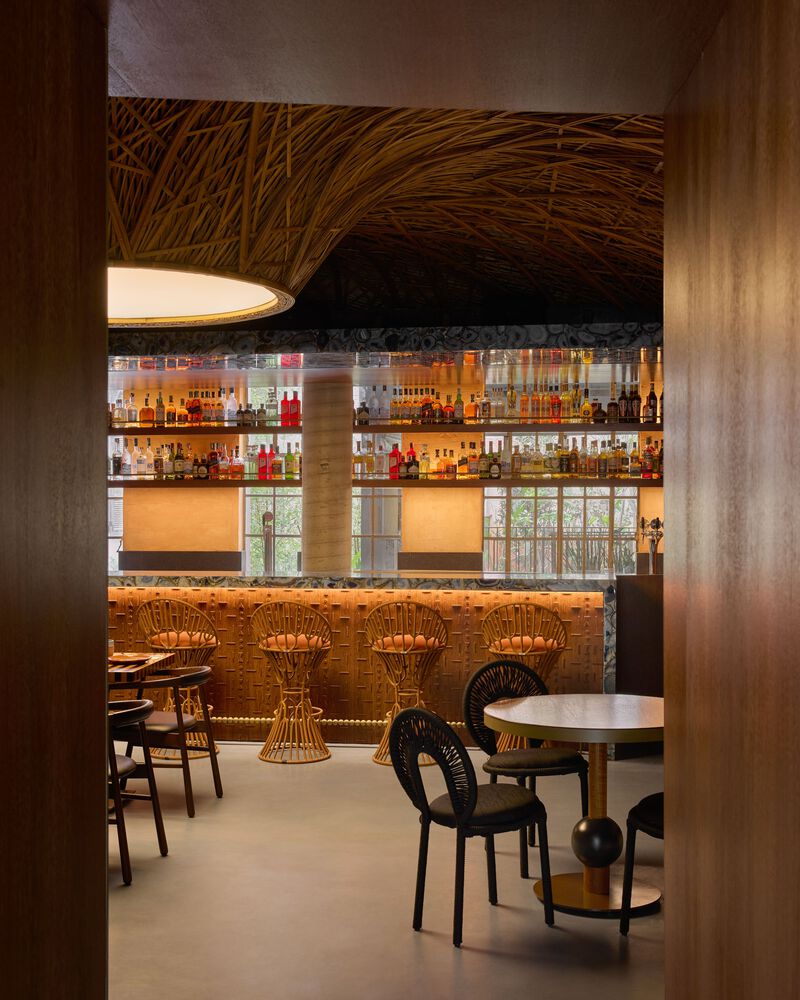
Within the roda, everyone stands on equal ground and moves together as a collective body that exists precisely because it recognizes and celebrates its differences.
The circular space is flexible and can be reconfigured to accommodate different activities and events.
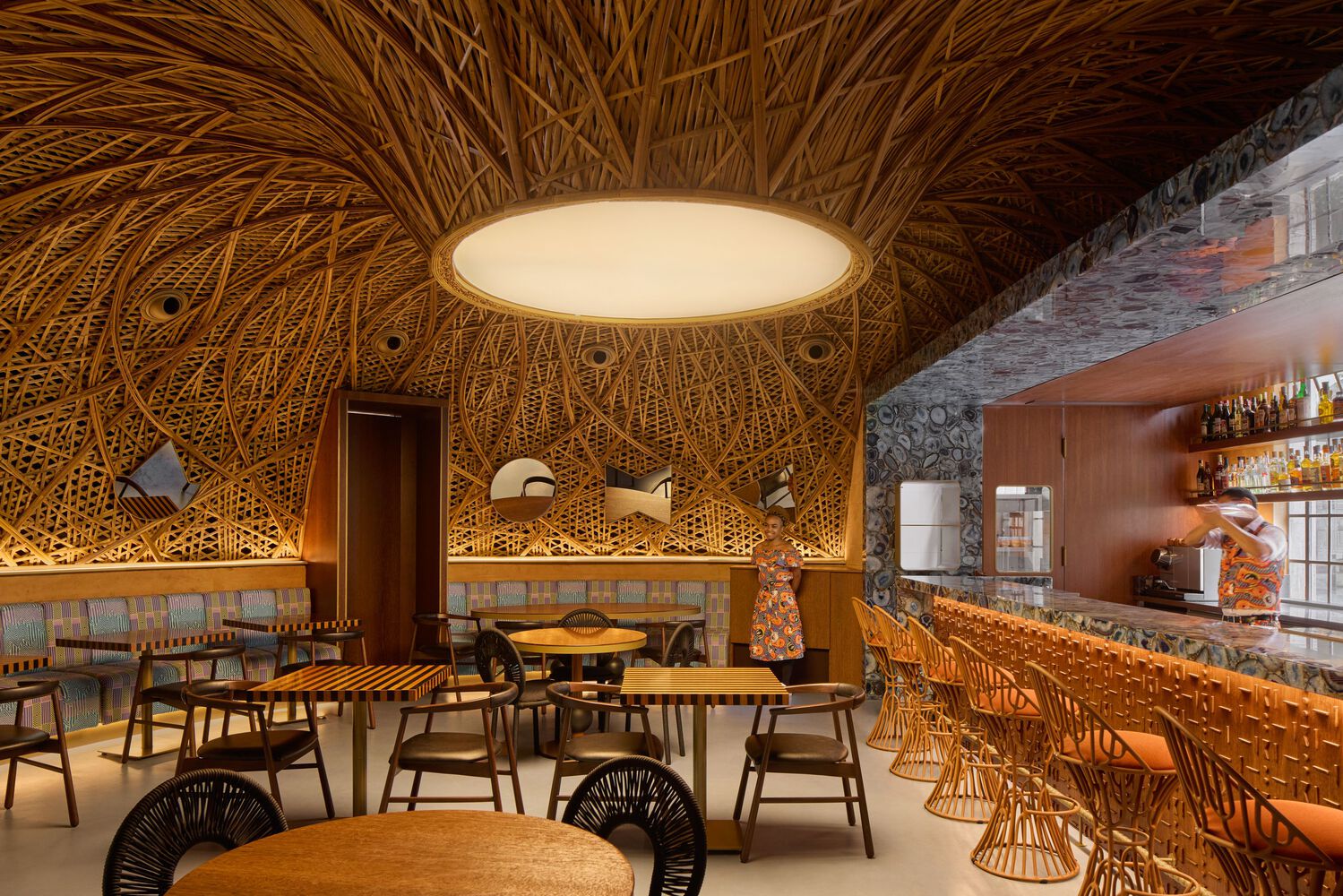
At its center, a bamboo dome highlights the material’s historical importance and celebrates the encounter between African and Afro-Brazilian knowledge, symbolizing the creation of diasporic knowledge and its cultural heritage.
A circular sofa surrounds the entire space; mirrors attached to the dome reflect the guests and their surroundings.
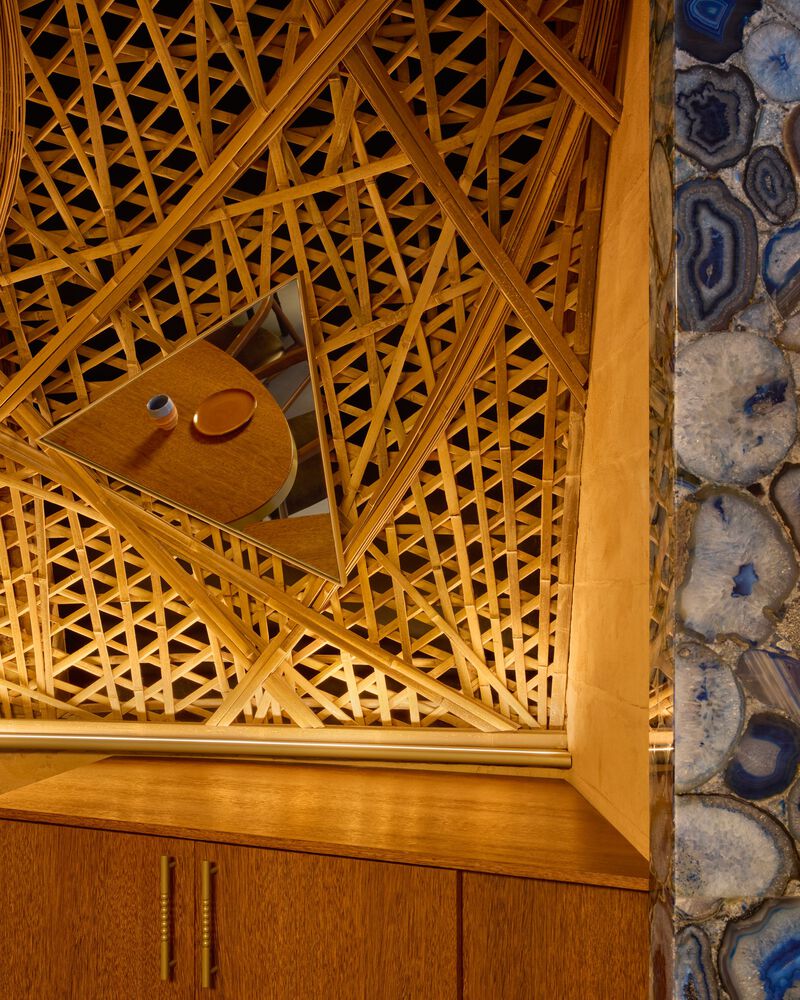
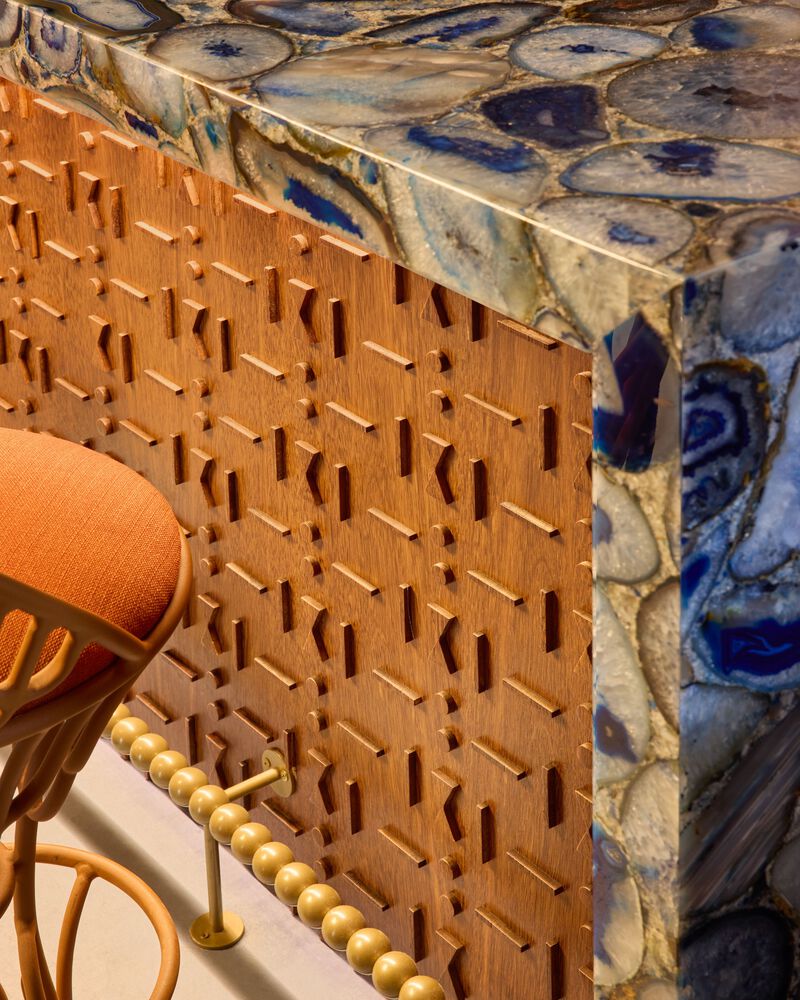
The design of the mirrors draws inspiration from Black artists Rubem Valentim (1922–1991) and Abdias Nascimento (1914–2011), whose work places geometrization and visual synthesis at its core.
Through the subtraction and addition of pure forms — circles, triangles, and rectangles — new symbols and compositions characterized by repetition and overlapping are constructed.
This logic of decomposing, shifting, and recombining forms was incorporated as a guiding principle throughout the project and is also present in the tables and graphic patterns of the space.
Another strong element of identity is earth. In Brazil, earthen architecture arrived with colonization, but the technique had already been mastered for centuries by peoples of the African continent.
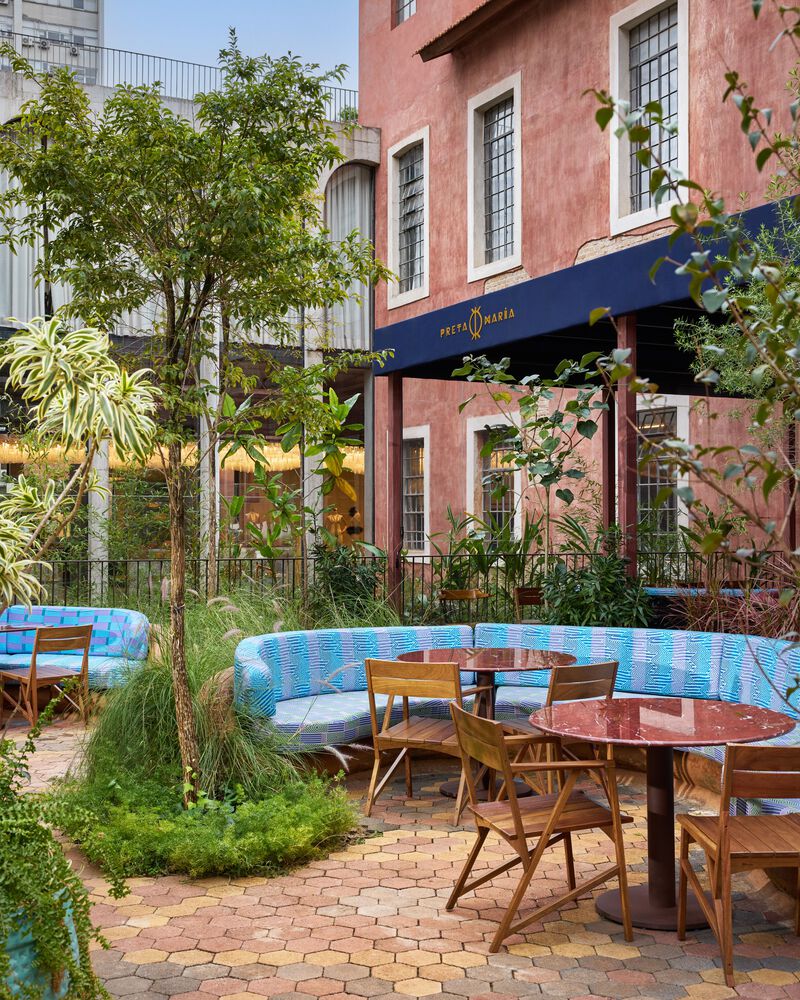
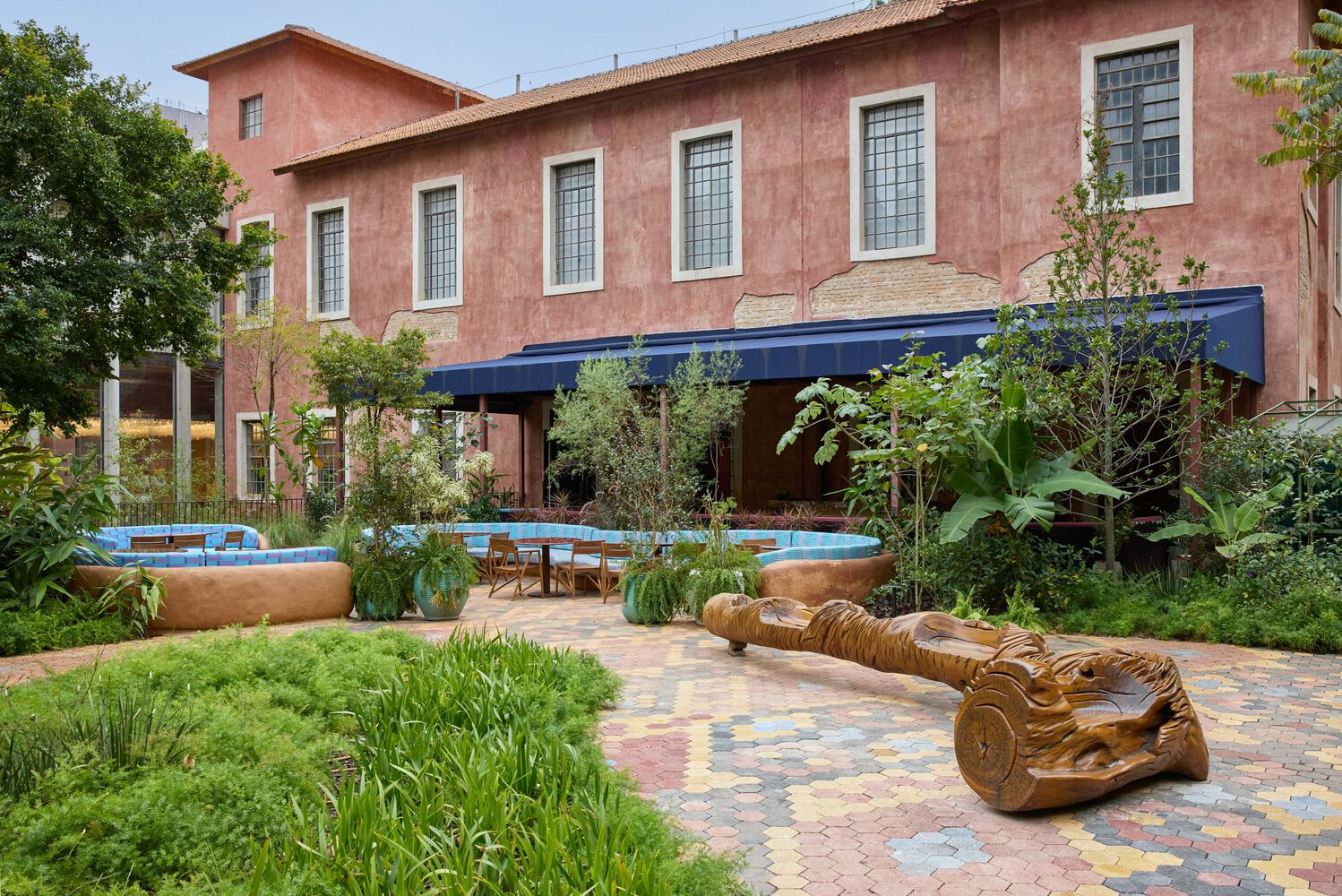
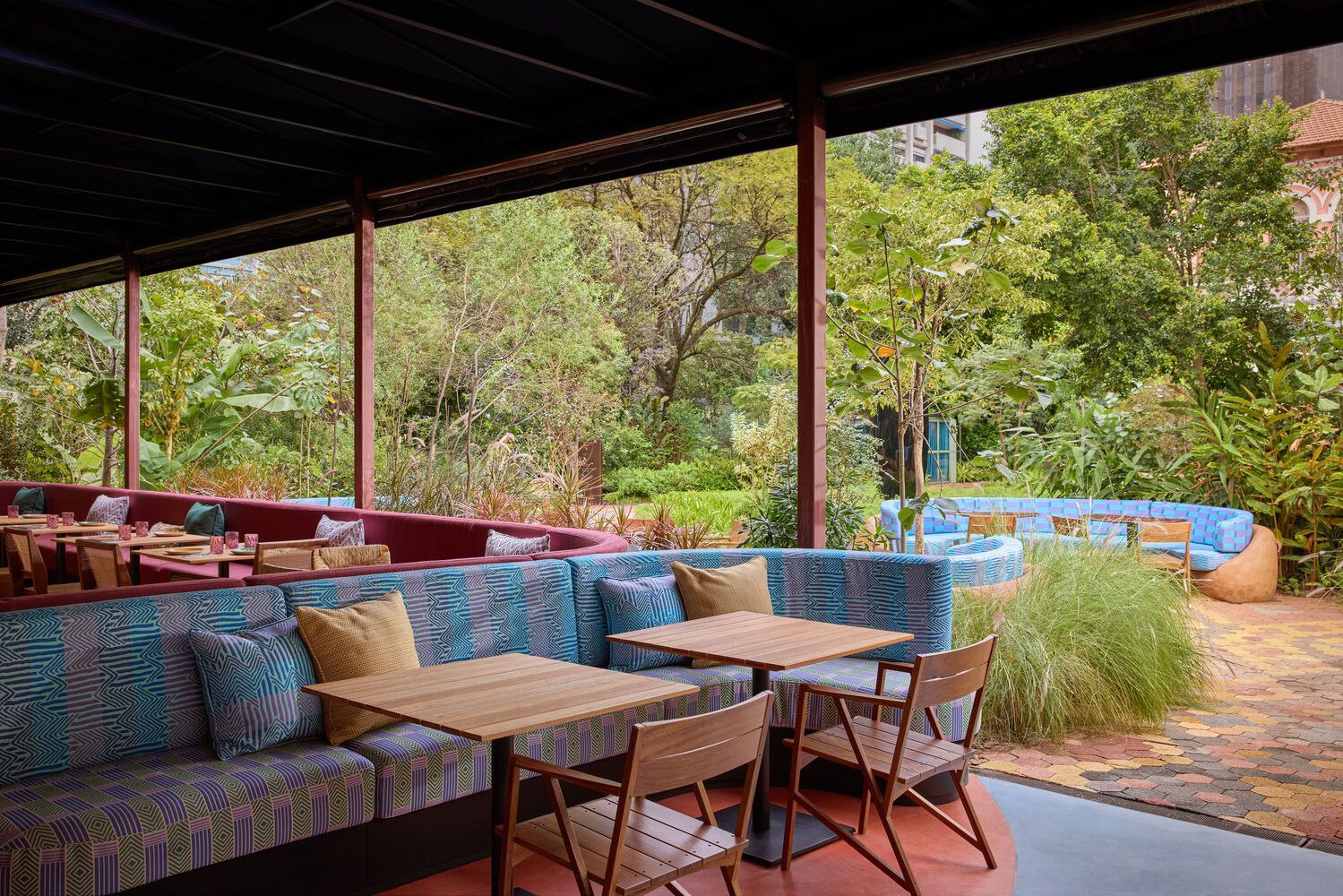
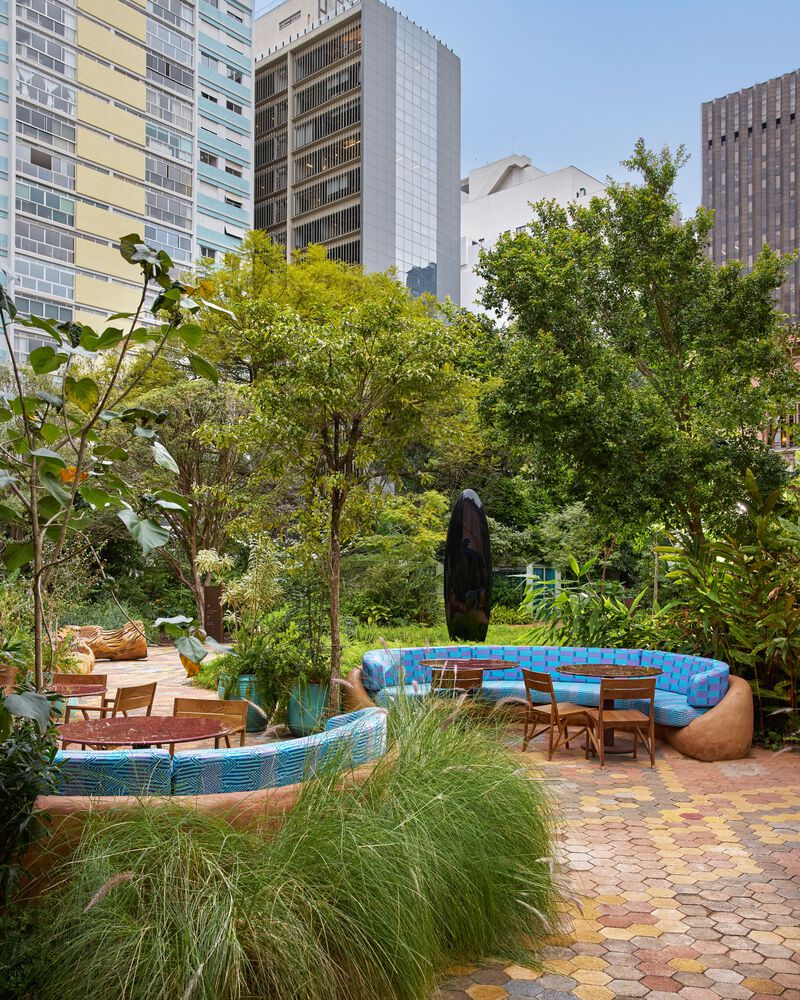
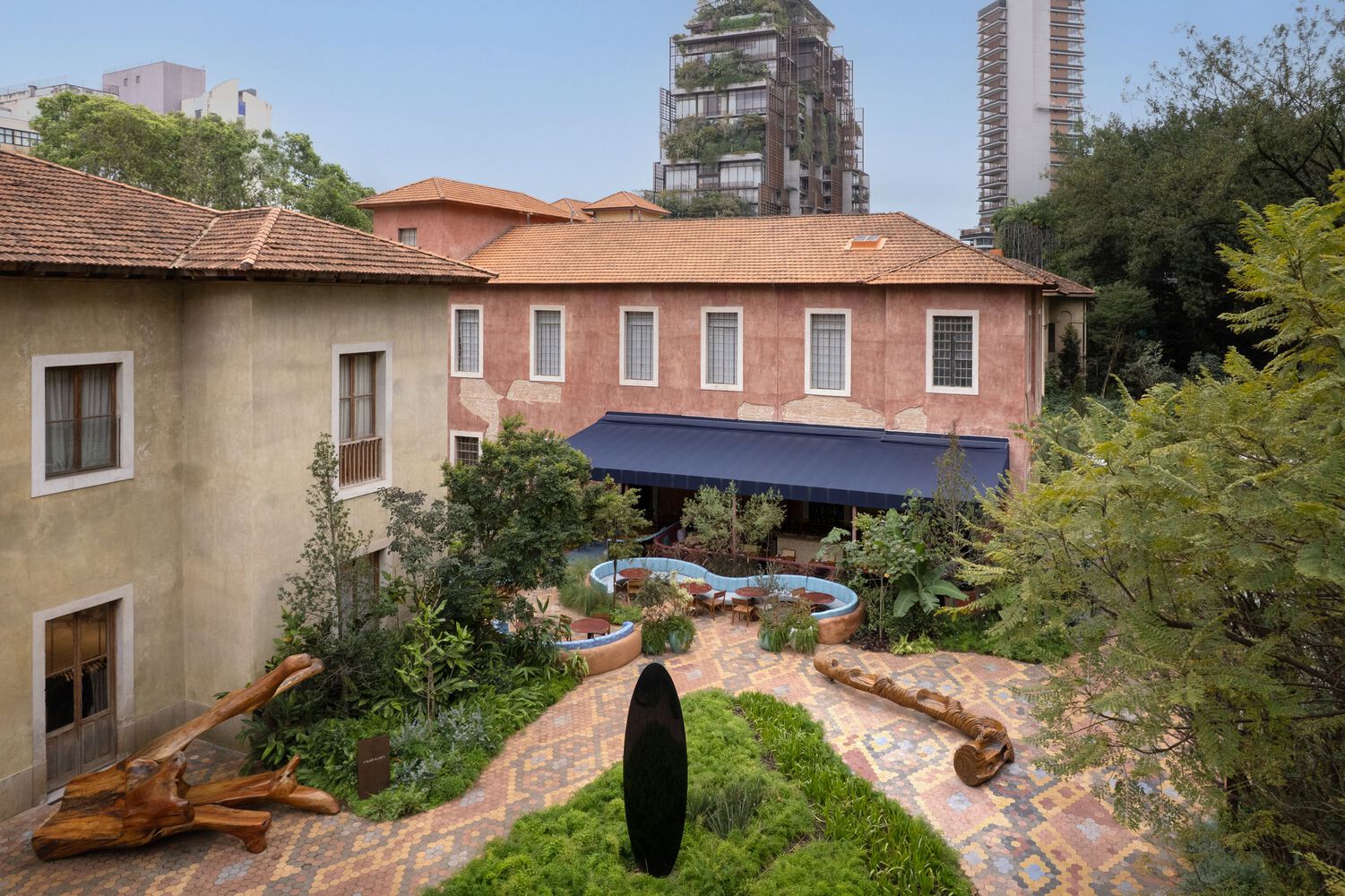
Sustainable and handcrafted, the taipa de mão technique was applied to the walls, the circular bench in the dining area, and the benches in the outdoor garden.
The fabric used for the benches and sofas was inspired by kente patterns, a traditional aesthetic element of the Ashanti (Asante) people historically associated with royalty.
Composed of interwoven geometric patterns in strips of silk or cotton, kente is present in African and Afro-Brazilian clothing and has become a symbol of aesthetic and existential self-affirmation.
The bar is one of the project’s main visual highlights, entirely clad in backlit Brazilian Ágata-Azul stone. Its wooden base features a geometric pattern digitally fabricated using CNC technology, developed from the decomposition of the Mmere Dane adinkra — “changes of time,” a symbol representing transformation throughout the cycles of life — and reinterpreted as a composition of pure forms: circles, rectangles, and triangles.
The blue-pigmented concrete floor refers to the sea as a space of passage for the diaspora, from Africa to the Americas — a transmigration of cultures, knowledge, and identities.
Black protagonism permeates the entire architectural project.
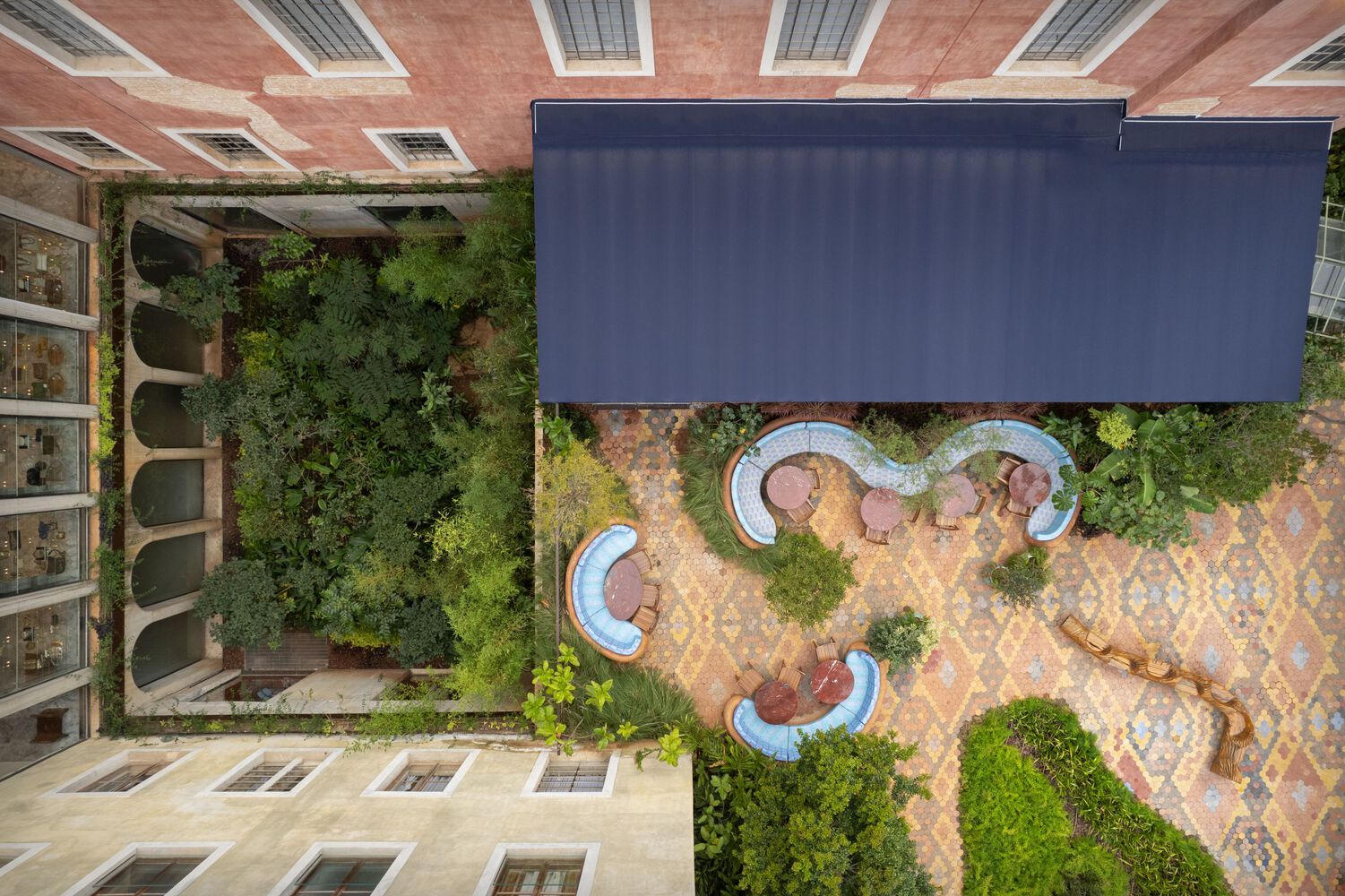
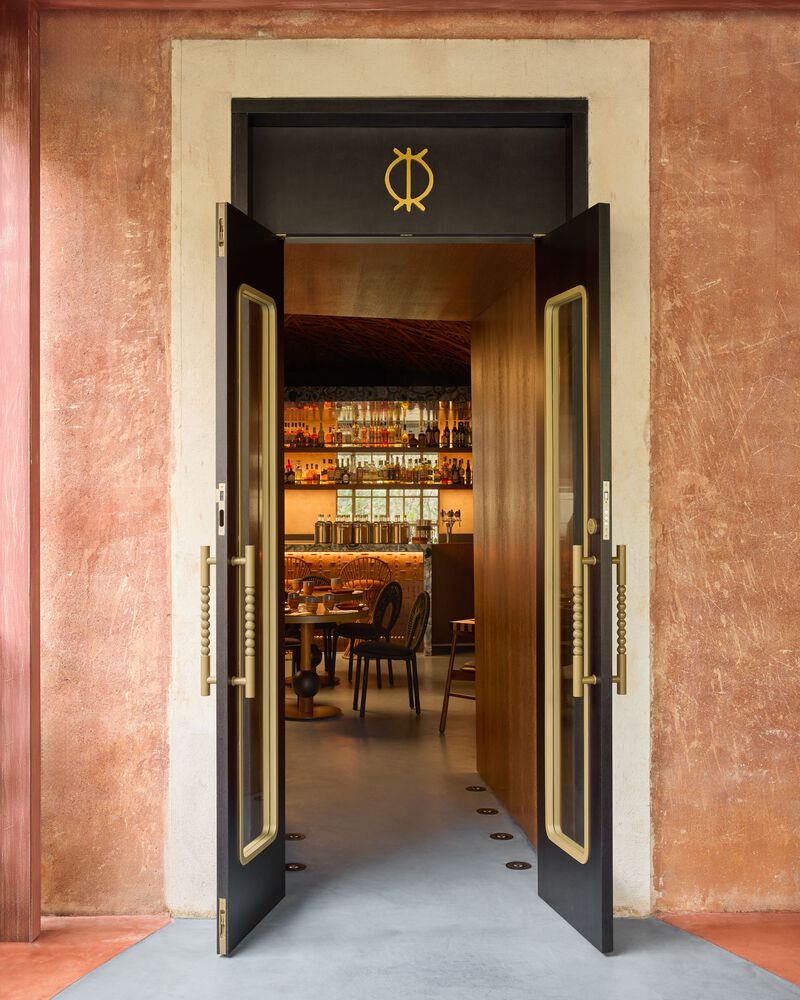
A kind of portal connecting the terrace to the circular interior dining area is clad in natural sucupira wood veneer and was inspired by the work of the women of Oualata, in the southern Sahara, who traditionally paint around windows and doors to communicate changes in family status to the outside world, such as births and deaths.
More than an element of passage, the portal symbolizes a return to the womb: crossing the entrance of a house is, symbolically, a return to maternal warmth — to a space of protection, welcome, and belonging.
The project celebrates the work of Afro-Brazilian architects, artists, designers, and intellectuals — from 20th-century references such as Abdias Nascimento and Rubem Valentim to contemporary names including Philipe Fonseca, Sergio Matos, Gabriela de Matos, Mateus Fraga, and Priscila Almeida.
It is this Black creative production that brings the space to life.

