SENPOP
Amass
ARCHITECTS
Amass
DESIGN TEAM
Wang Kailin, AI Linzi, Fu Lei, Zhang Hengyu, Tian Jie
PHOTOGRAPHS
Xinxin Guo
AREA
70 m²
YEAR
2025
LOCATION
Chengdu, China
CATEGORY
Retail Interiors
English description provided by the architects.
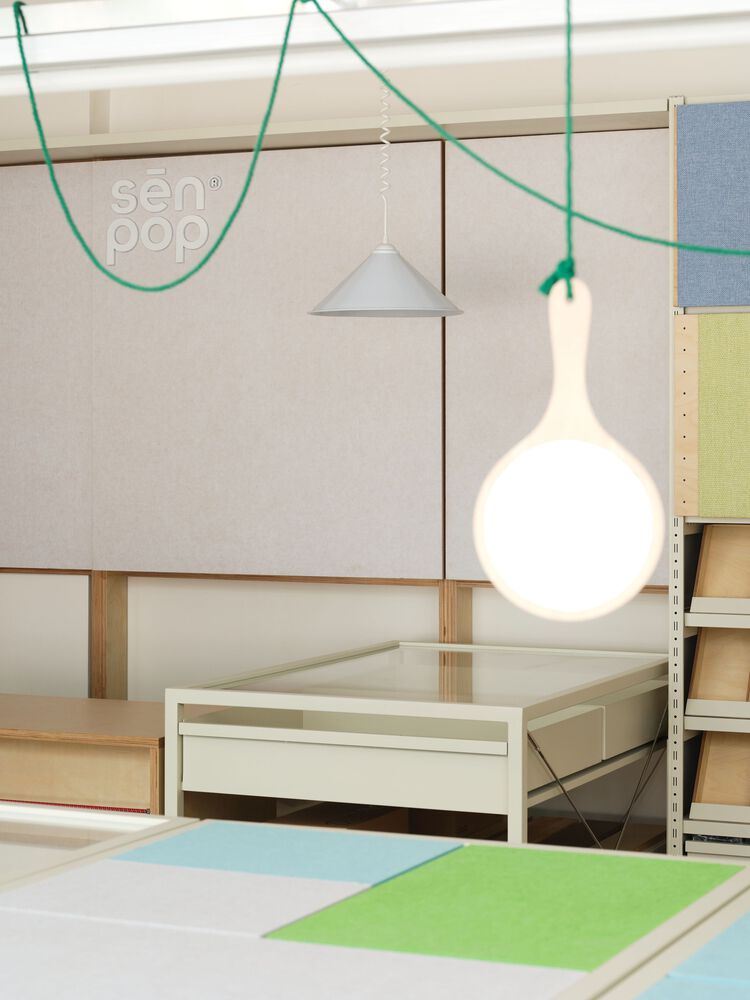
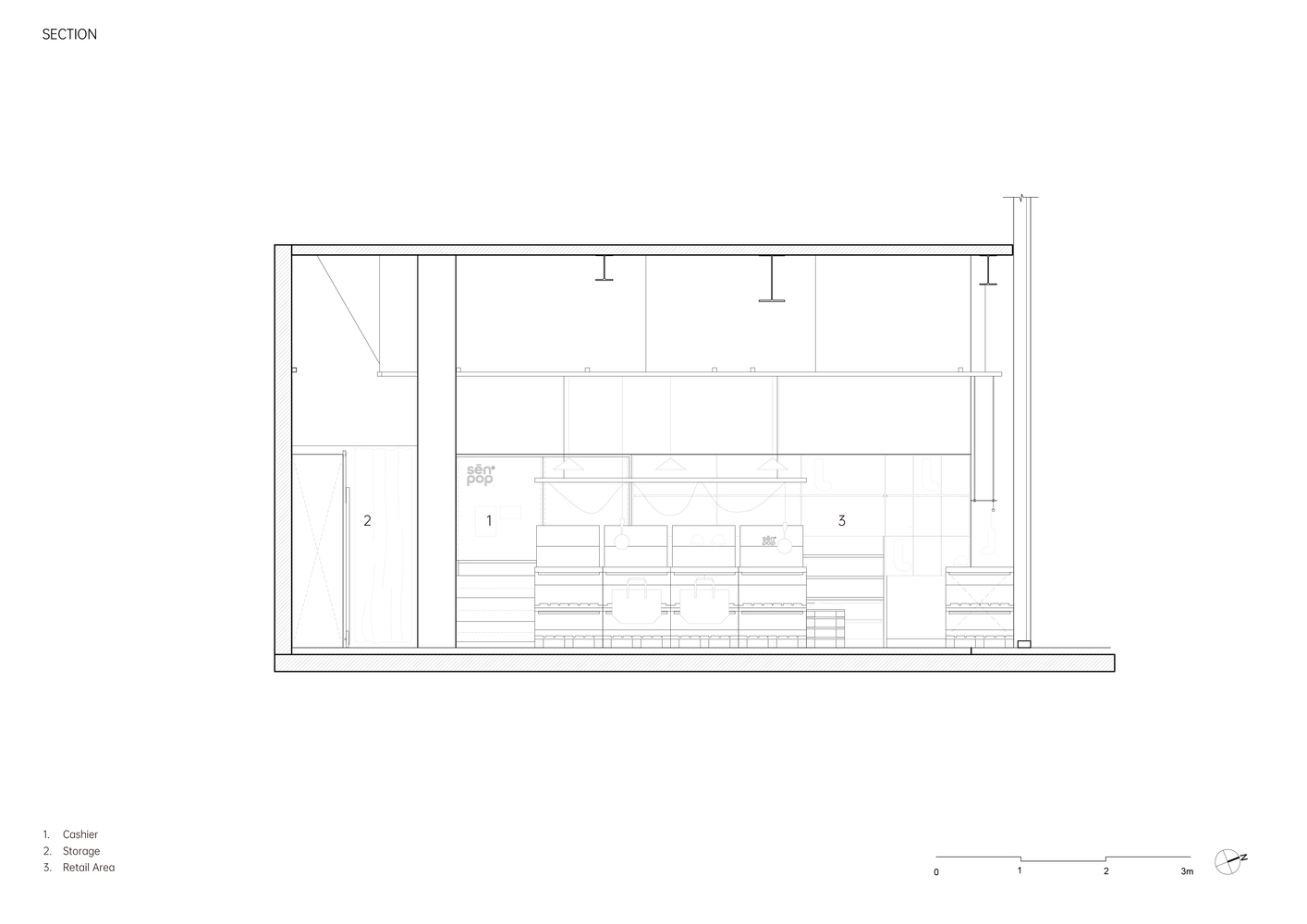
Senpop is a retail brand that began with socks and has expanded into accessories centered around clothing and textiles.
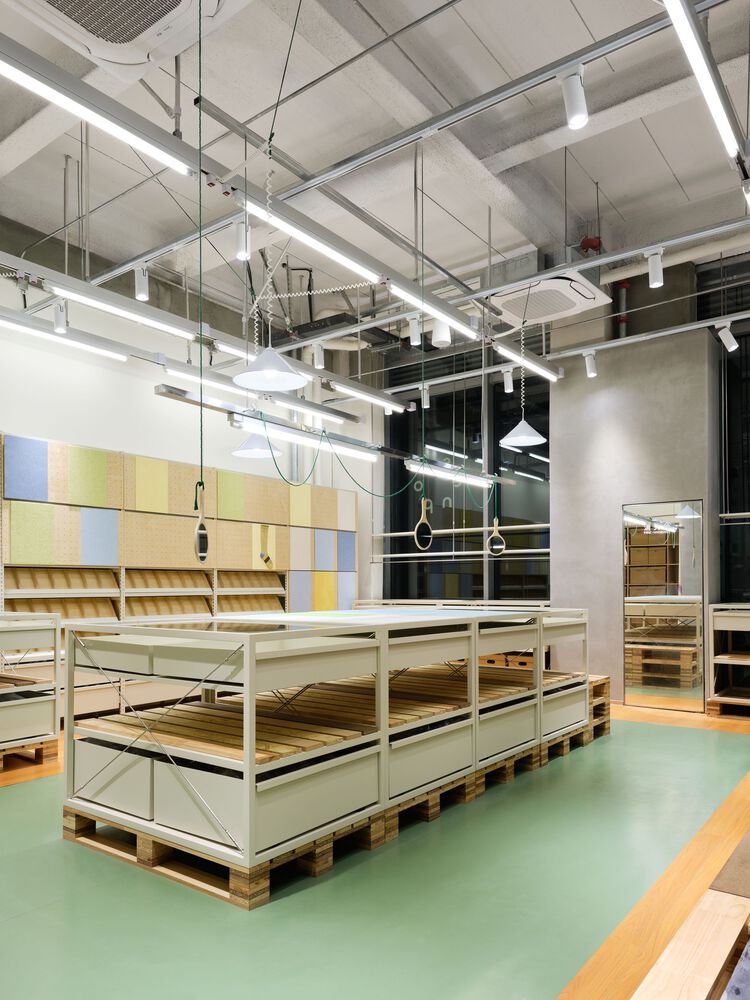
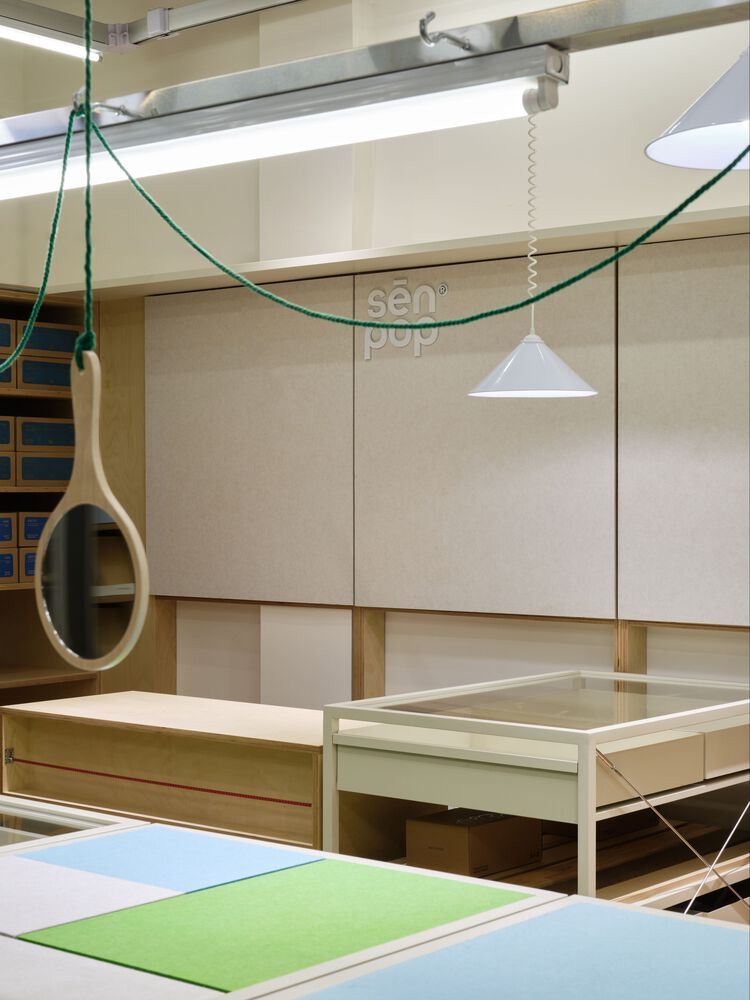
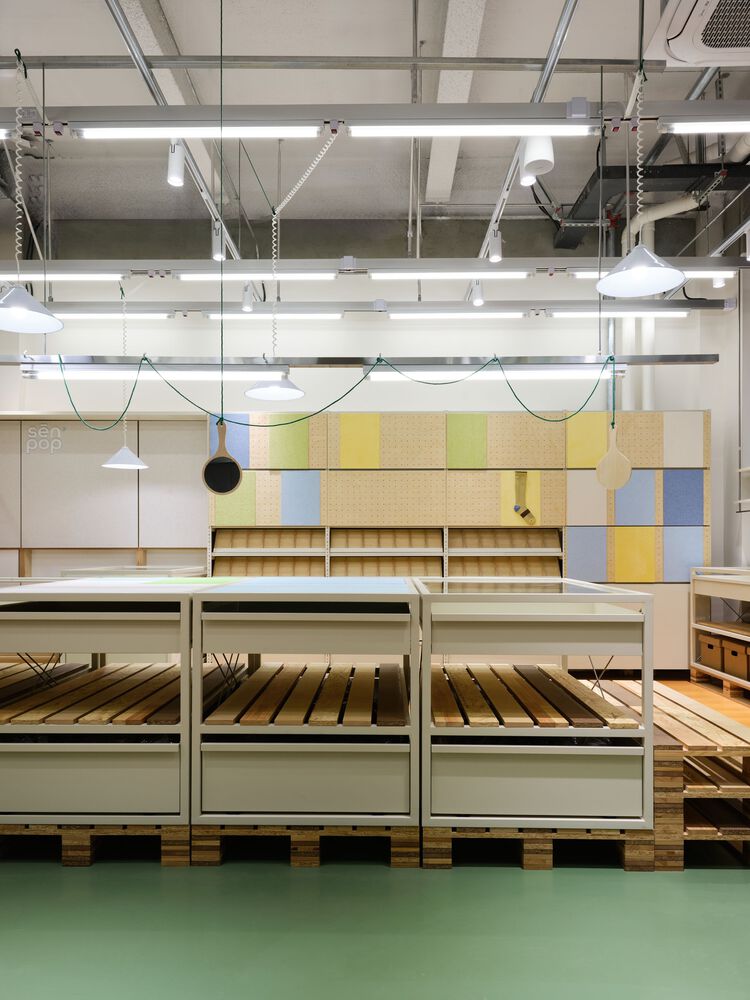
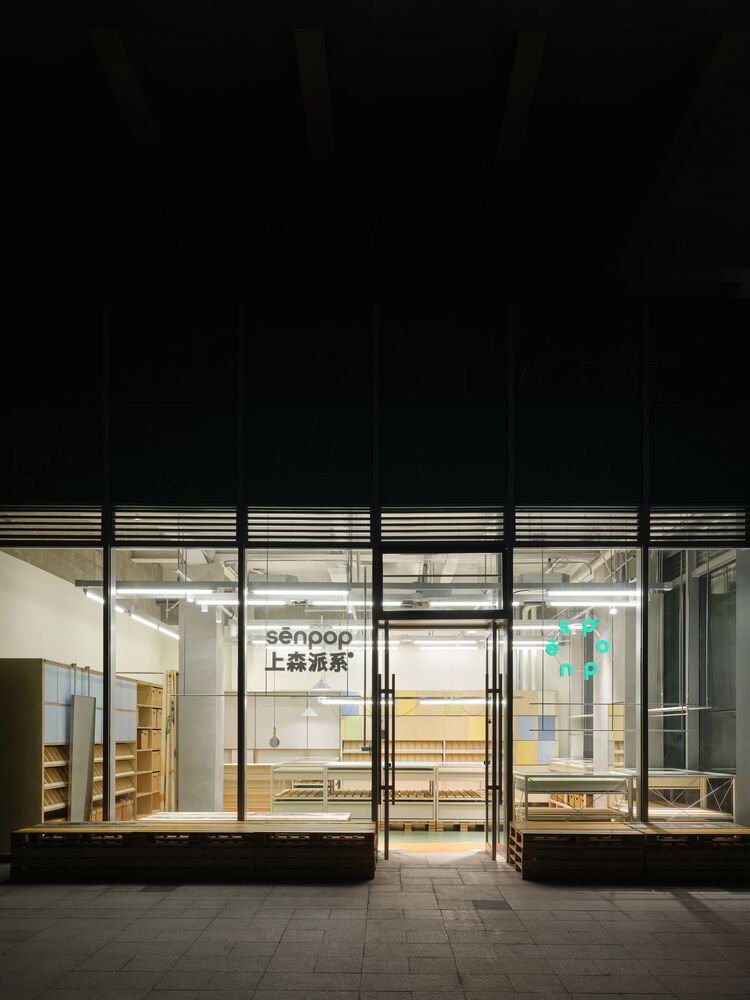
This project reinterprets the processes of production and distribution, transforming the store into a hybrid space between factory, warehouse, and retail.
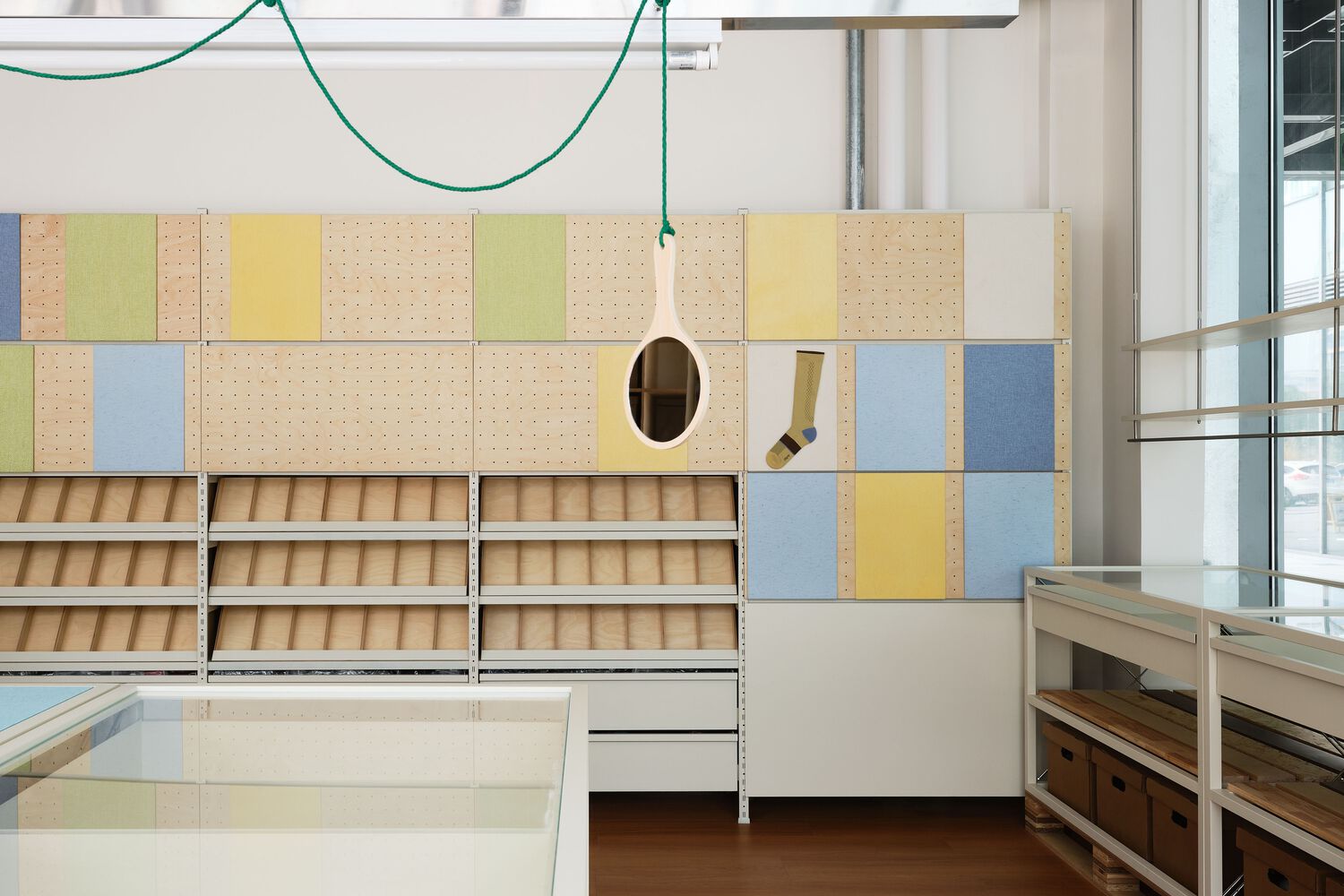
Located in Chengdu, the design focuses not on display as a visual outcome, but on the lifecycle of the product—from knitting and sorting to storage and transport. These processes are broken down into spatial cues and reorganized within the store.
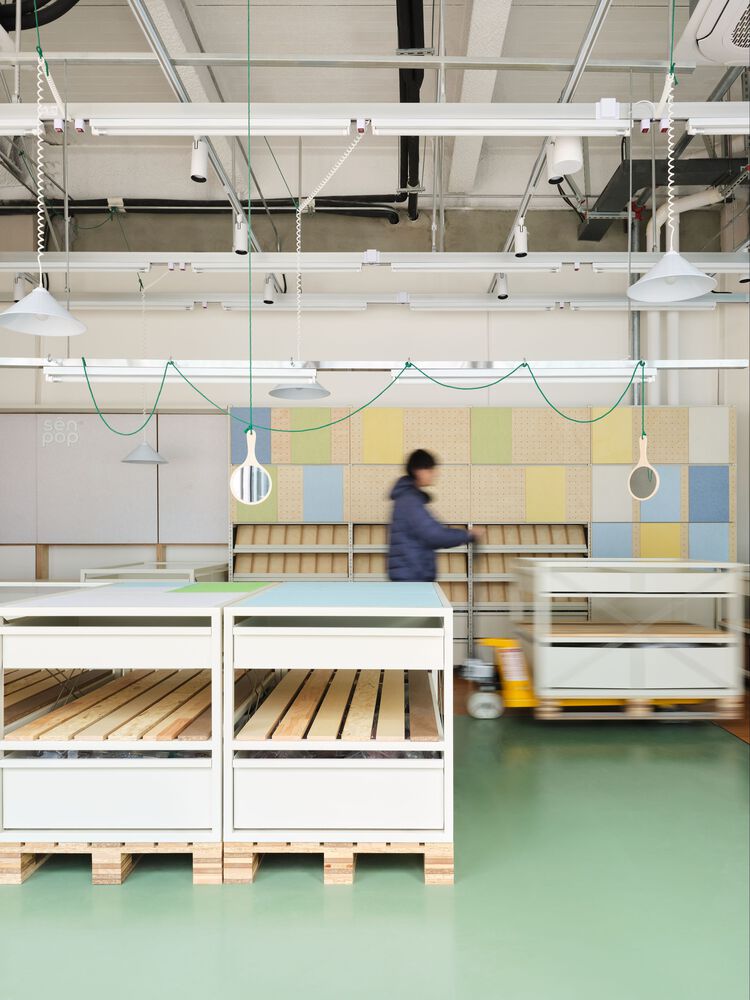
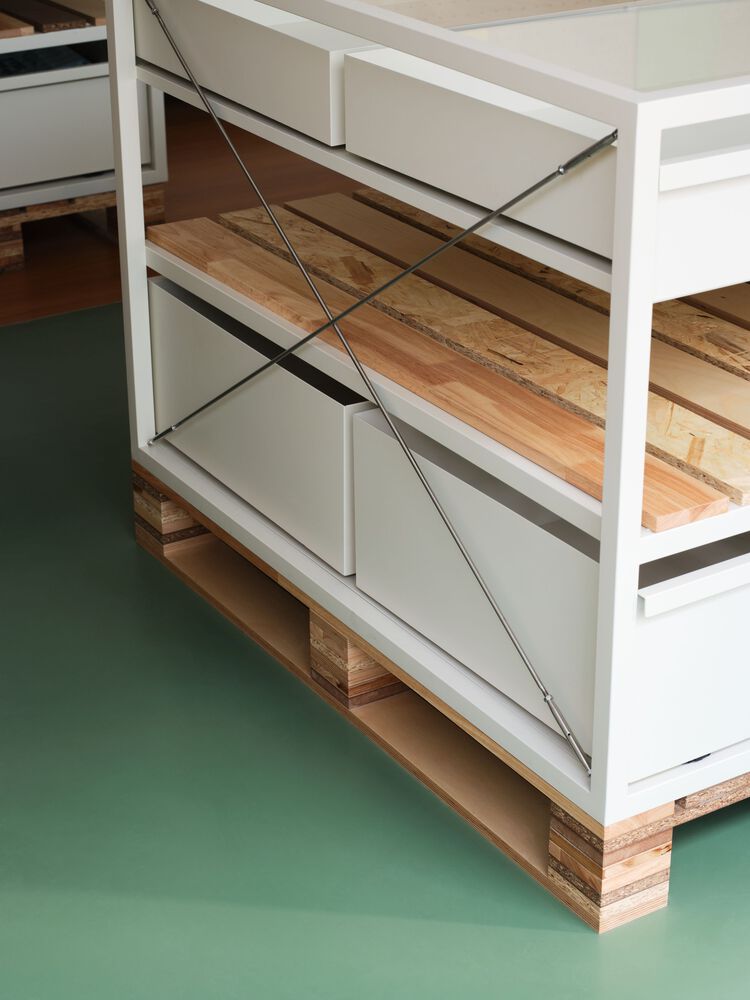
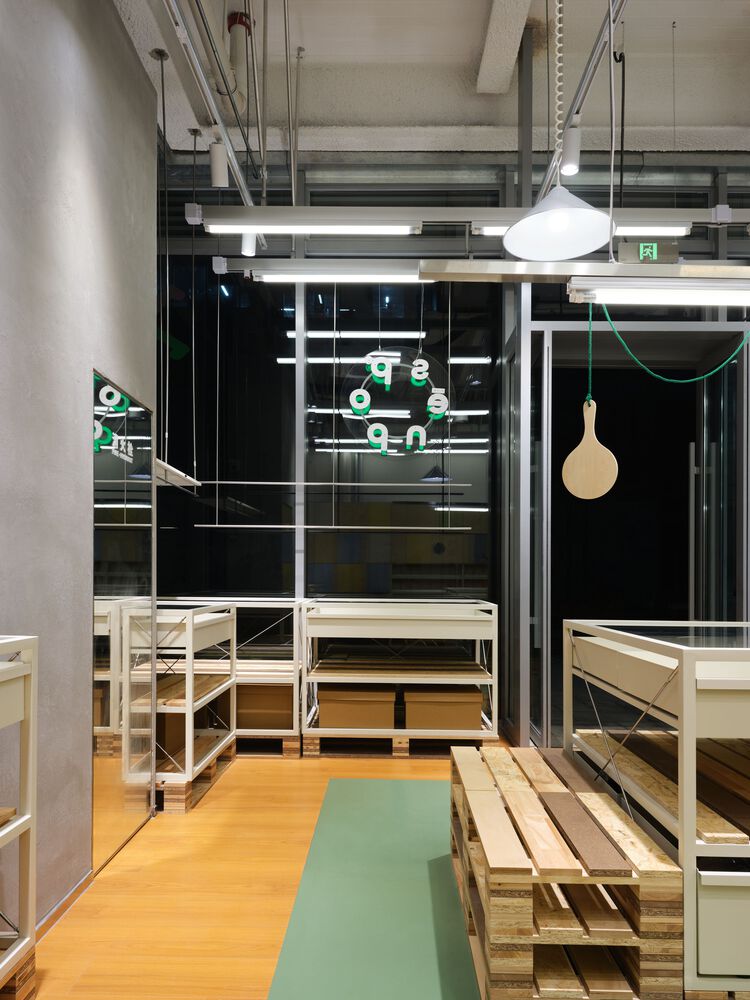
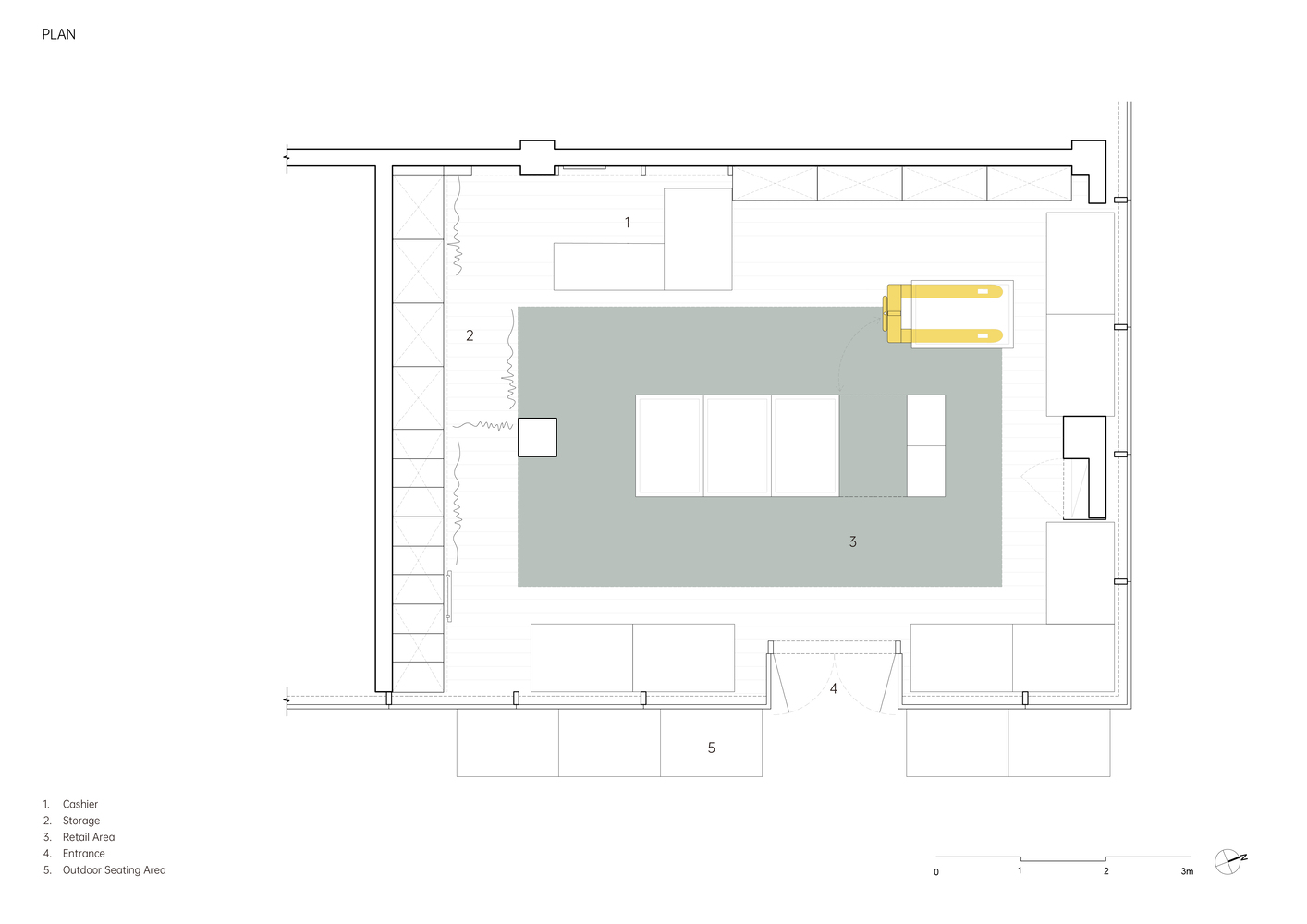
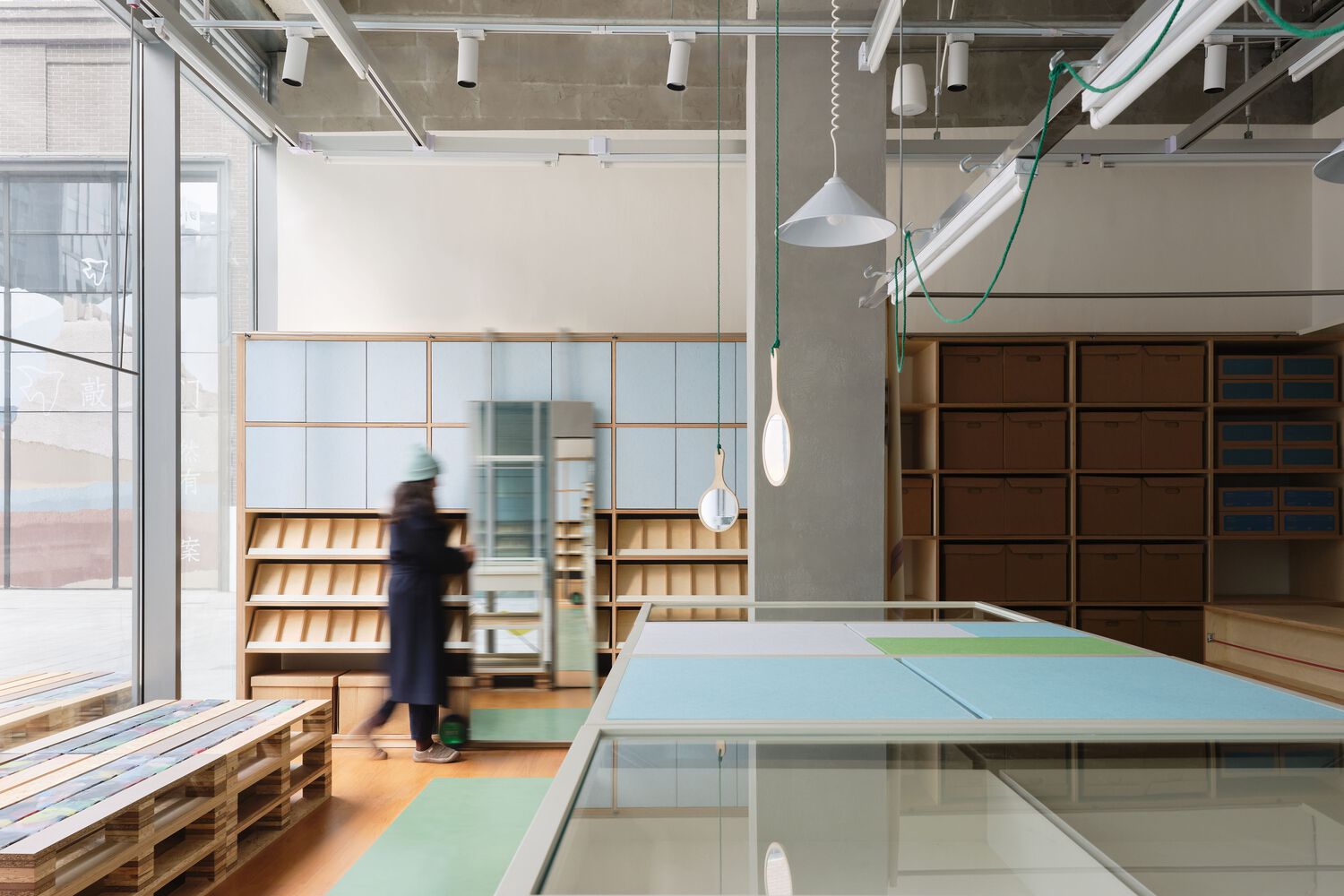
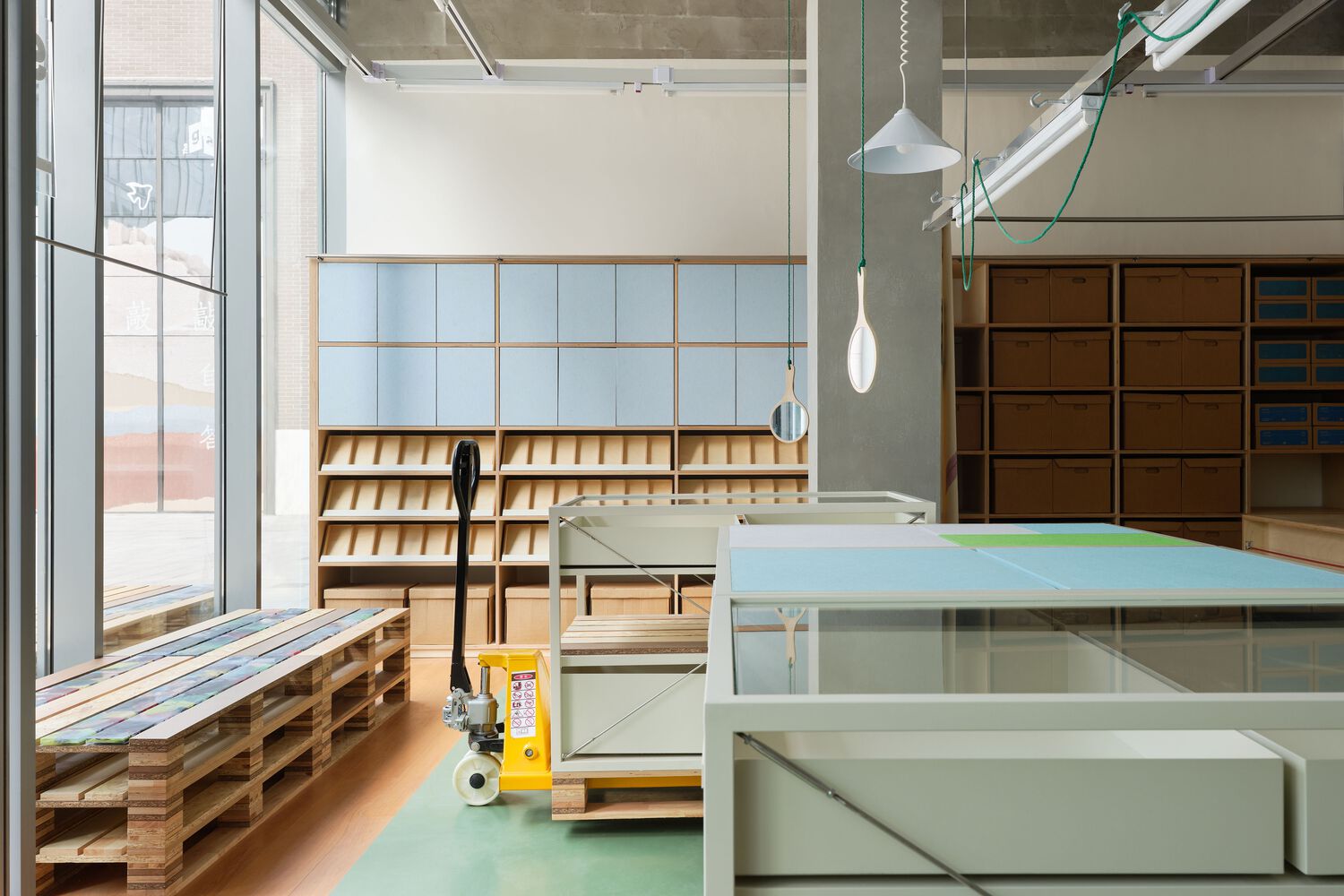
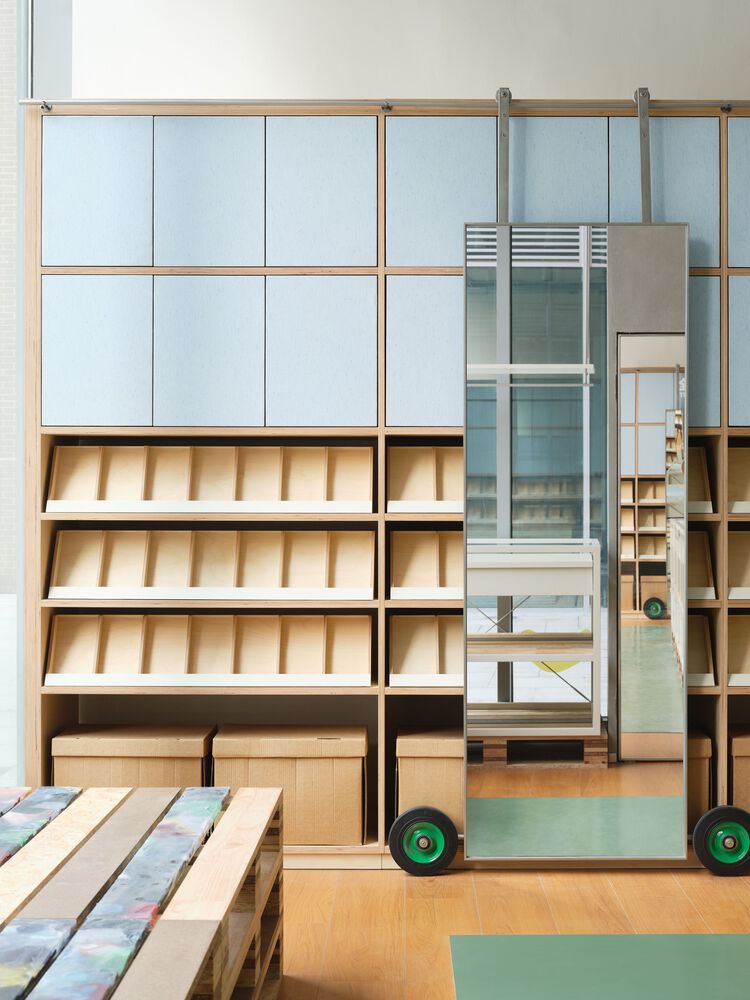
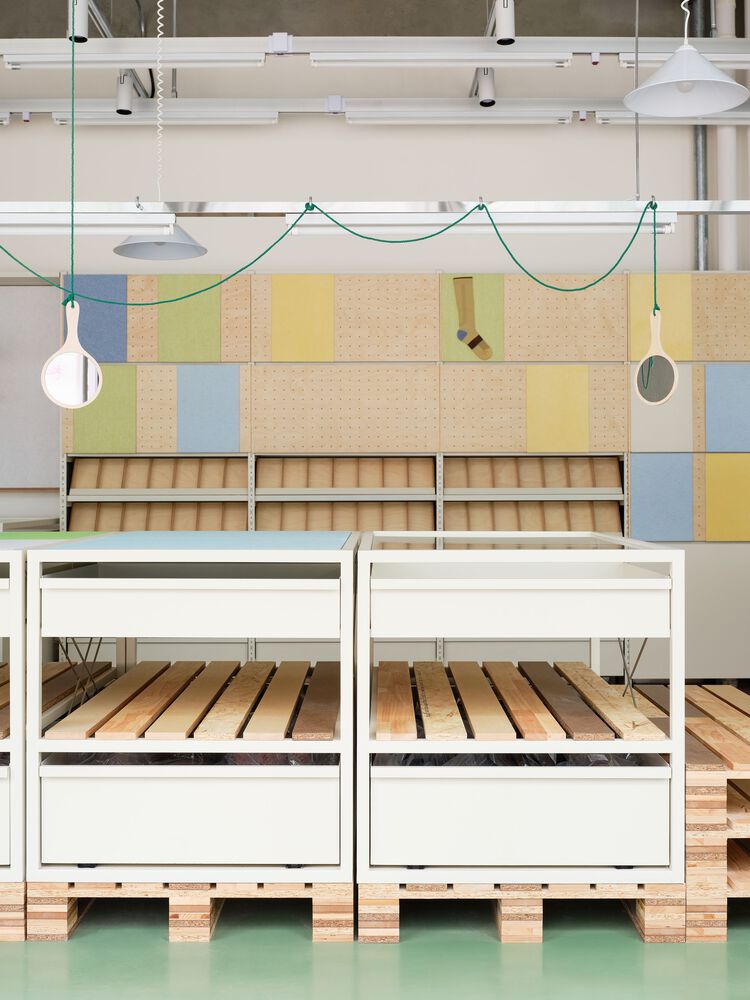
The central island draws from the logic of forklifts and pallet transport, replacing conventional retail counters.
It can be moved and reconfigured, allowing the display system to operate with a sense of circulation similar to goods in transit.
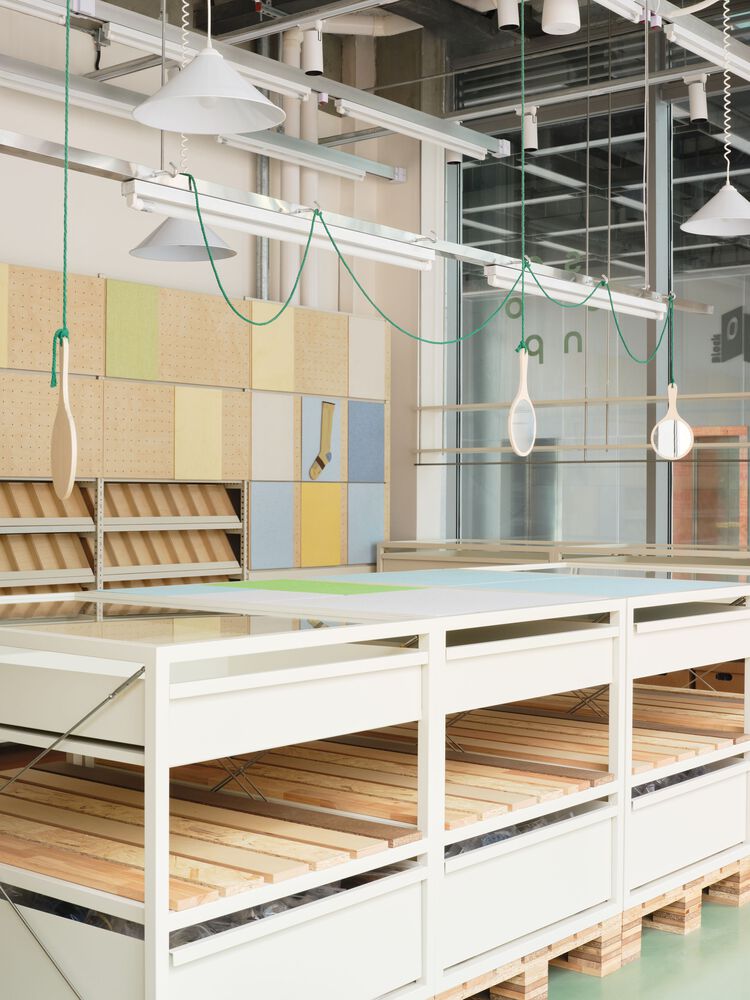
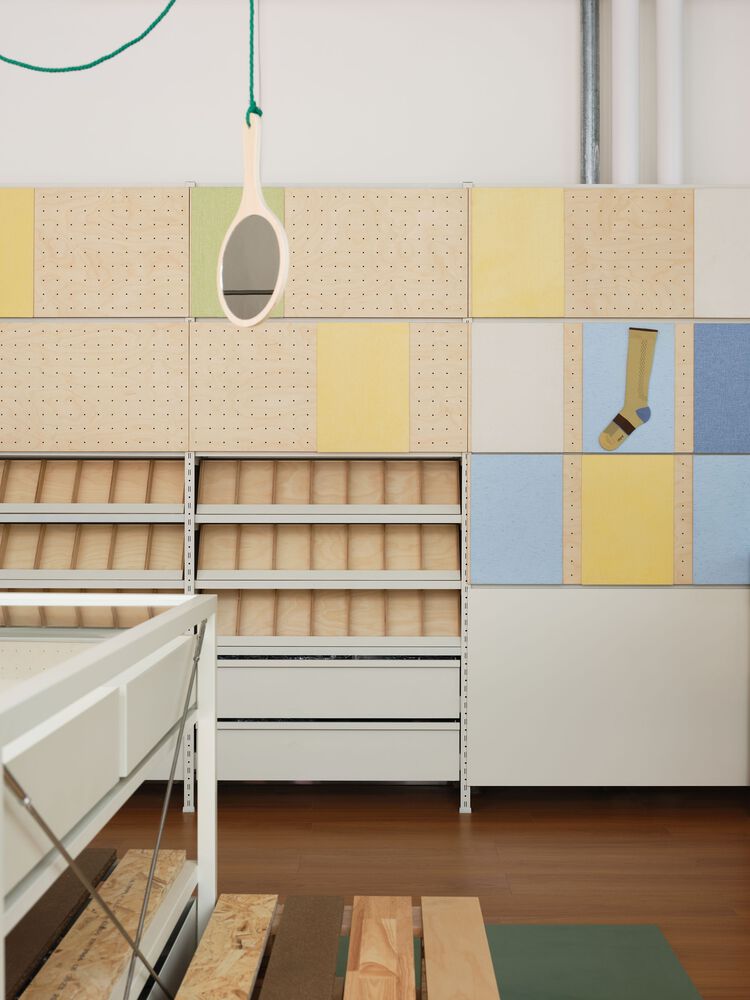
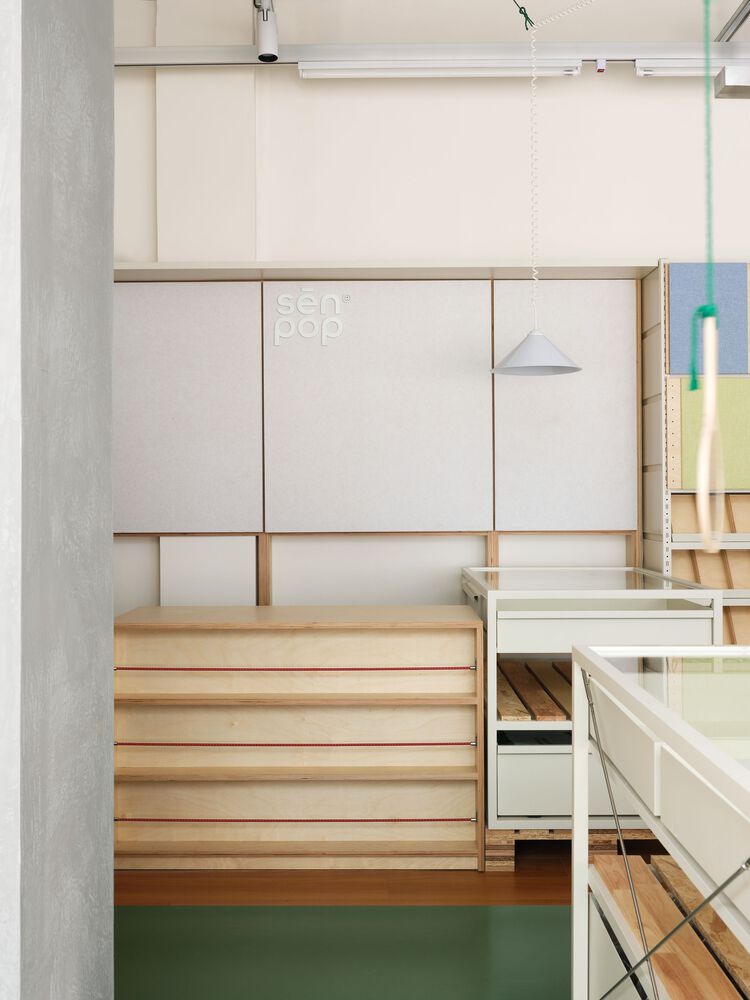
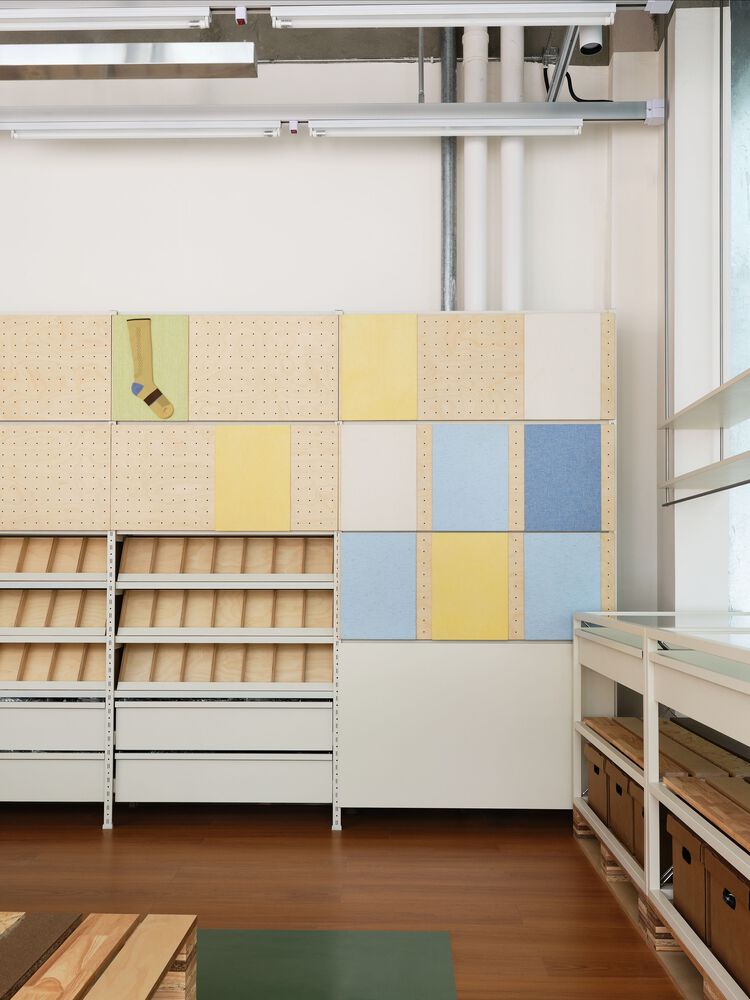
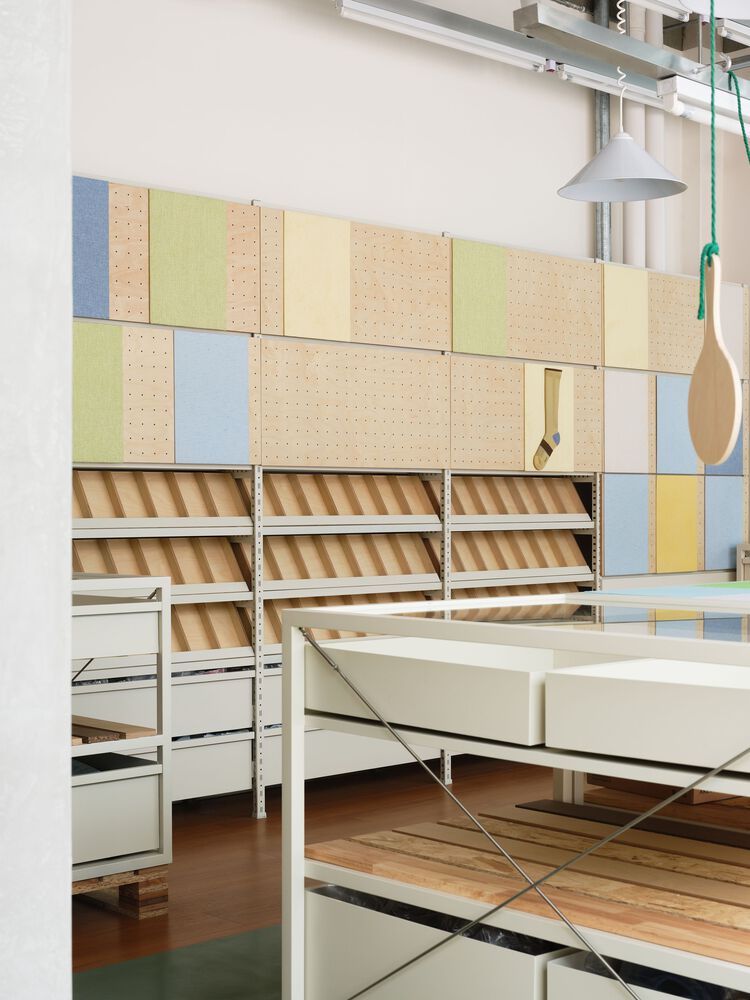
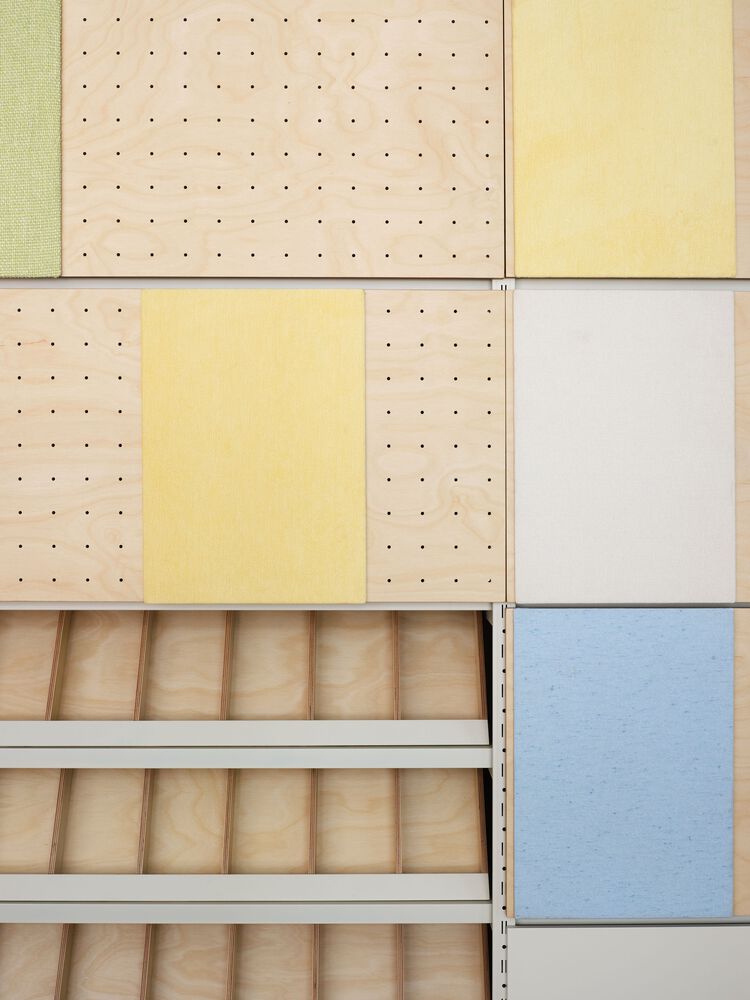
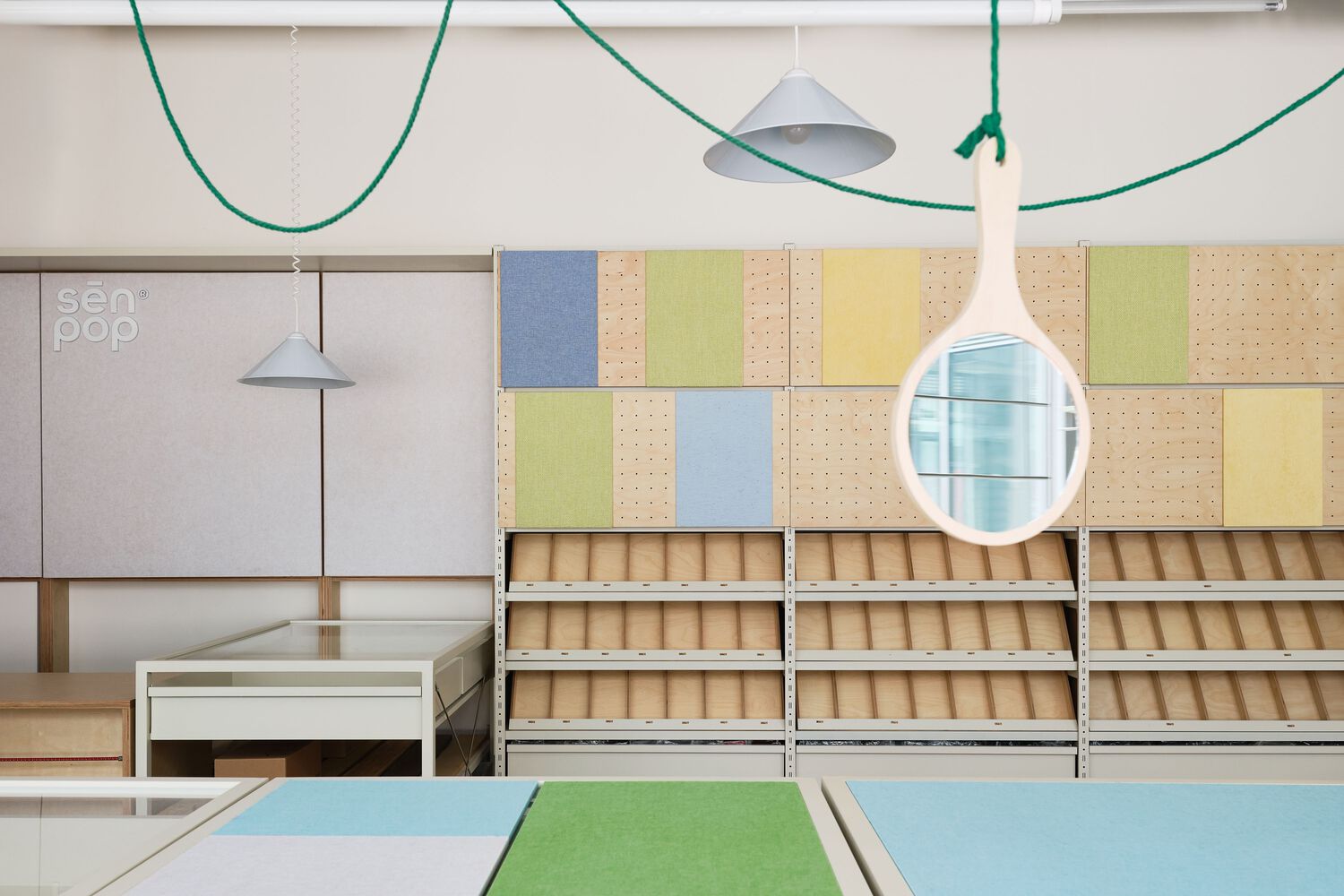
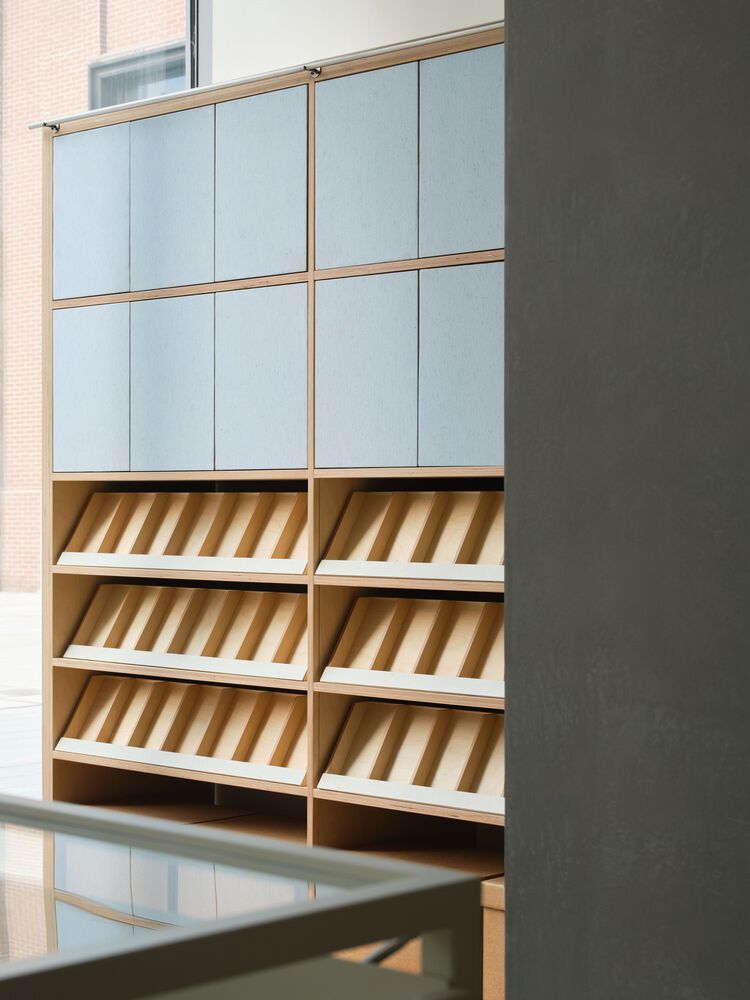
The display surfaces are constructed from joined base materials such as MDF, particle board, and plywood, with their exposed edges forming part of the spatial expression.
A lightweight system of magnetic felt panels provides a display condition between sampling and storage, allowing objects to remain in a transitional state rather than a fixed presentation.
Material strategy incorporates recycled fabric processed into resin panels, with sample socks embedded within.
These elements follow the dimensions of pallet boards and appear intermittently as special components, acting less as primary displays and more as records of the production process.
By translating the logic of production and storage into spatial organization, the project is composed of distributed units rather than a singular scene.
It avoids reconstructing a complete factory environment, instead maintaining an in-between condition—where the space feels both in use and on display.