
Jer Café At Tselinny Center Of Contemporary Culture
JER CAFÉ AT TSELINNY CENTER OF CONTEMPORARY CULTURE
NAAW
ARCHITECTS
NAAW
LEAD ARCHITECTS
Elvira Bakubayeva
LEAD TEAM
Aisulu Uali
TECHNICAL TEAM
Akmaral Mendygarina, Daniyar Almagambetov
DESIGN TEAM
Victoria Akram
MANUFACTURERS
Aq Objects, Artek
PHOTOGRAPHS
Damir Otegen
AREA
150 m²
YEAR
2025
LOCATION
Almaty, Kazakhstan
CATEGORY
Coffee Shop Interiors
English description provided by the architects.
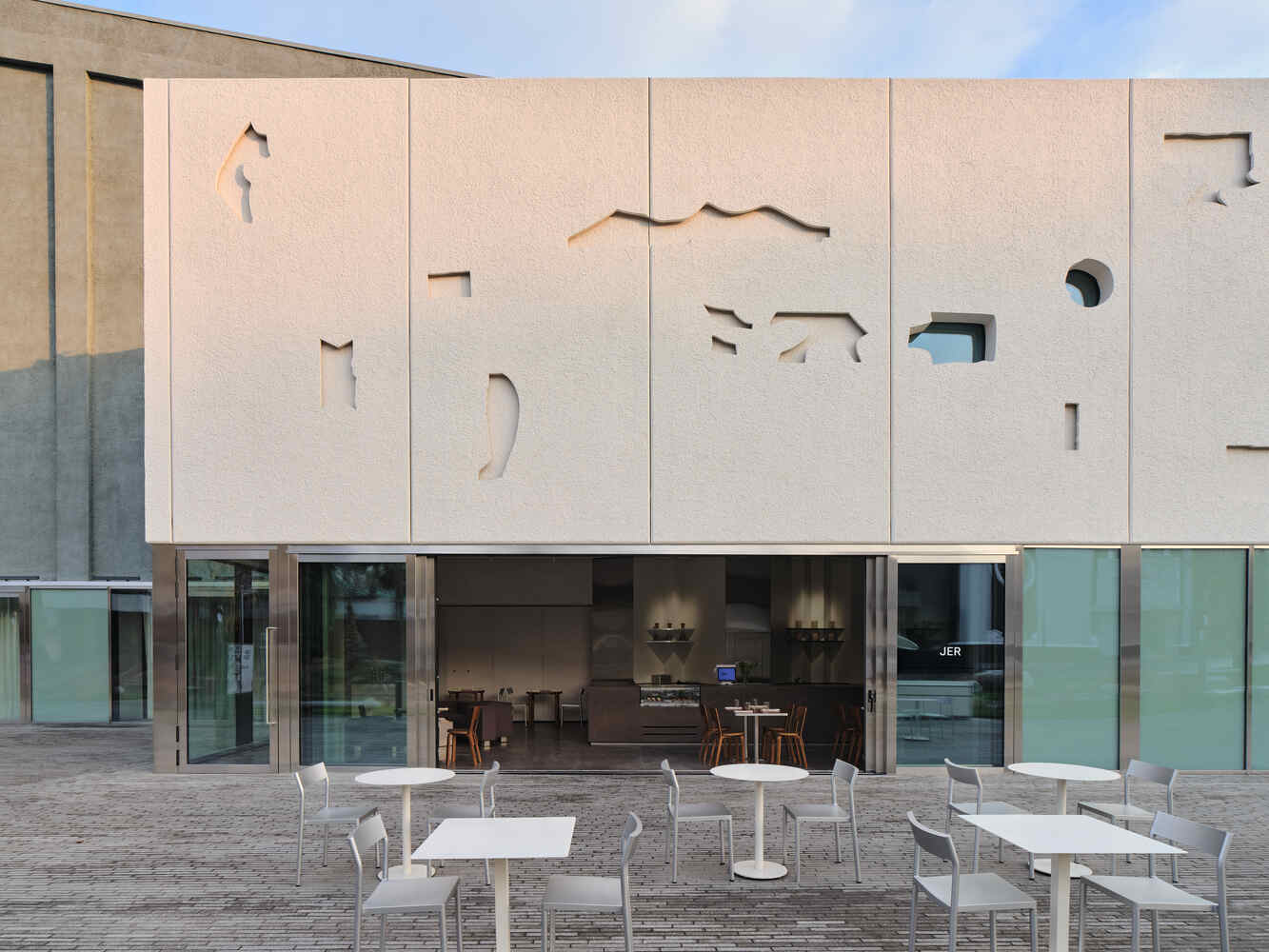
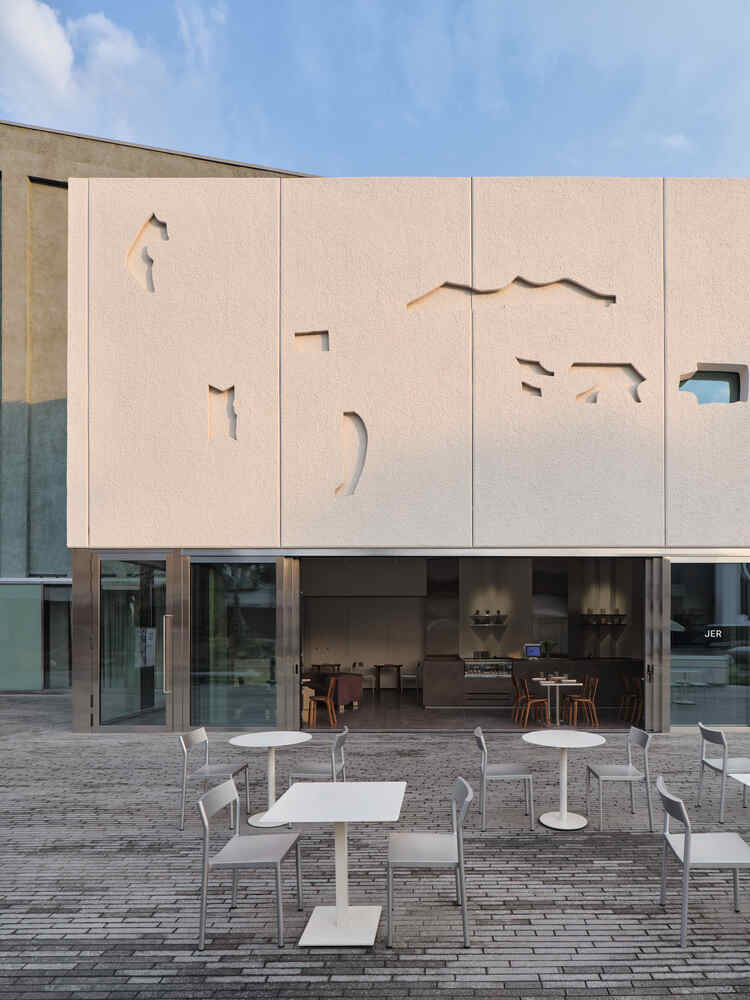
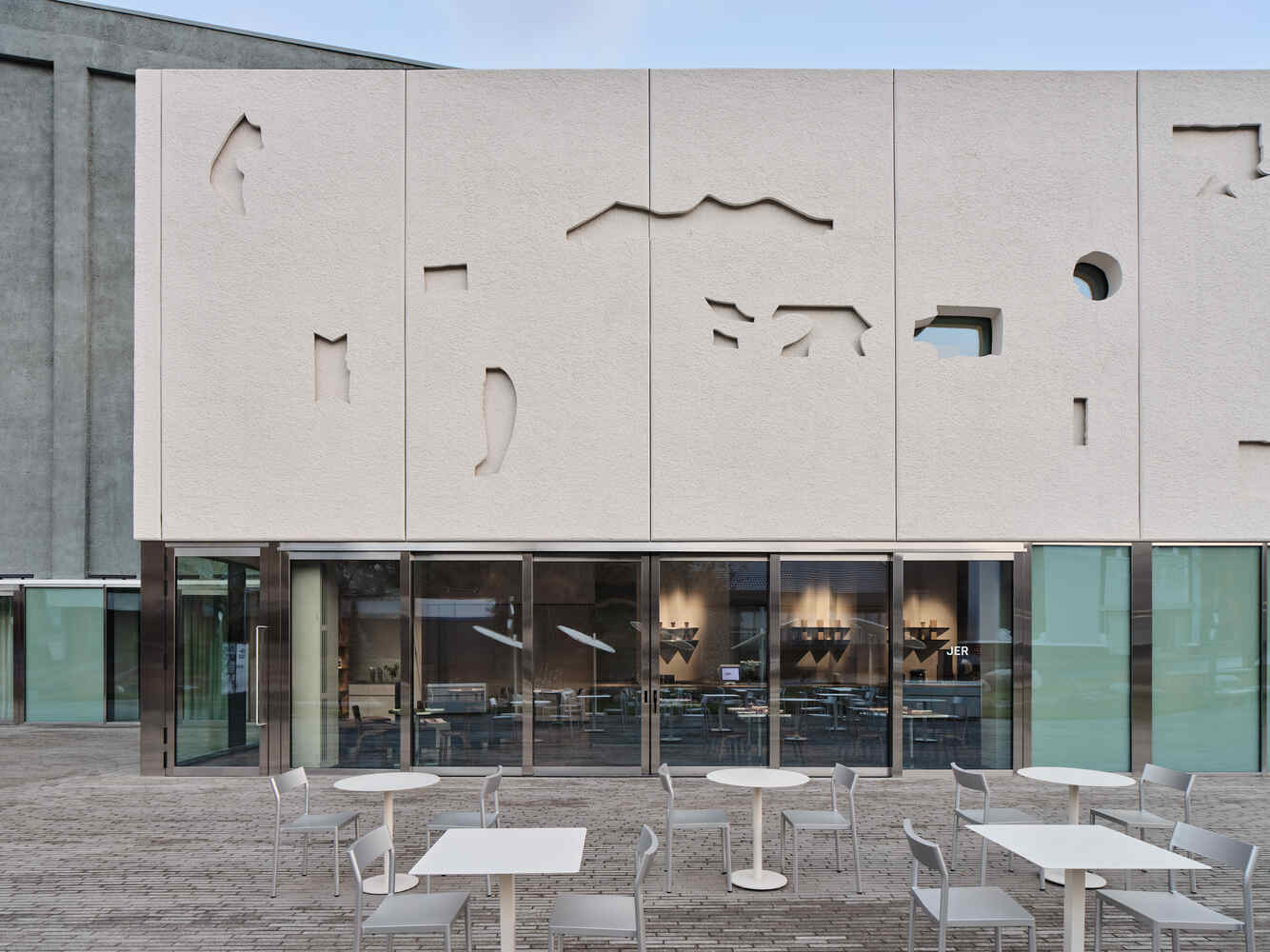
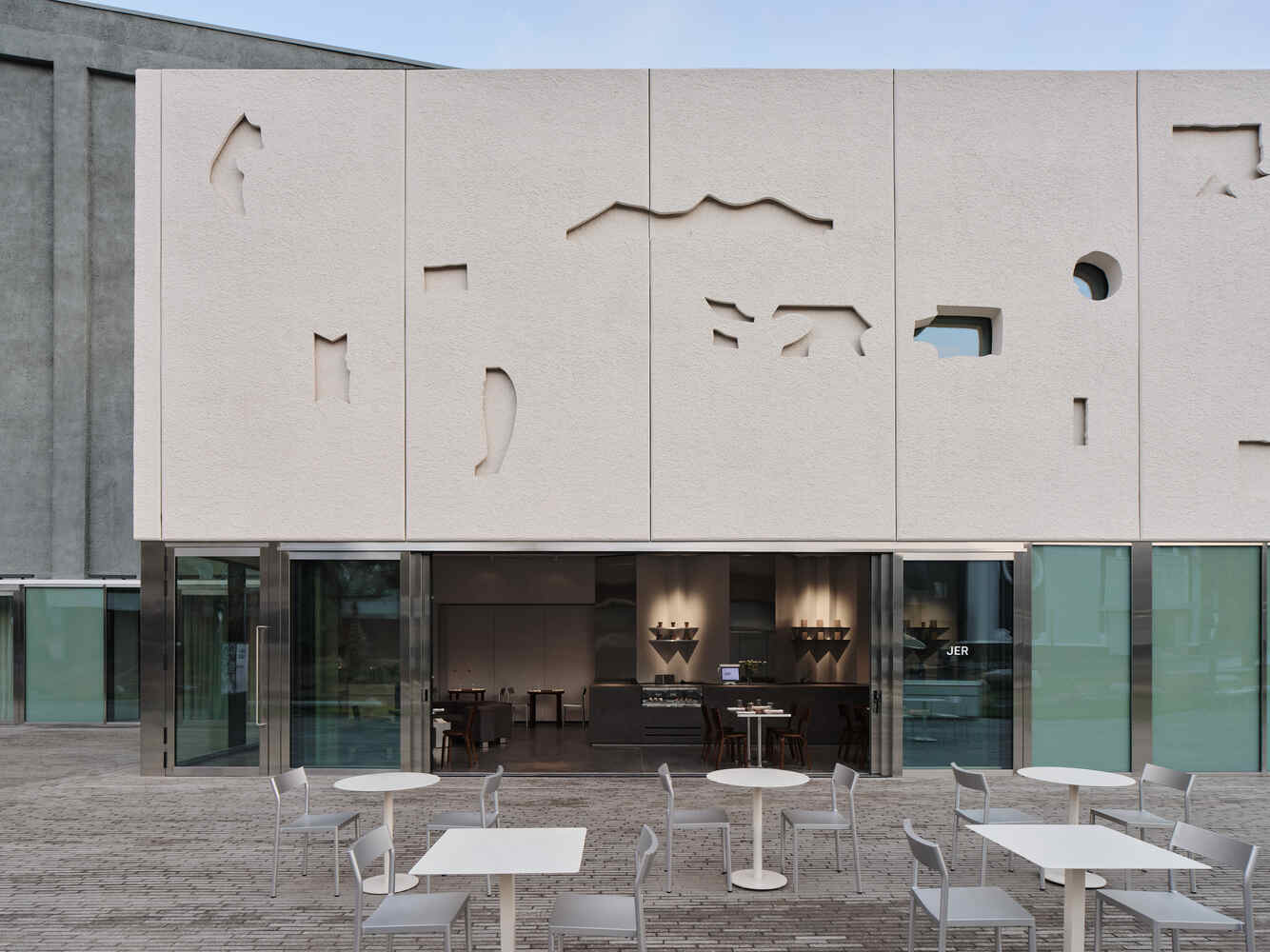
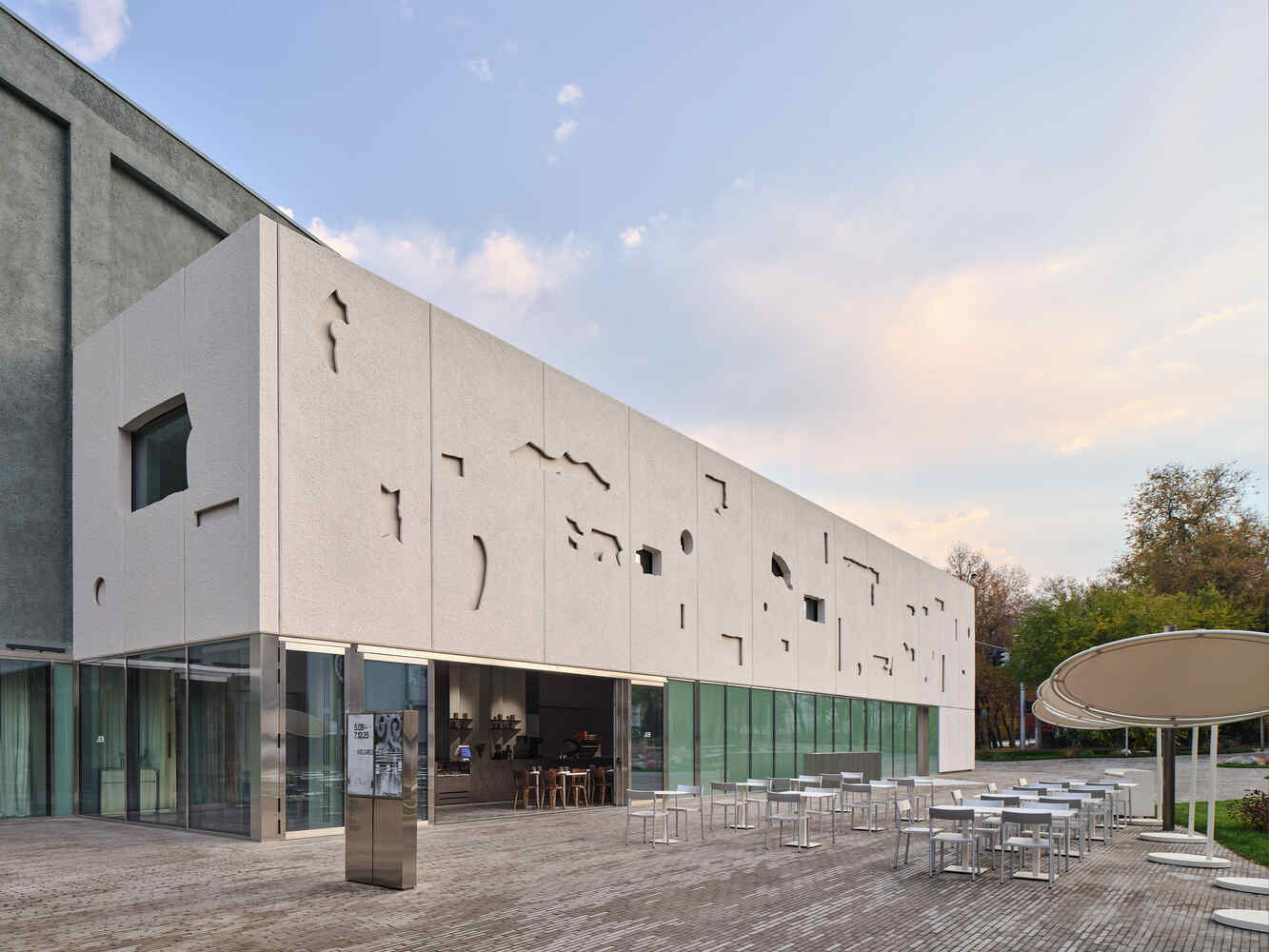
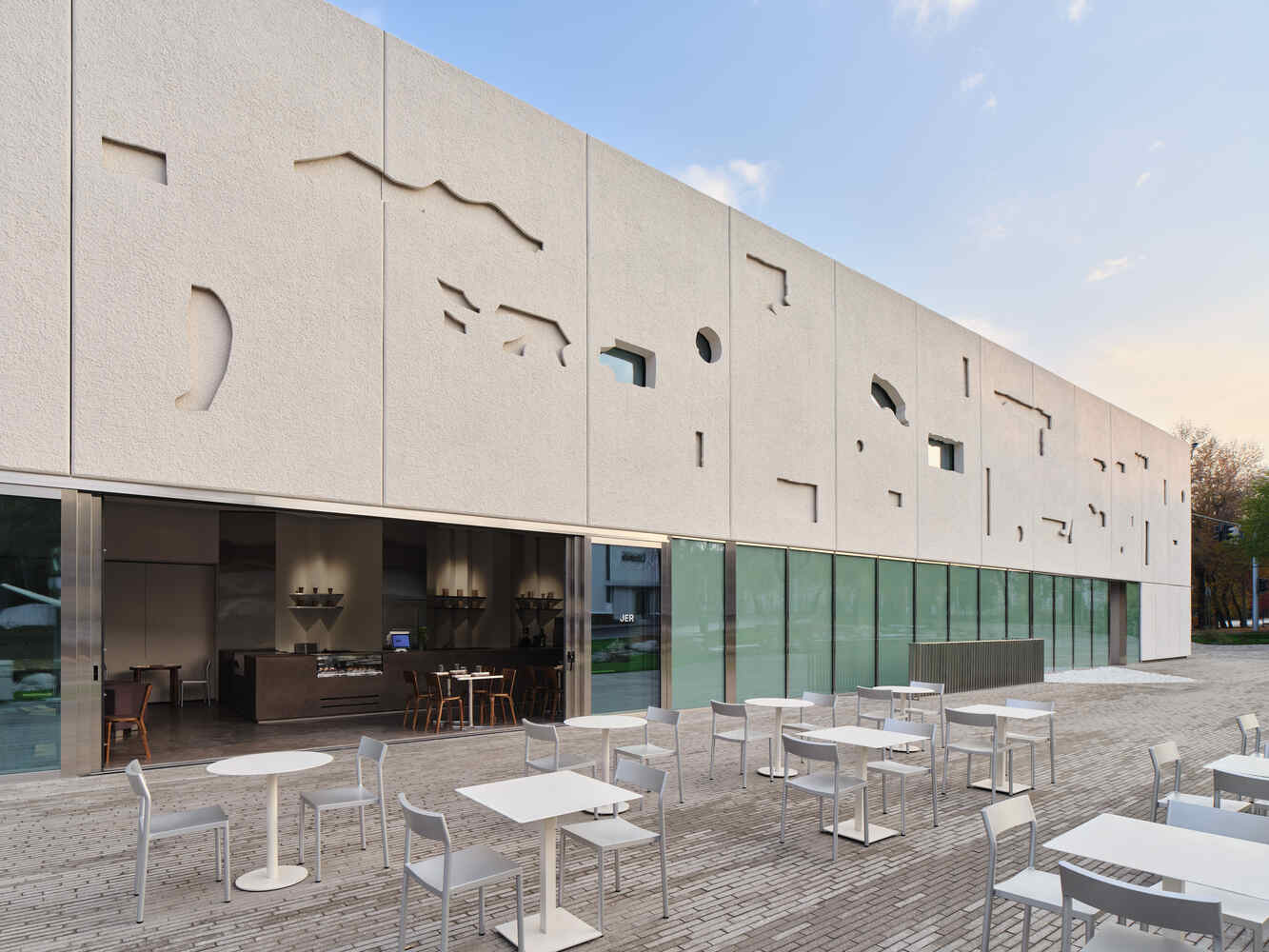
As part of the transformation of Almaty's former Soviet-era Tselinny cinema into the Tselinny Center of Contemporary Art, led by Asif Khan Studio, NAAW was commissioned to develop the interior concept and design for the JER café located within the building.
In designing the JER café interior for the Tselinny Center, several key objectives were addressed. First, the space was conceived as an organic continuation of the architectural renovation project by Asif Khan Studio.
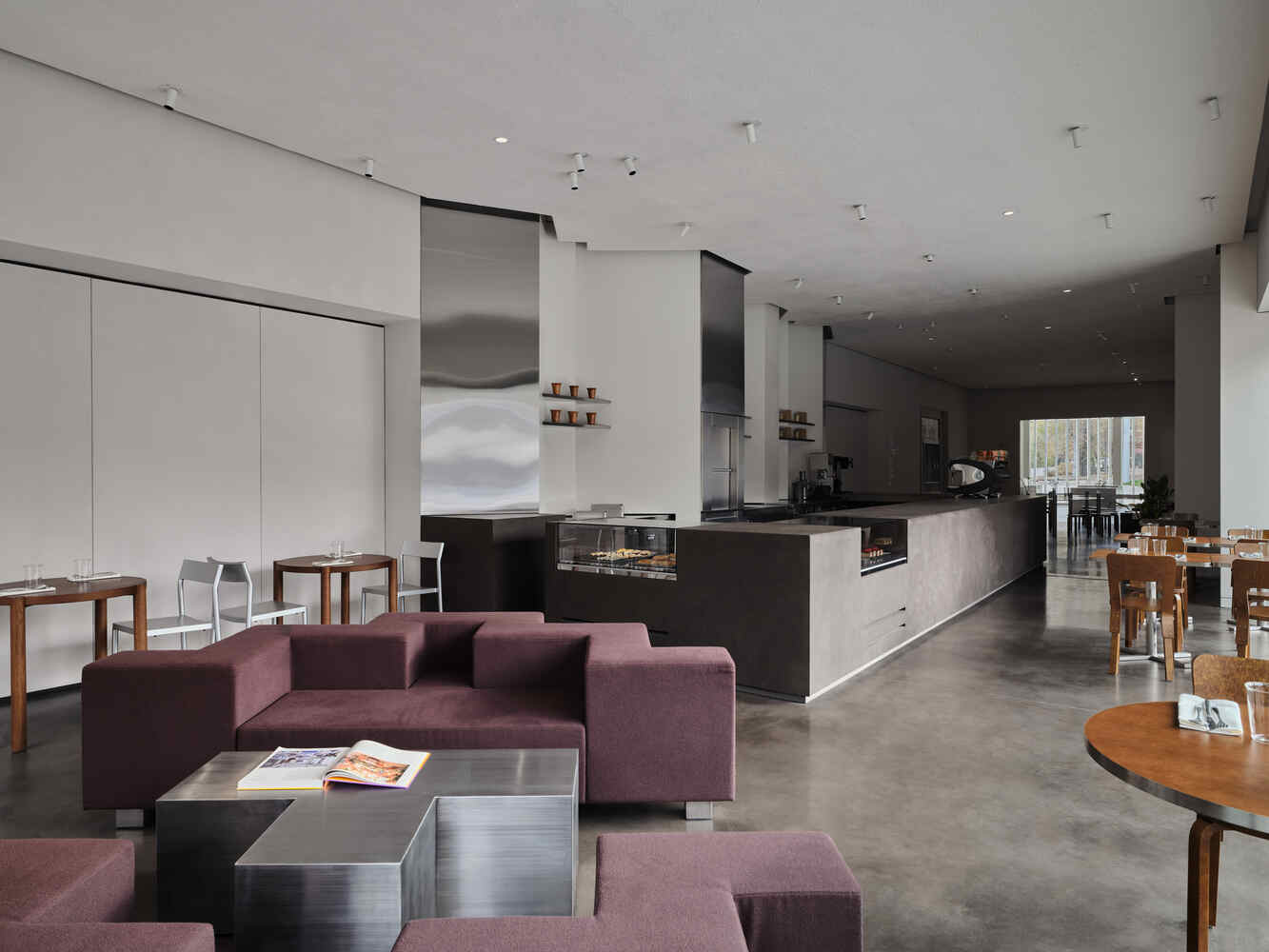
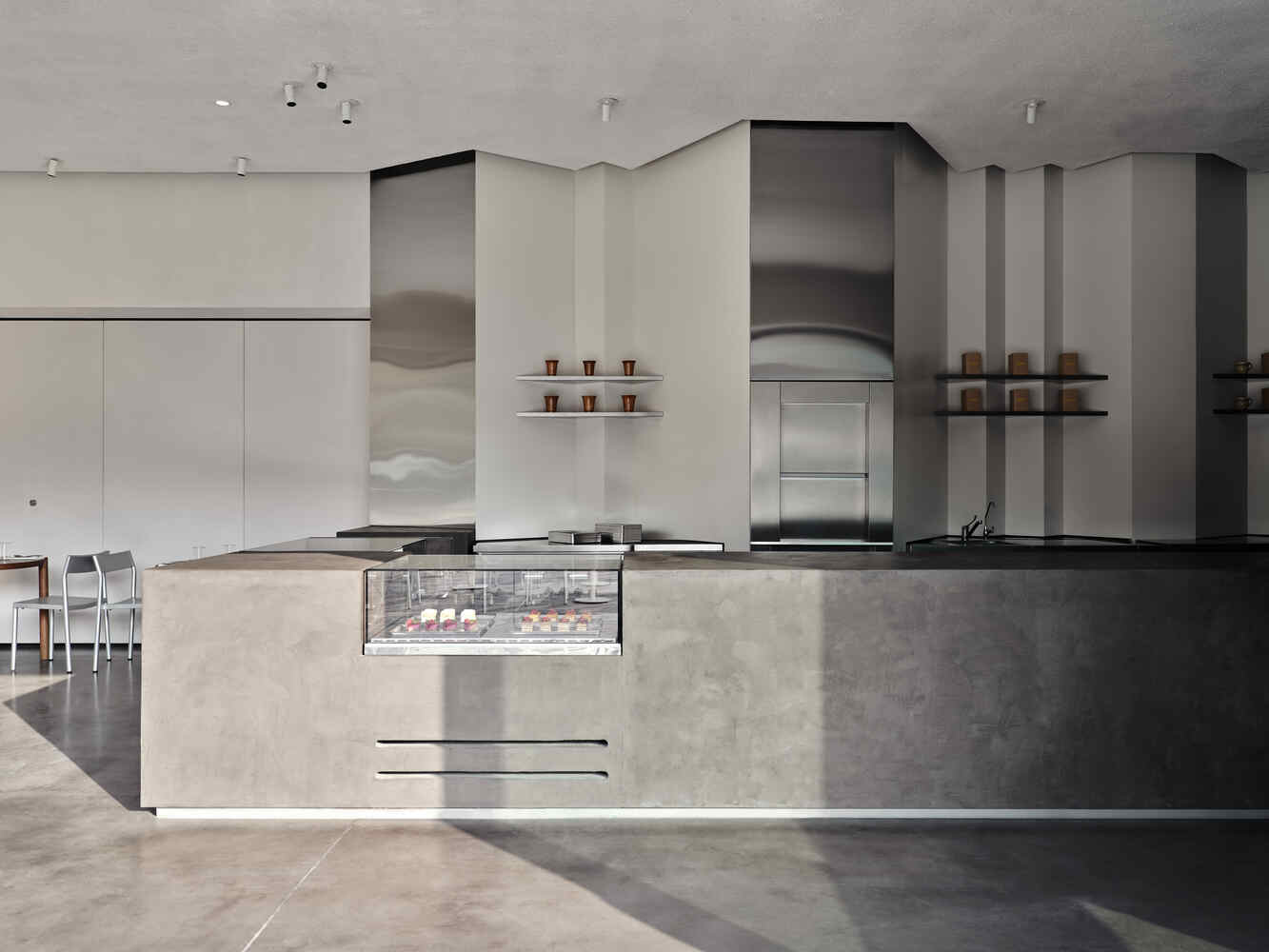
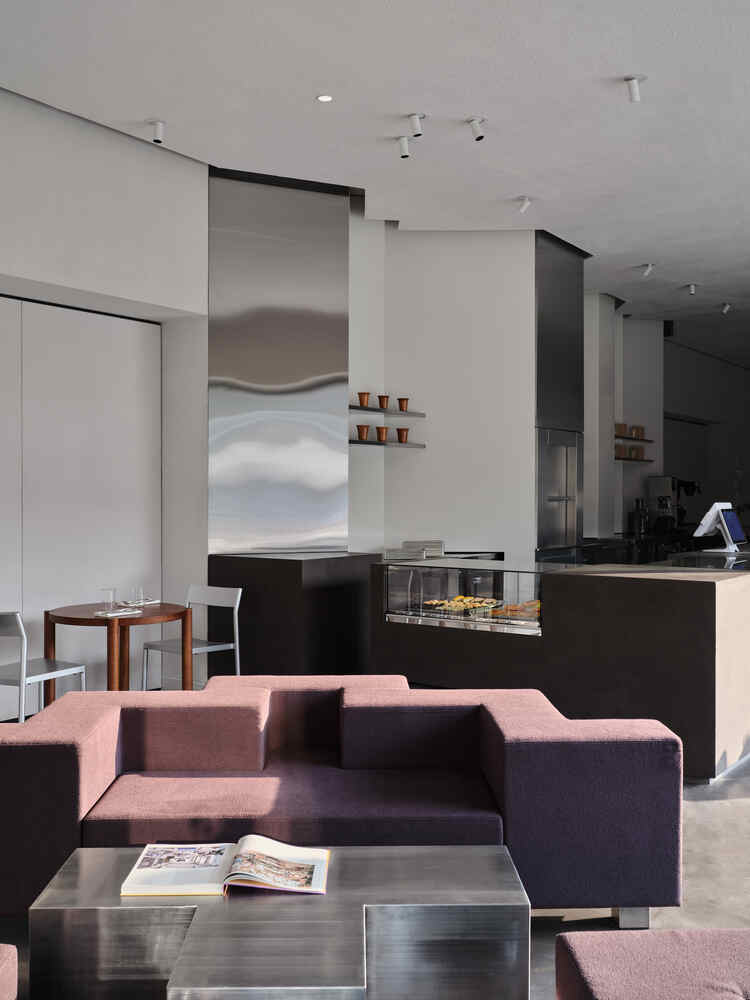
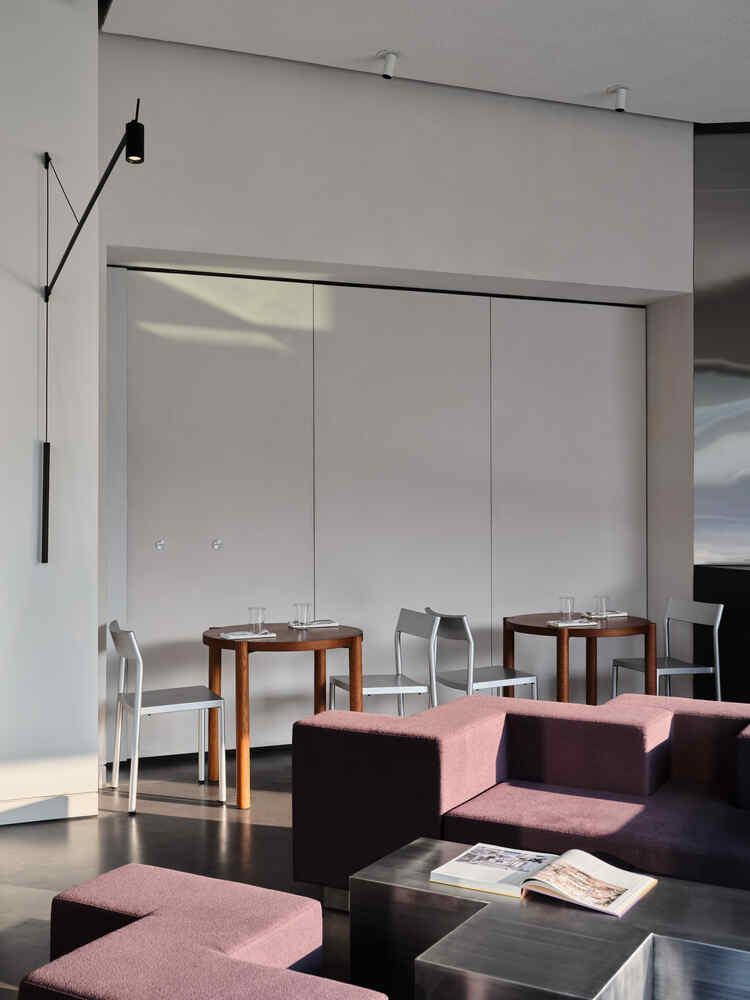
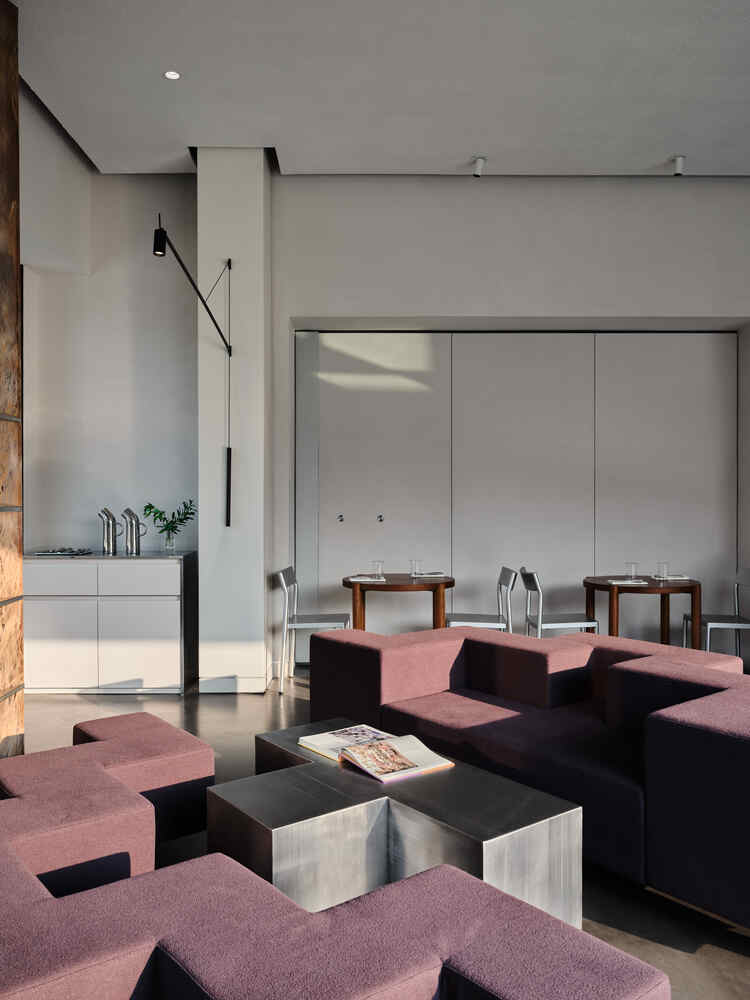
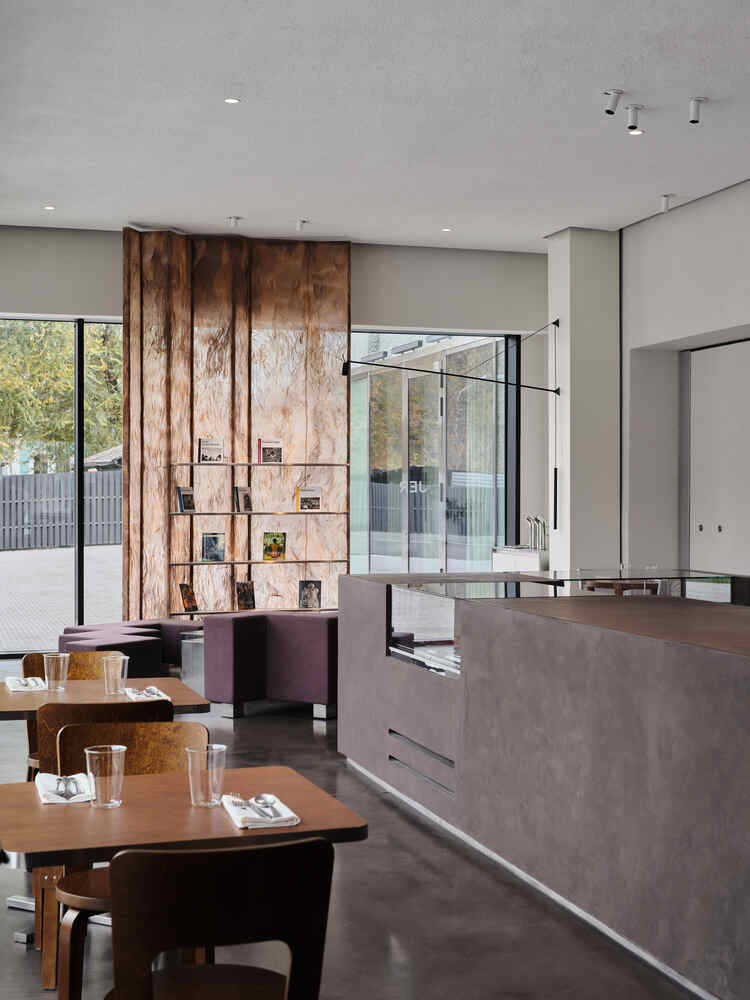
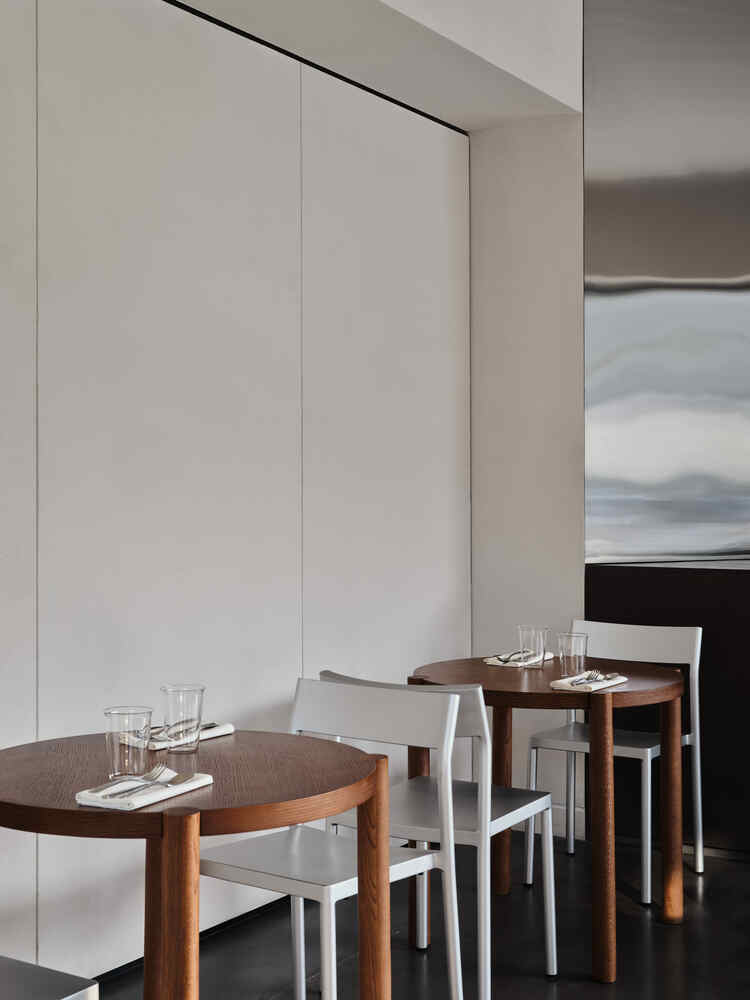
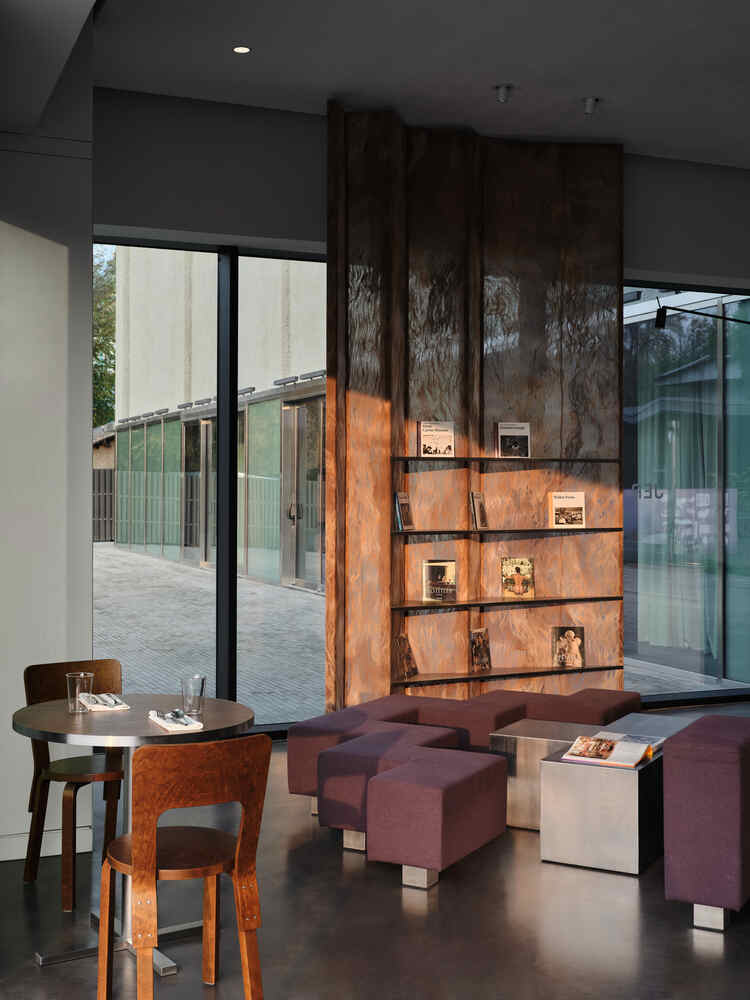
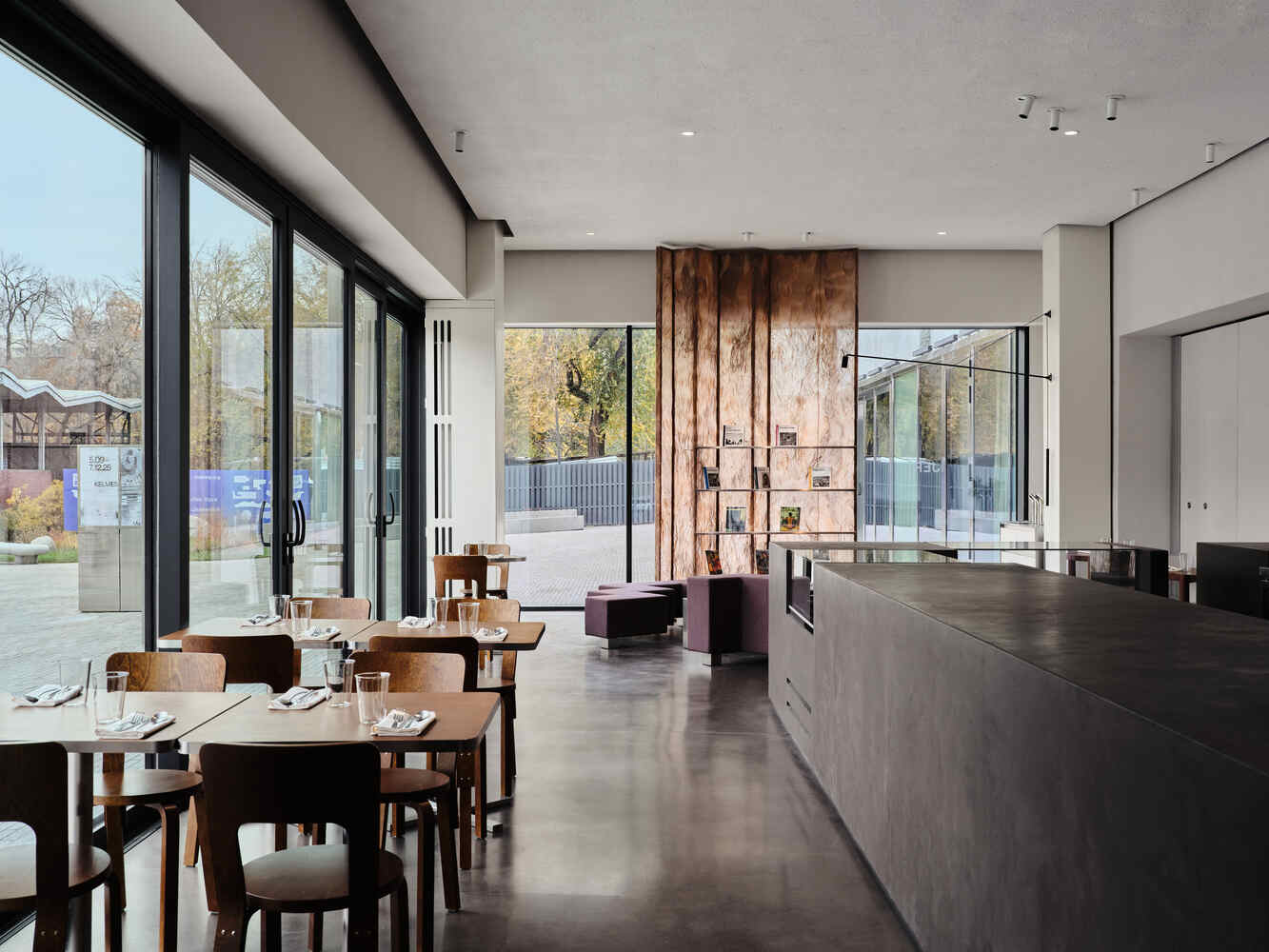
The café is seamlessly integrated into the overall spatial flow: the flooring and wall materials extend those used in the auditorium, while the color palette echoes the earth tones and natural shades found throughout the building.
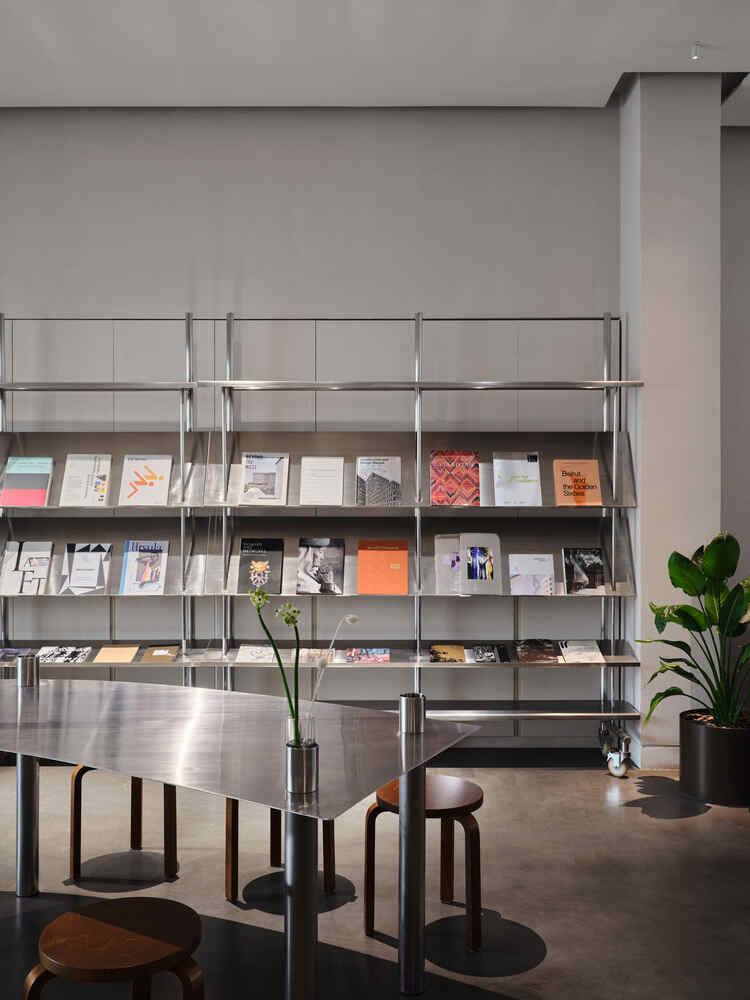
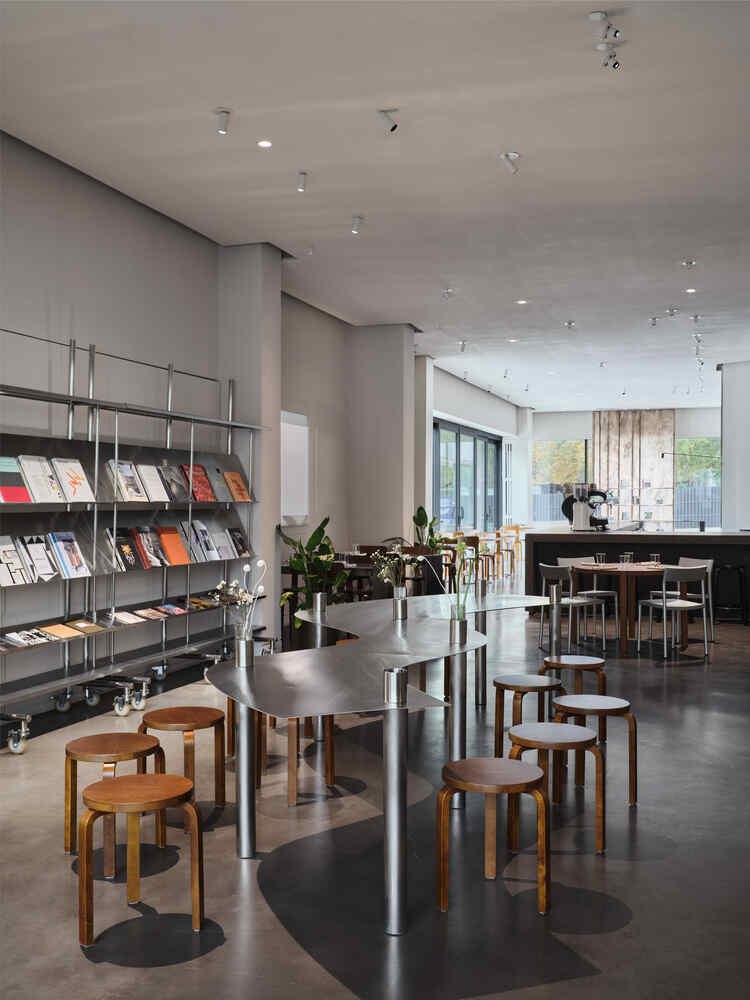
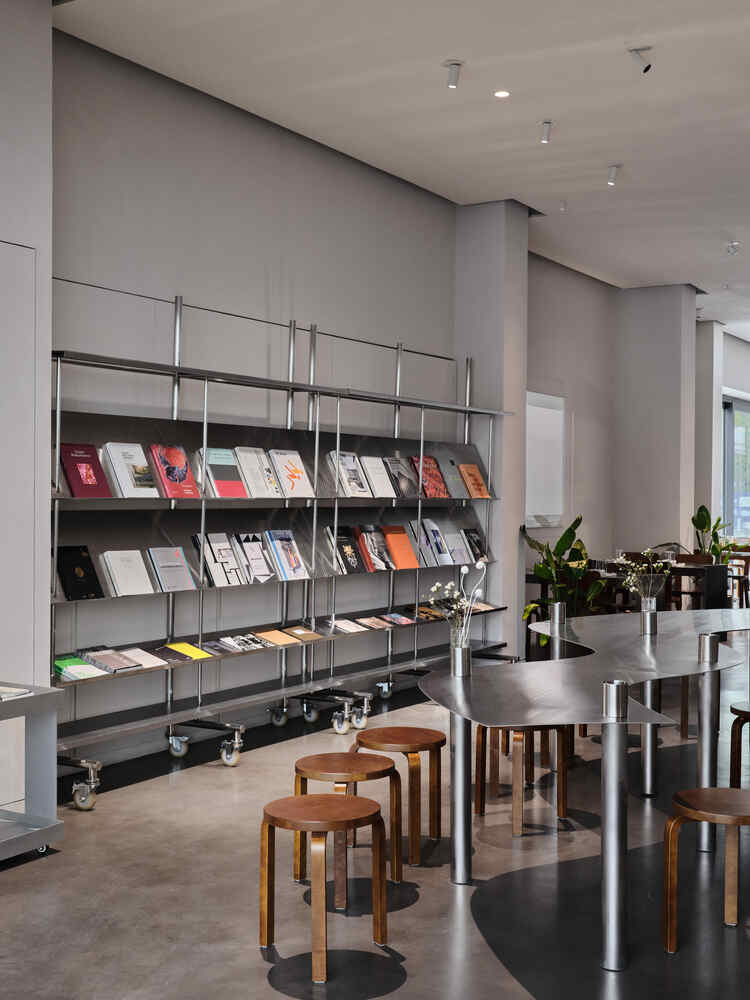
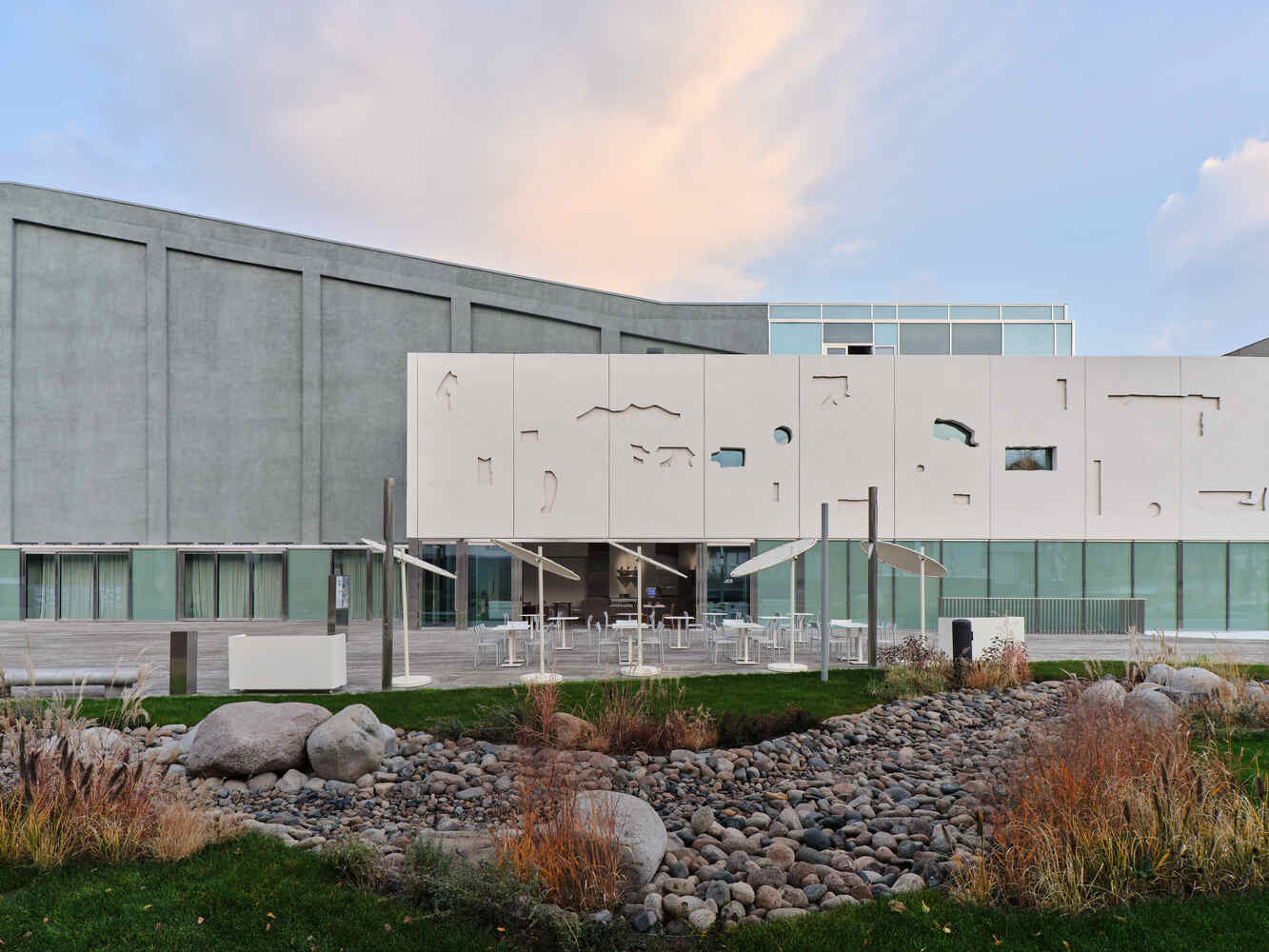
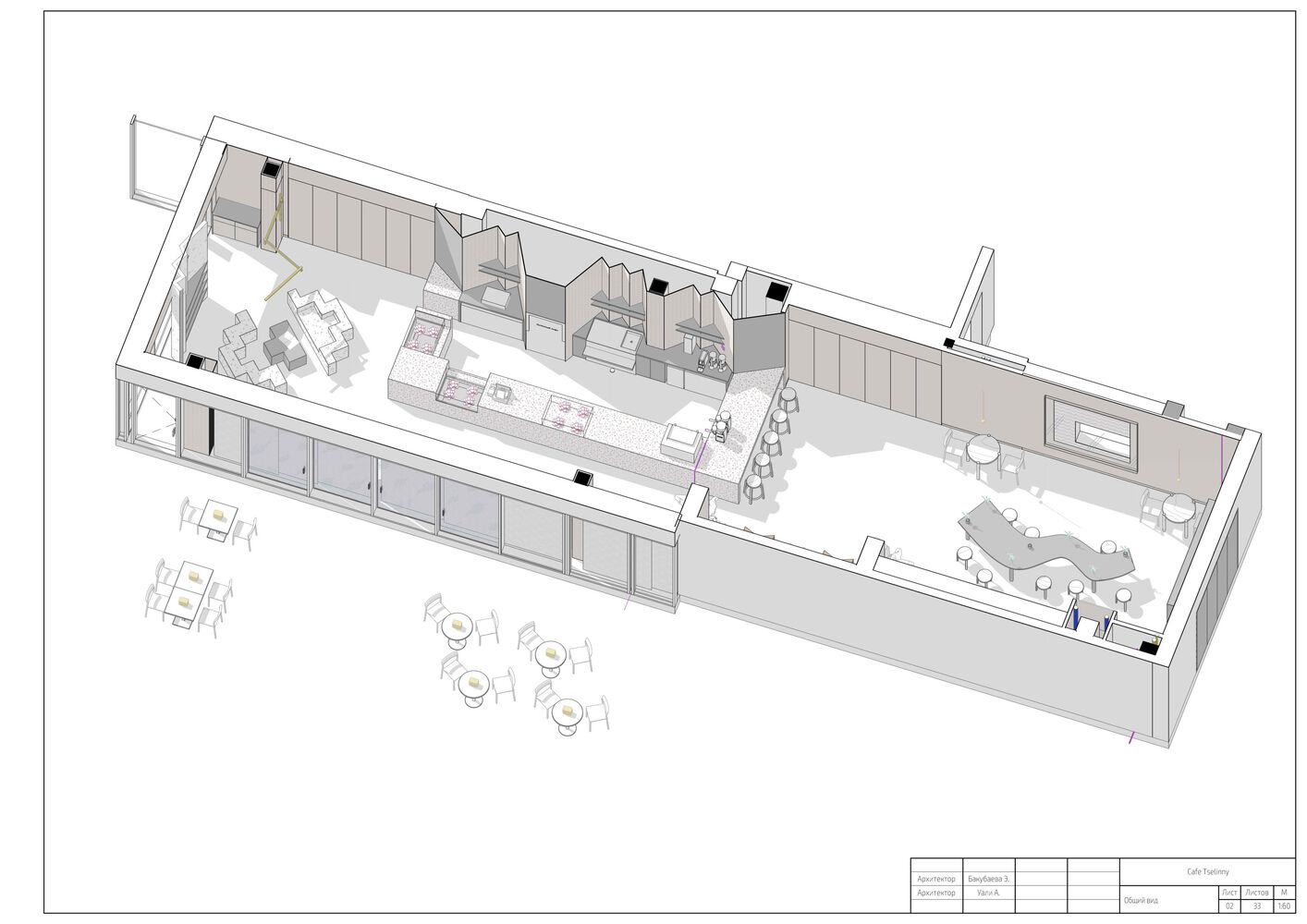
The river-like shape of the communal table echoes the idea of landscape and natural fluidity, resonating with the forms of the outdoor landscaping.
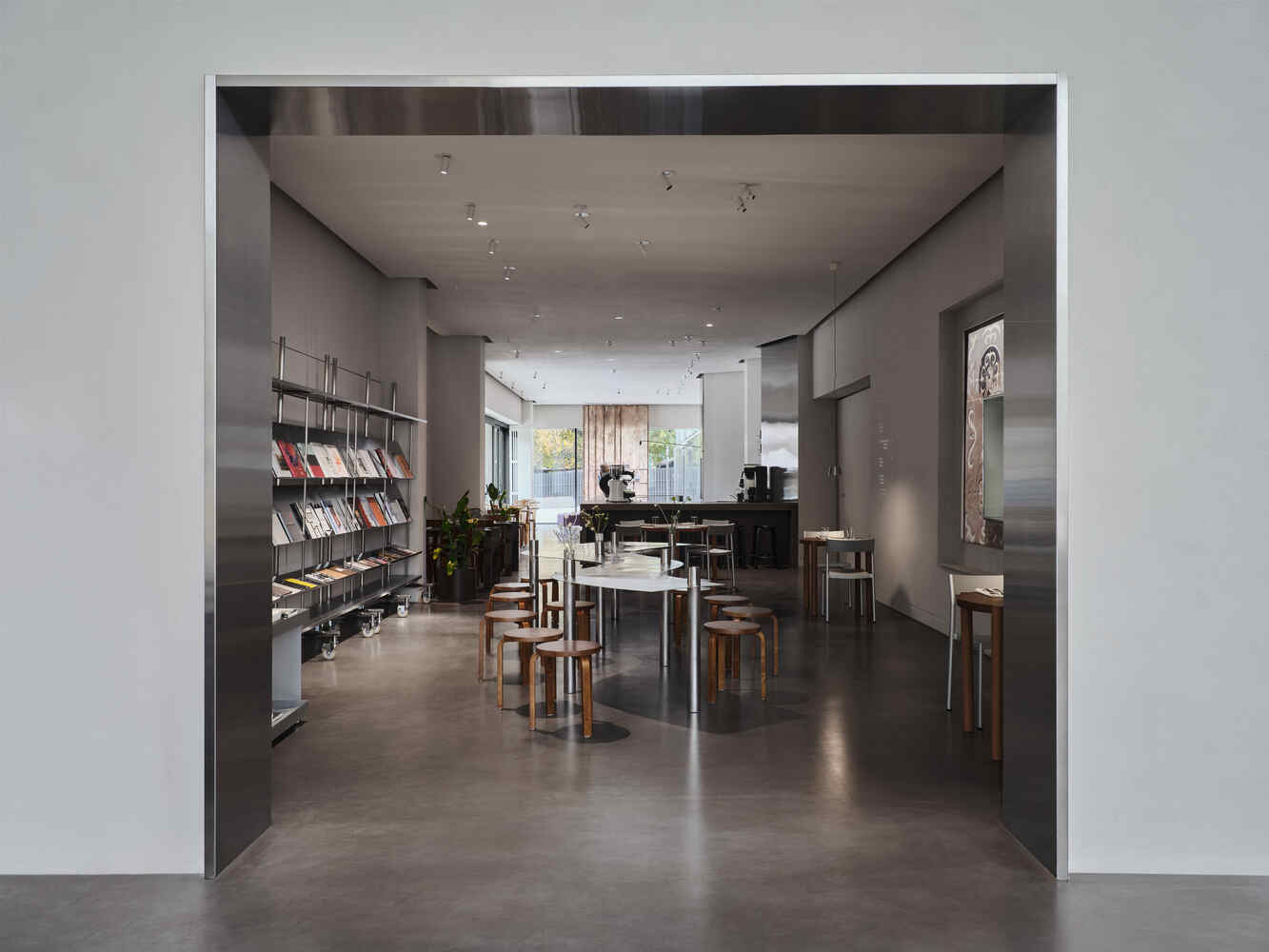
Burnished stainless steel tables, treated with fire, bring in the elemental presence of heat — a subtle nod to nature's raw forces within an otherwise calm interior.
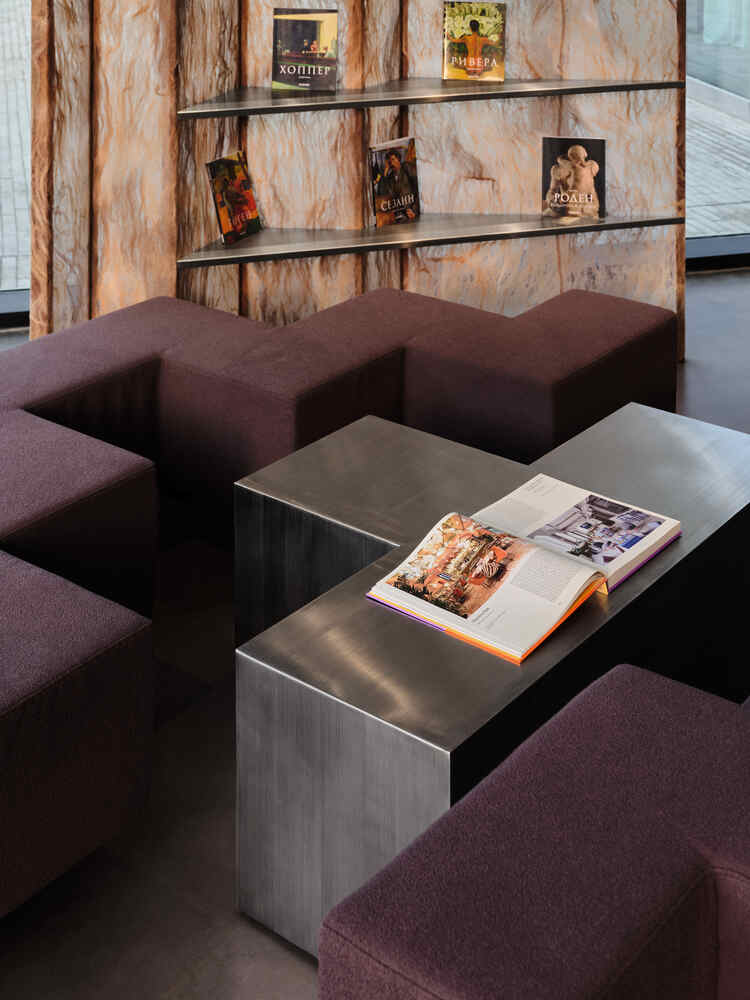
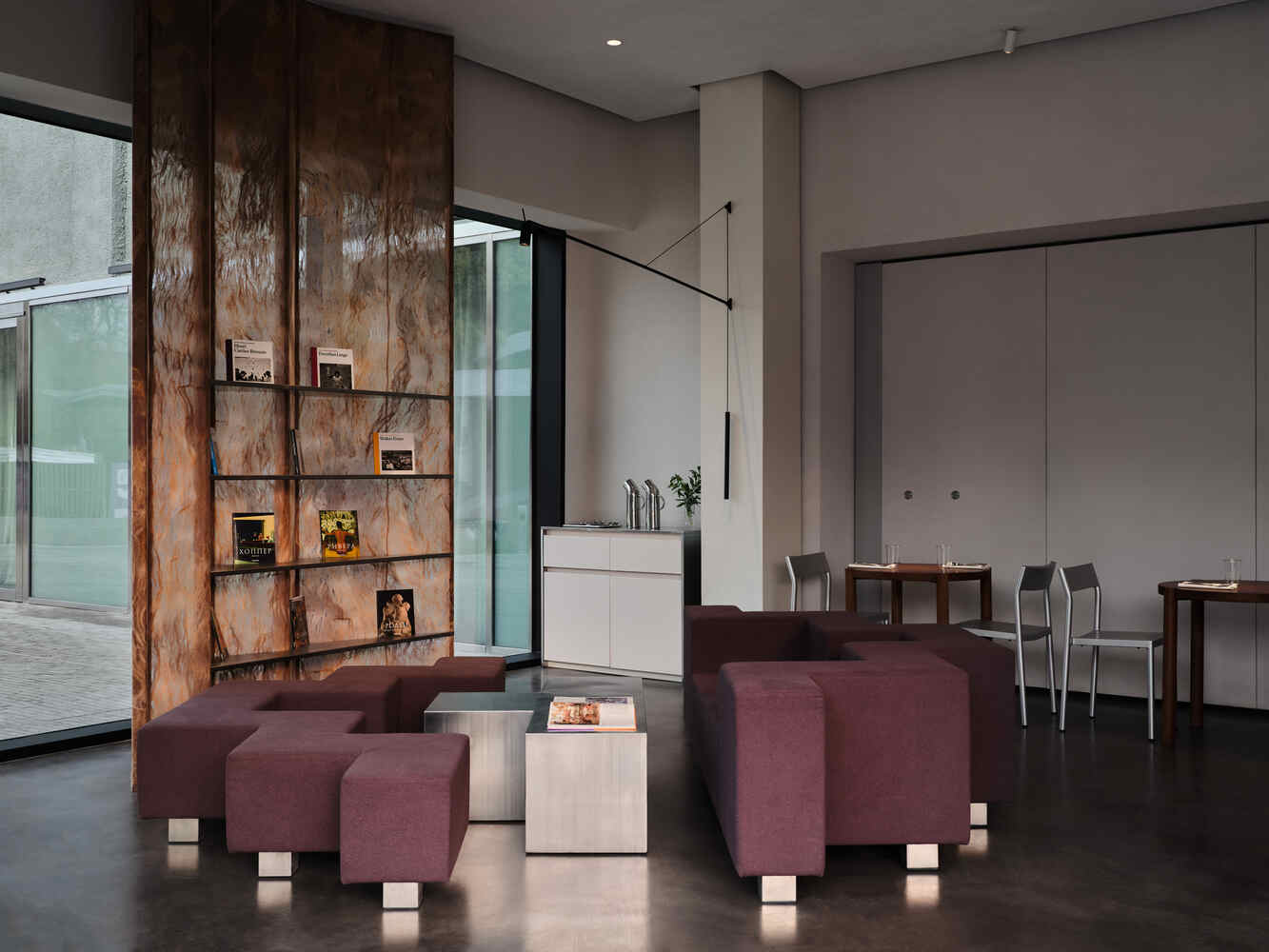
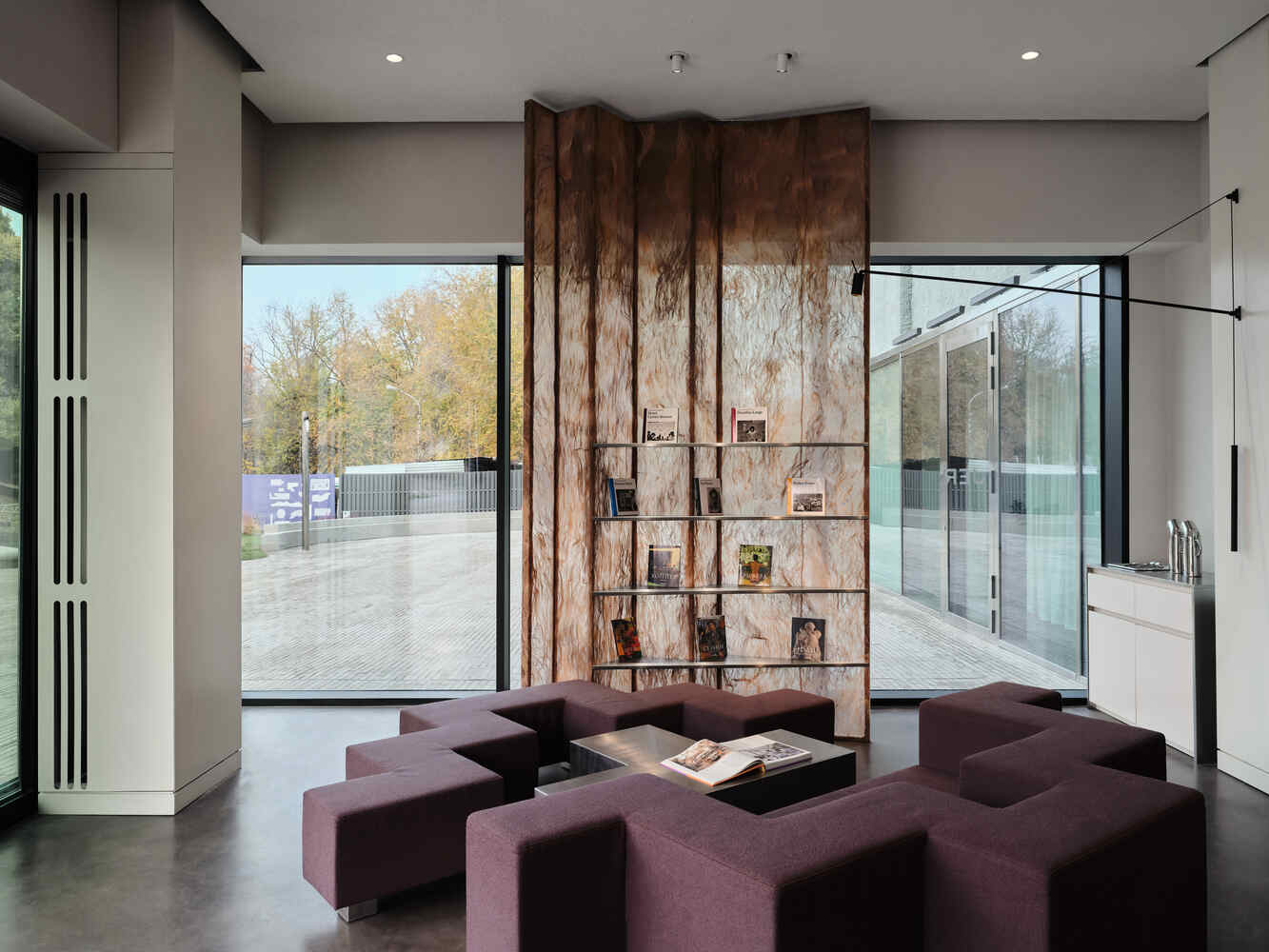
The design subtly reflects contemporary Kazakh design language through the use of locally rooted elements: a sculptural felt partition, and a custom sofa by Kazakh brand Aq Objects, shaped in the form of the Aishyk (crescent moon) ornament.
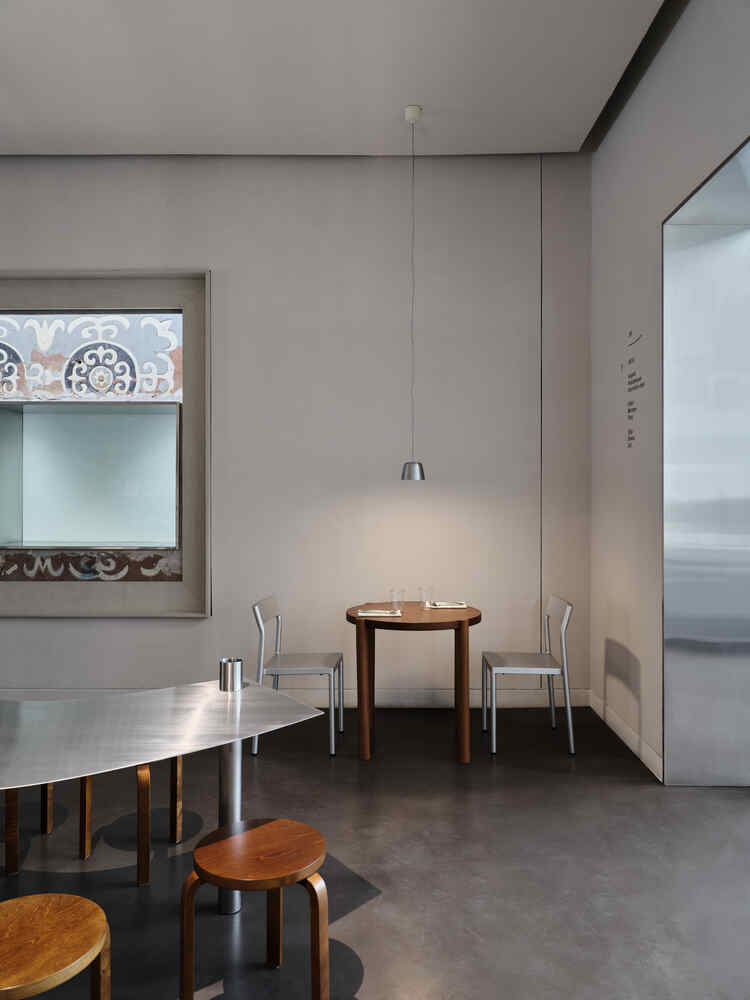
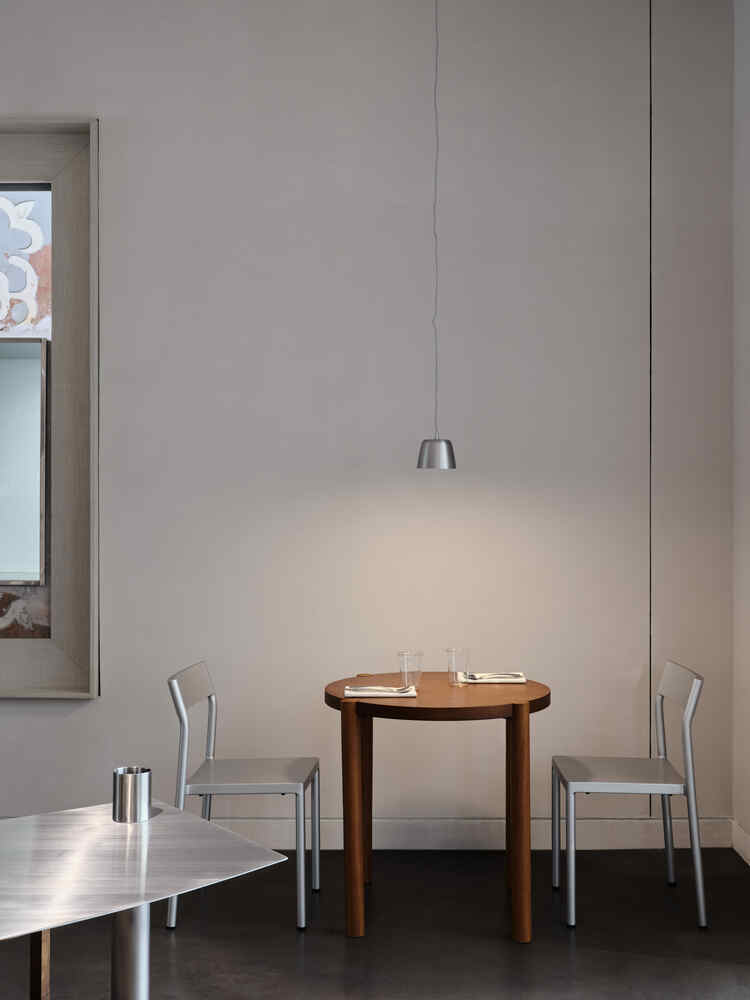
The project also pays tribute to the history of the building. A partially ruined Sidorkin bas-relief was preserved in its raw state and is accompanied by a drawing on the wall that outlines the original structure of the architectural fragment.
To honor design heritage more broadly, we incorporated iconic Alvar Aalto stools as a reference to timeless modernism.
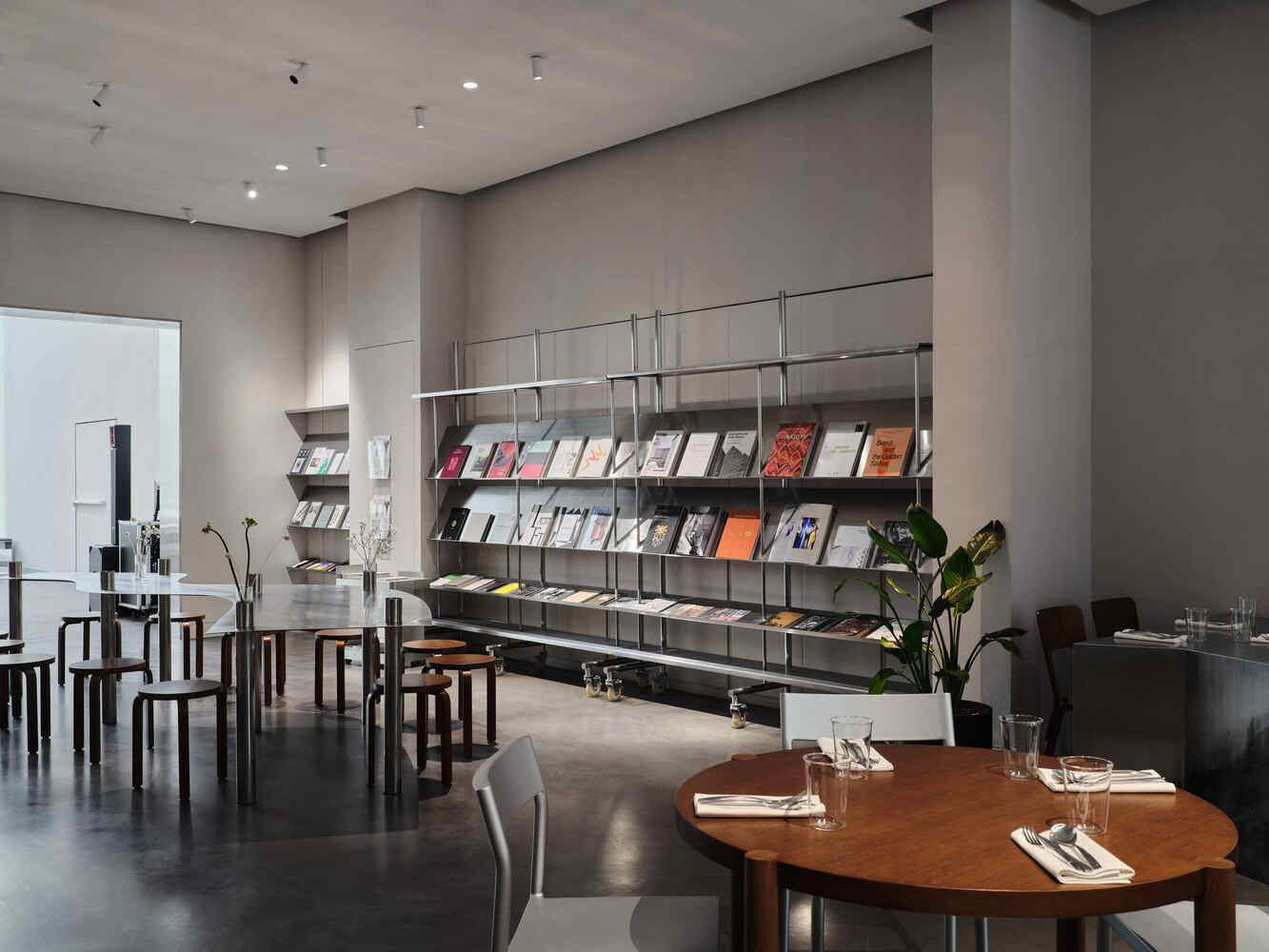
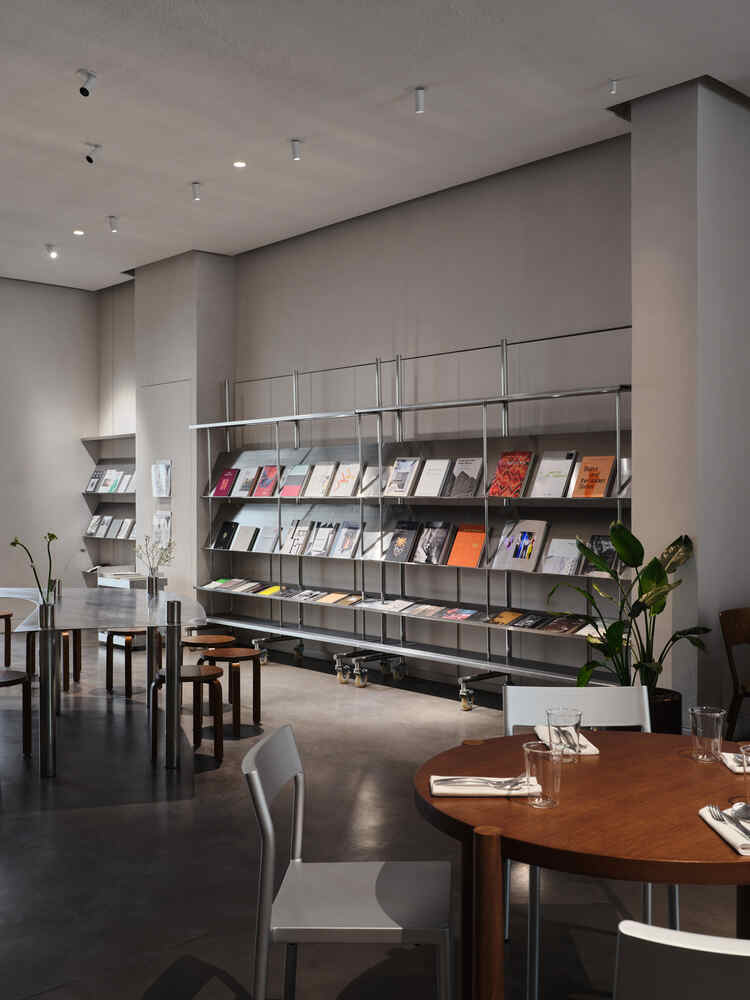
The space also includes an integrated extension of the neighboring bookshop, reinforcing the cultural and public character of the café.