Tai-Silk Courtyard
TAI-SILK COURTYARD
Co-mileu, Deep Origin Lab
ARCHITECTS
Co-mileu, Deep Origin Lab
OPENING CEREMONY PLANNER
Zhang Yilin, Xu Luni
CONSTRUCTION
Shanghai Supai Decoration Engineering Co., Ltd.
HISTORICAL ARCHITECTURE CONSULTANT
Cai Xuanhao, Li Kaira
CLIENT
Zhejiang Tai Silk Garments Co., Ltd.
DESIGN TEAM
Comilieu: Dai Qiaoqi, Tang Yini; Deep Origin Lab: Liu Qinrong, Yao Lu, Xu Chaocai
LIGHTING CONSULTANT
Cheng Rong
PHOTOGRAPHS
Hao Chen
AREA
1054 m²
YEAR
2024
LOCATION
Taizhou, China
CATEGORY
Renovation, Retail Interiors
English description provided by the architects.
ARCHITECTURAL HERITAGE
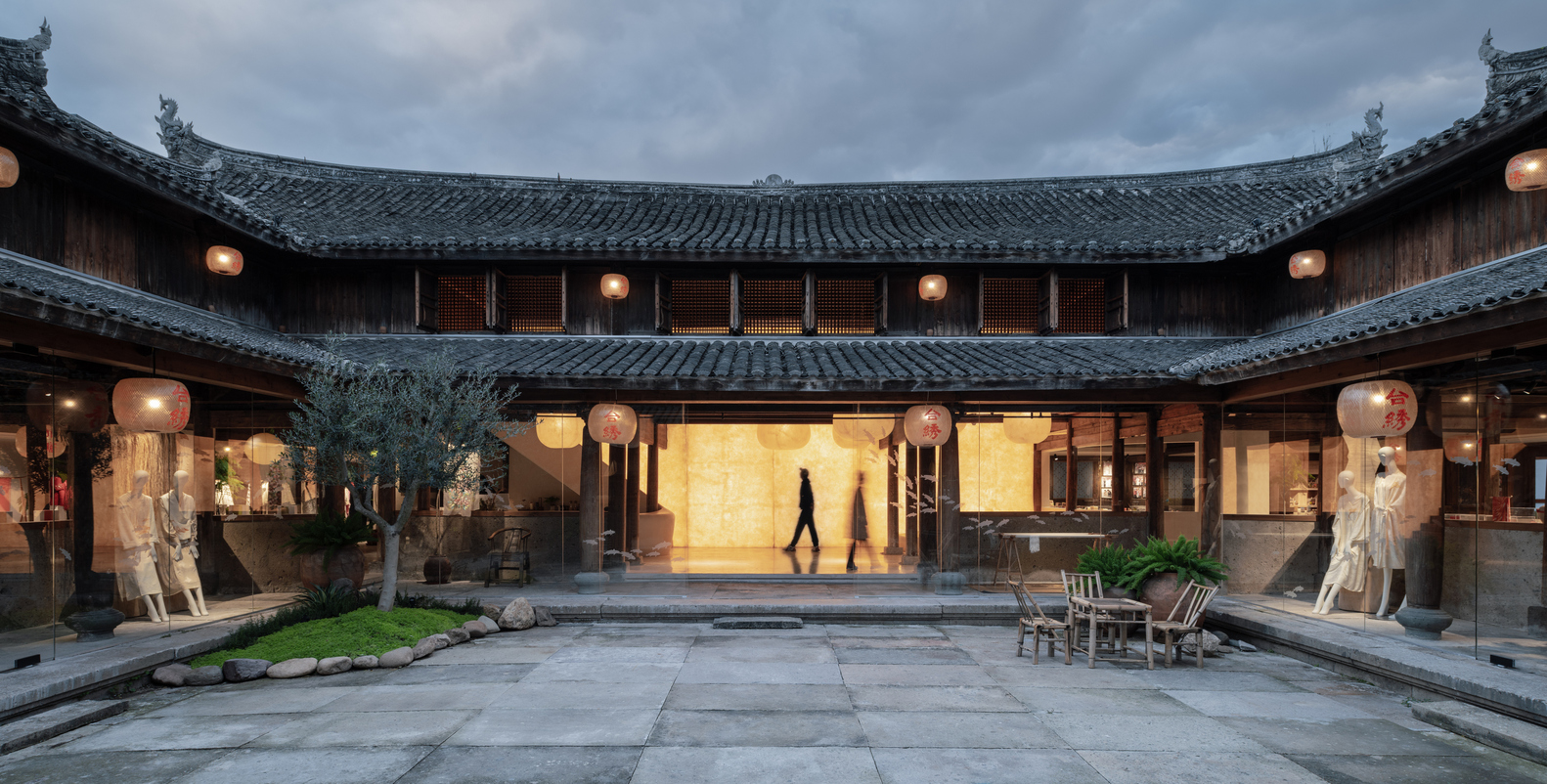
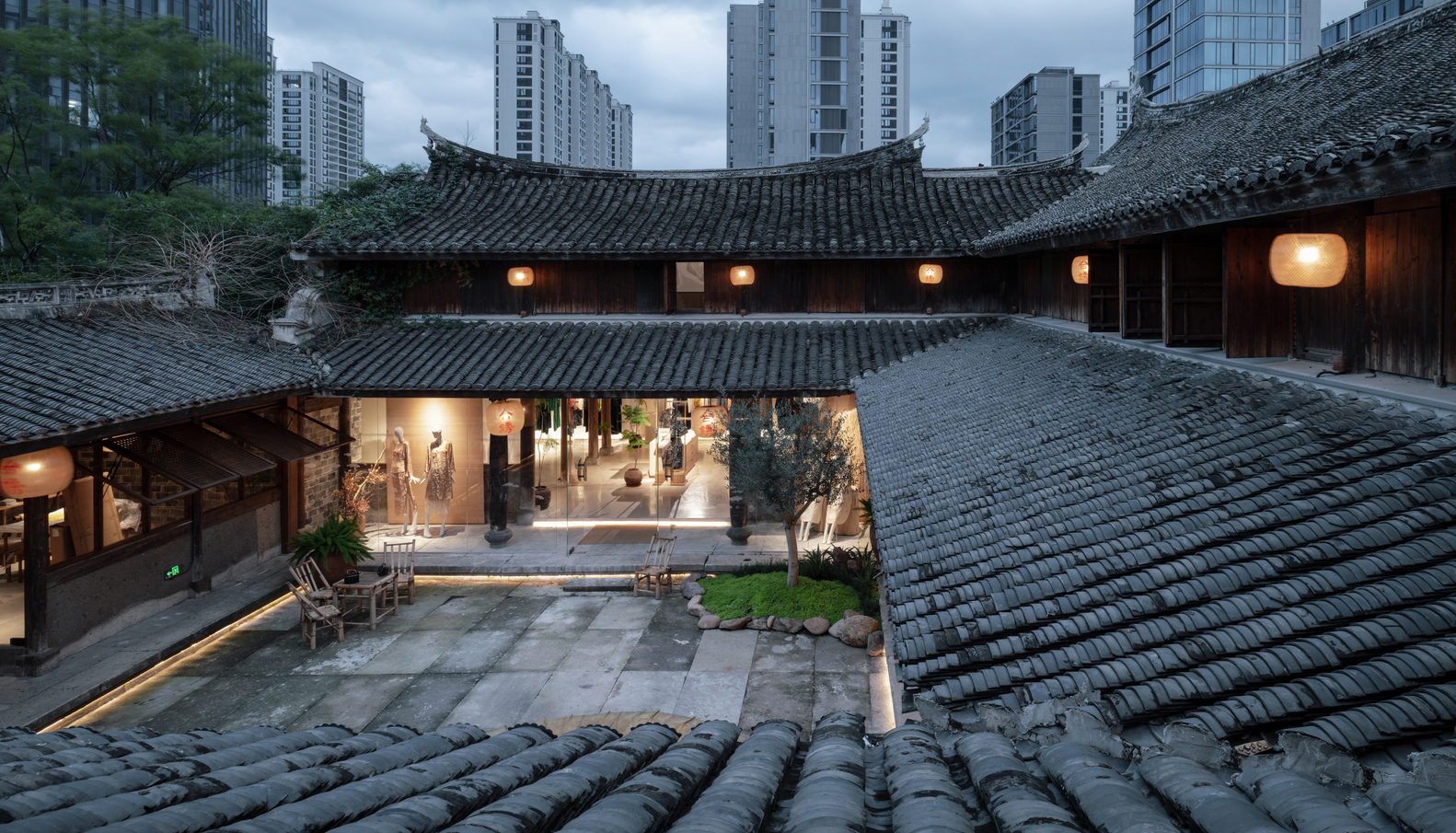
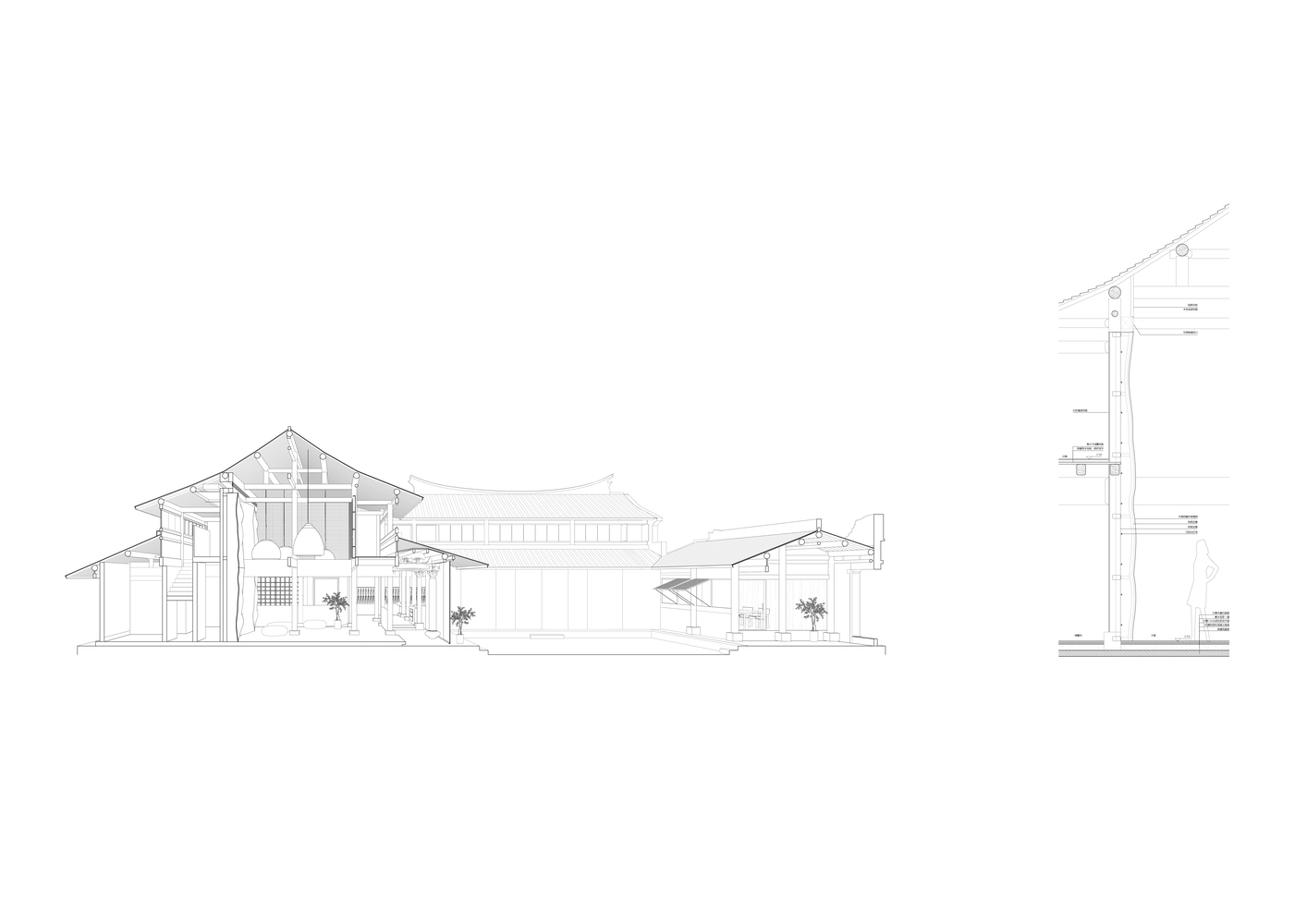
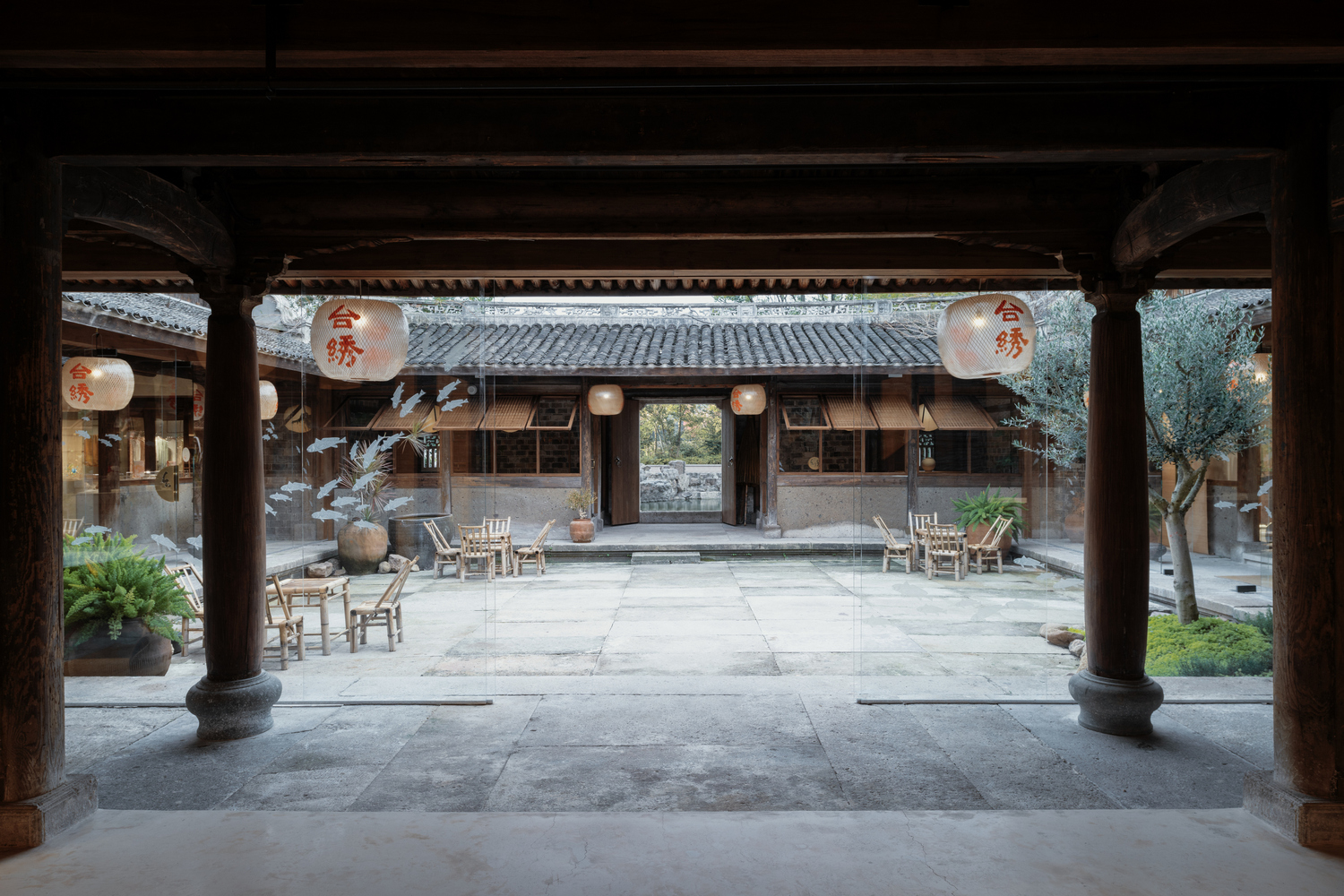
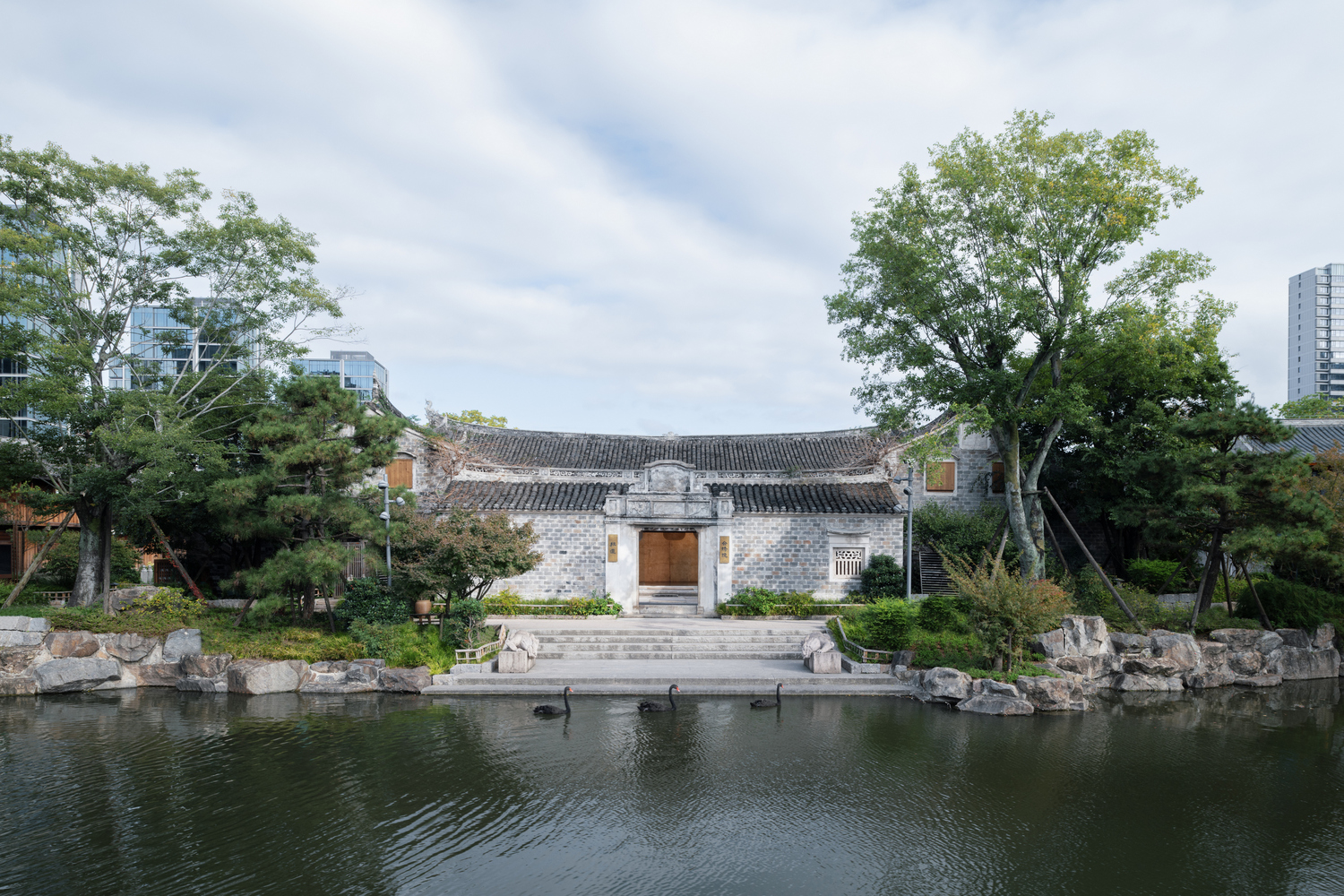
TaiSilk Courtyard is located in Jiazhi Street District, the Zhou Residence is a historic Jiangnan-style courtyard complex featuring a traditional three-bay main hall flanked by two wing rooms and a single-story gatehouse, collectively enclosing a central quadrangle stone courtyard.

The spatial organization follows the "Main Hall-Wing Rooms" typology, with a combination of hip-and-gable and flush gable roofs, all encircled by overhanging eaves.
As a representative vernacular dwelling of the Taizhou subregion in the Wu cultural area, its generous courtyard scale lends itself to conversion into public or commercial spaces.
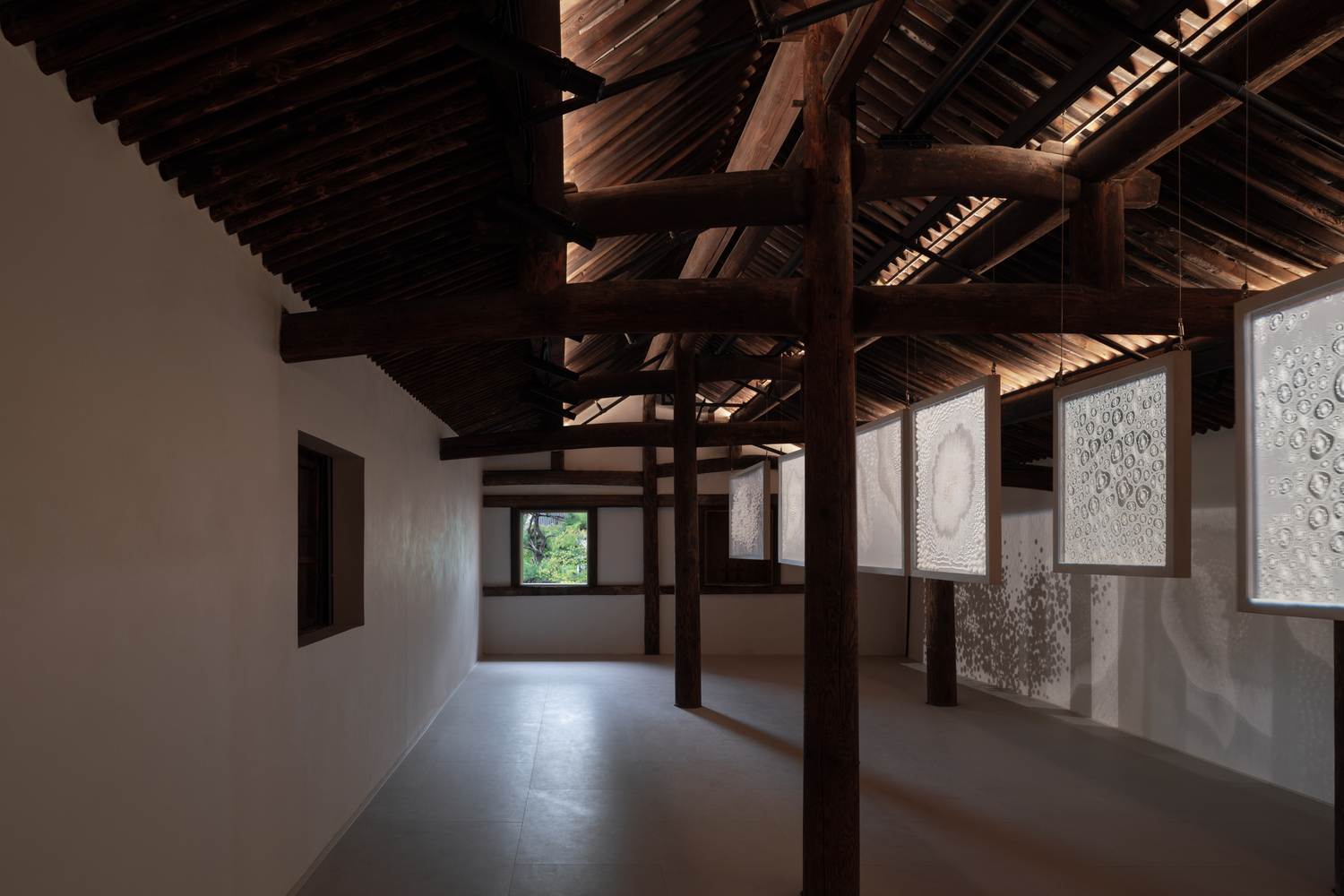
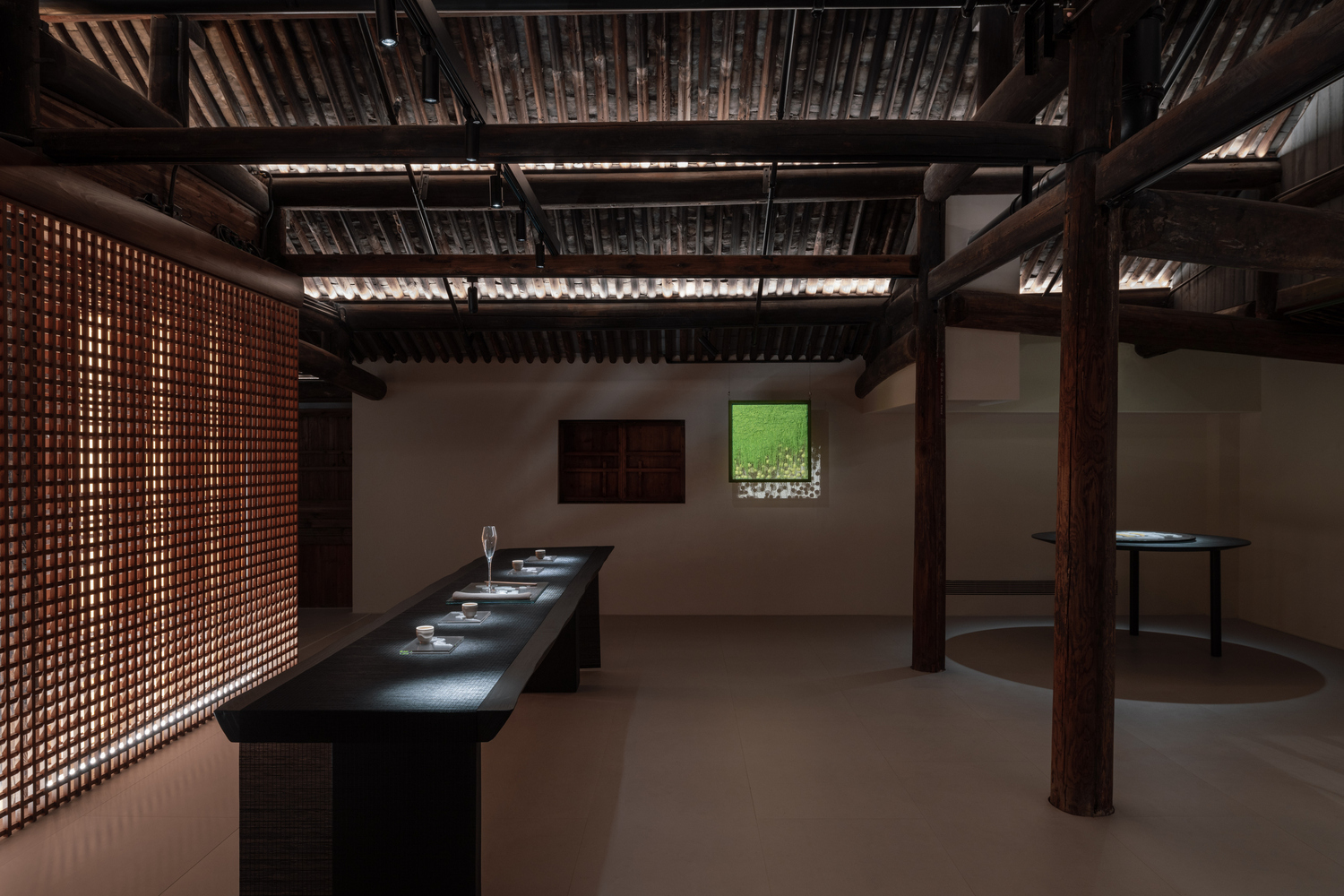
The second floor, originally used for storage or living quarters, features a central ceremonial space above the main hall.
The design team developed an adaptive reuse strategy that respects the original timber structure while accommodating new programming.
ADAPTIVE REUSE STRATEGY
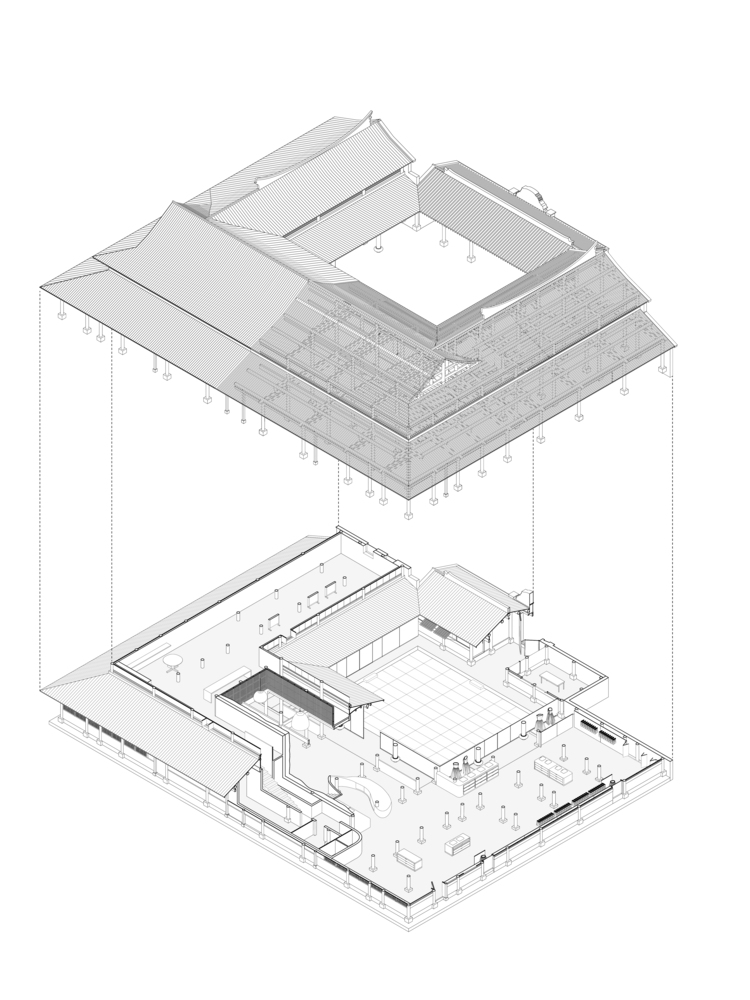
The intervention reorganizes the enclosed residential compound into a public axis connecting waterfront-courtyard-atrium-staircase-gallery, transforming it into a hub for cultural exhibitions and commercial activities.
Centered on Taizhou embroidery fashion displays and cultural events, the project revitalizes the site as Jiazhi Street Distriact's new cultural anchor.
FACADE TREATMENT
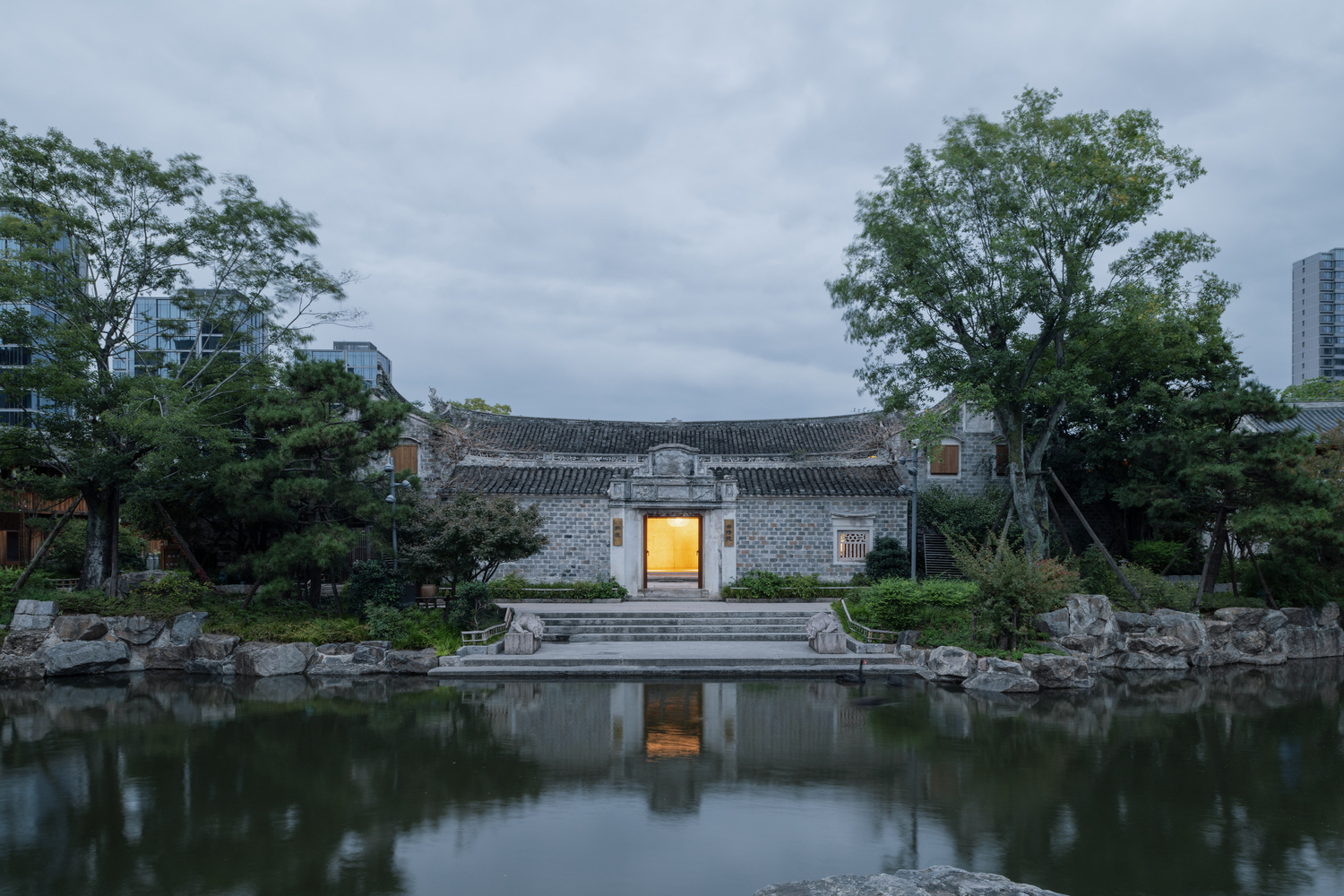
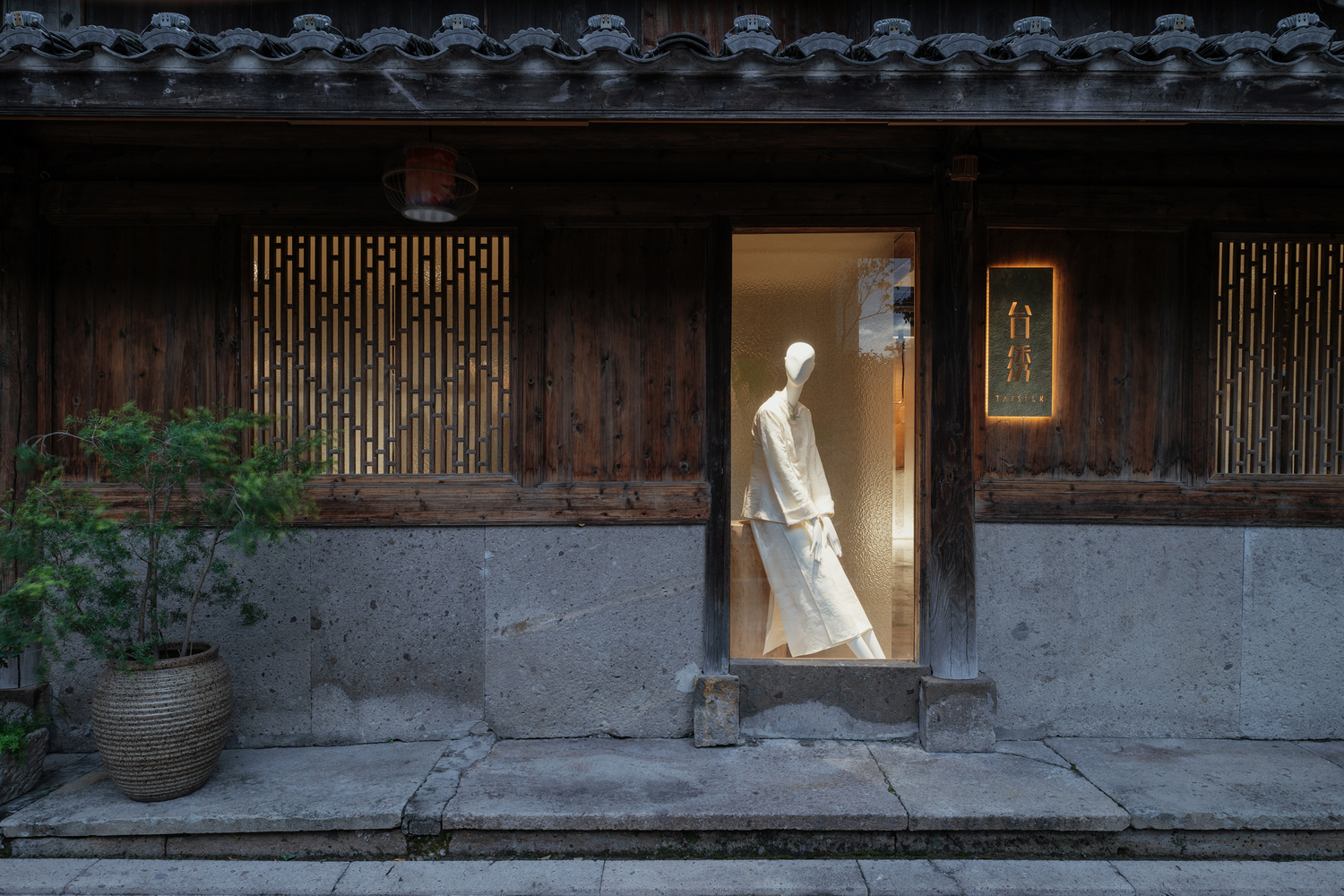
Southern Facade (Waterfront): Retaining its historic prominence as an event space, the south elevation underwent minimal alterations—only refurbishing the wooden gate and adding dual brass signage—to highlight the original brick walls and carved stone gateframe.
The opened gate frames a view of the courtyard's illuminated feature wall, creating visual intrigue. Eastern Facade (Main Street): Select wooden doors were replaced with glass doors to enhance accessibility.
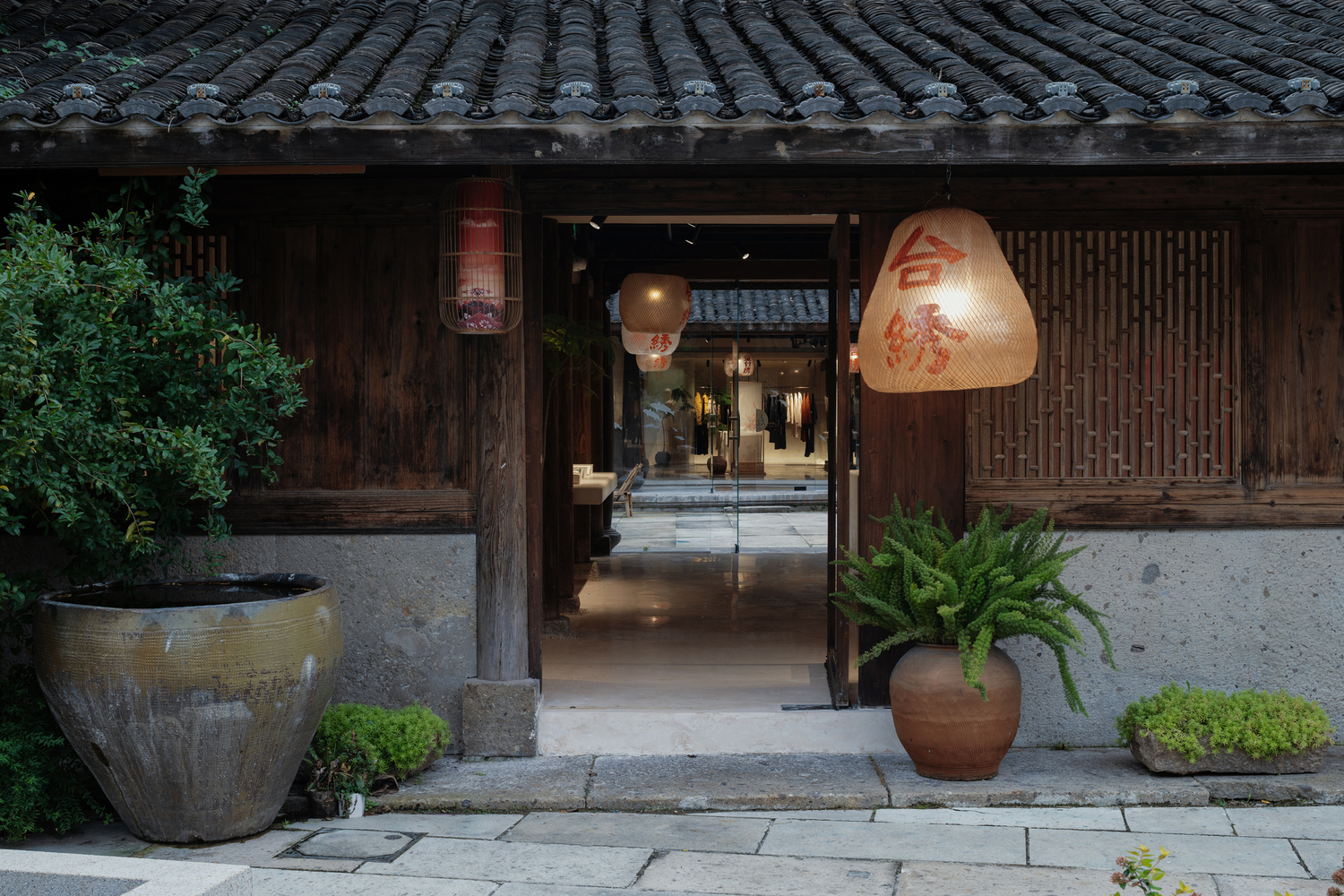
Western Facade: Display windows were inserted to showcase embroidered garments from the commercial space.
SPATIAL RECONFIGURATION
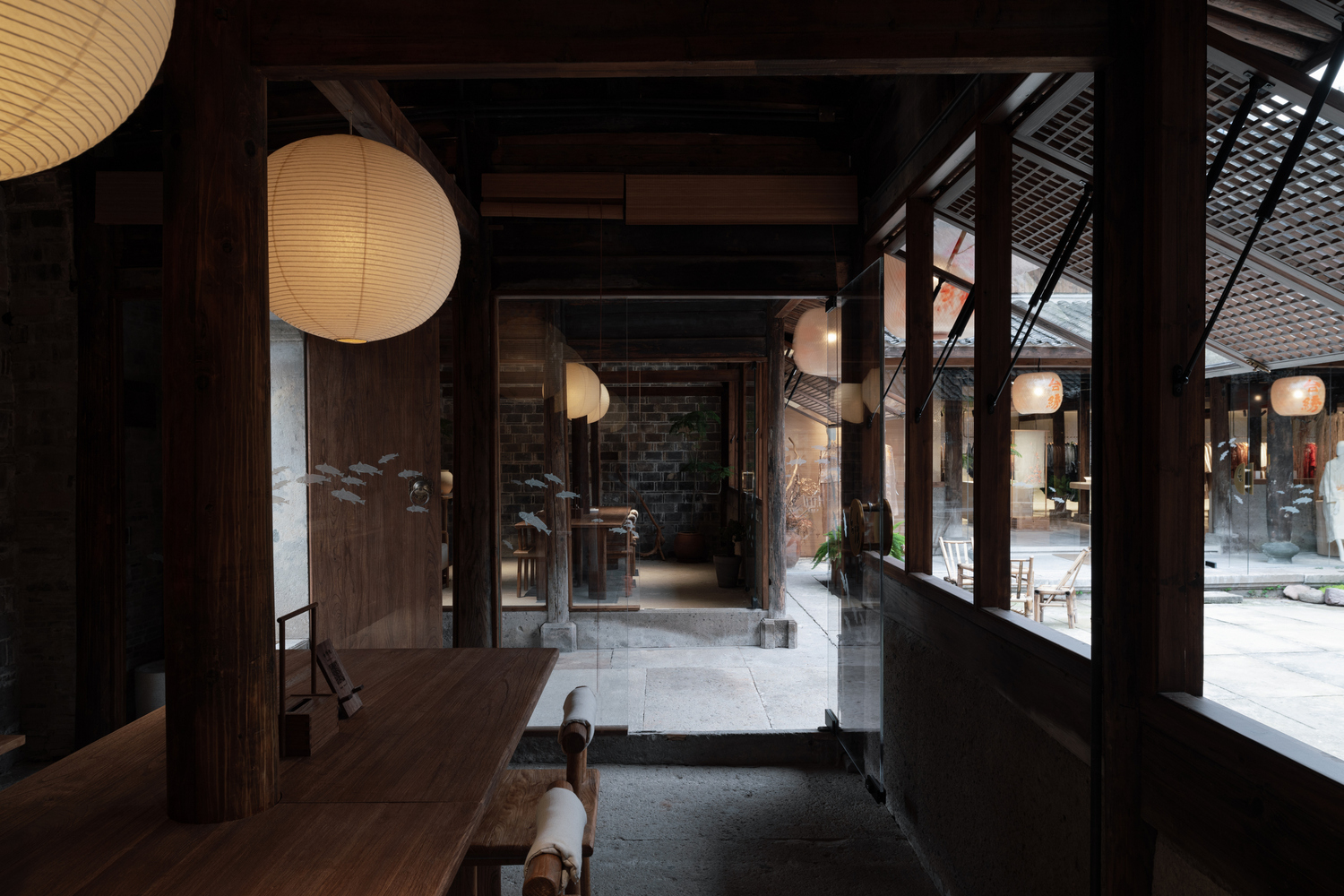
Gatehouse is Converted into an intimate tearoom. Original wooden doors and windows on three sides of the courtyard were removed, leaving stone walls.
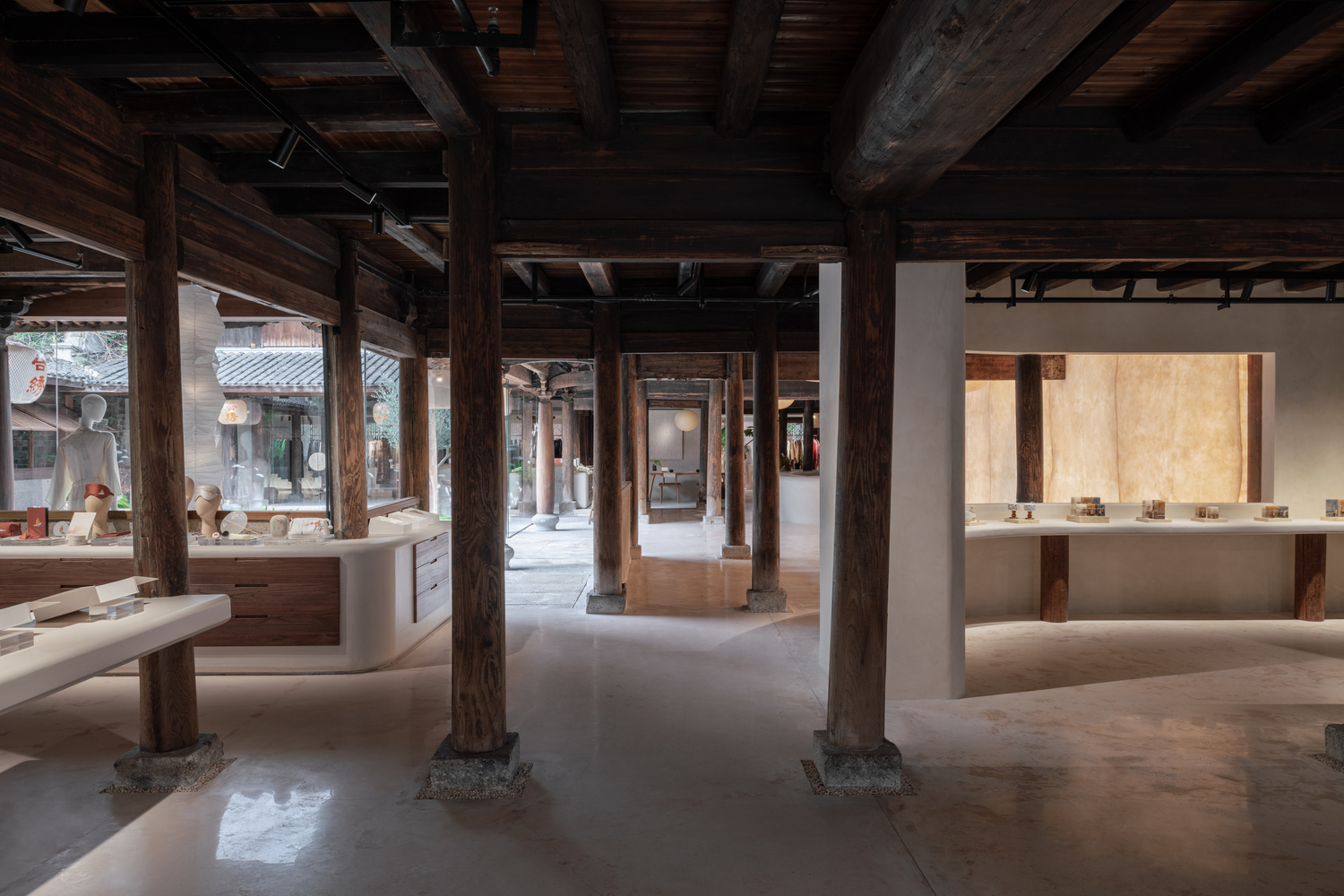
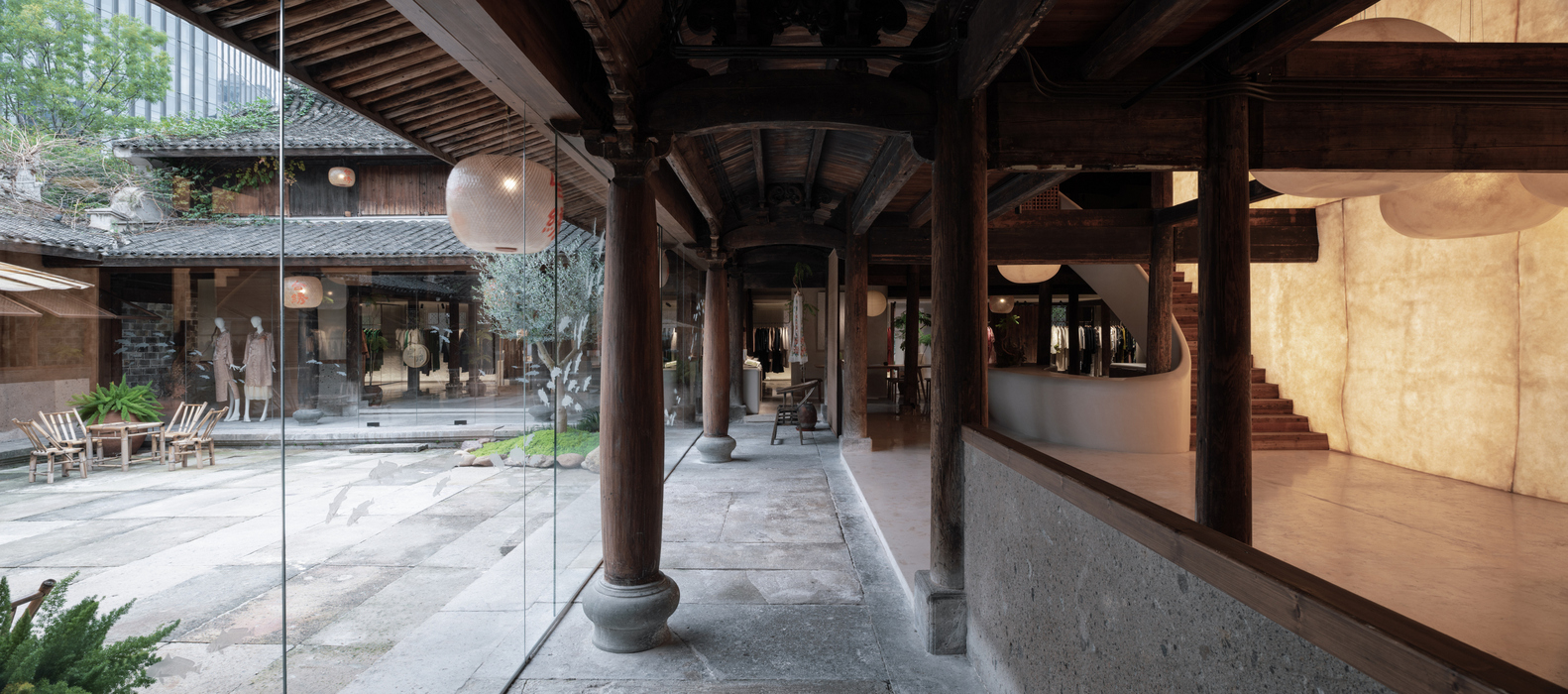
The perimeter corridors were enclosed with glass curtain walls, expanding indoor exhibition areas into the courtyard.
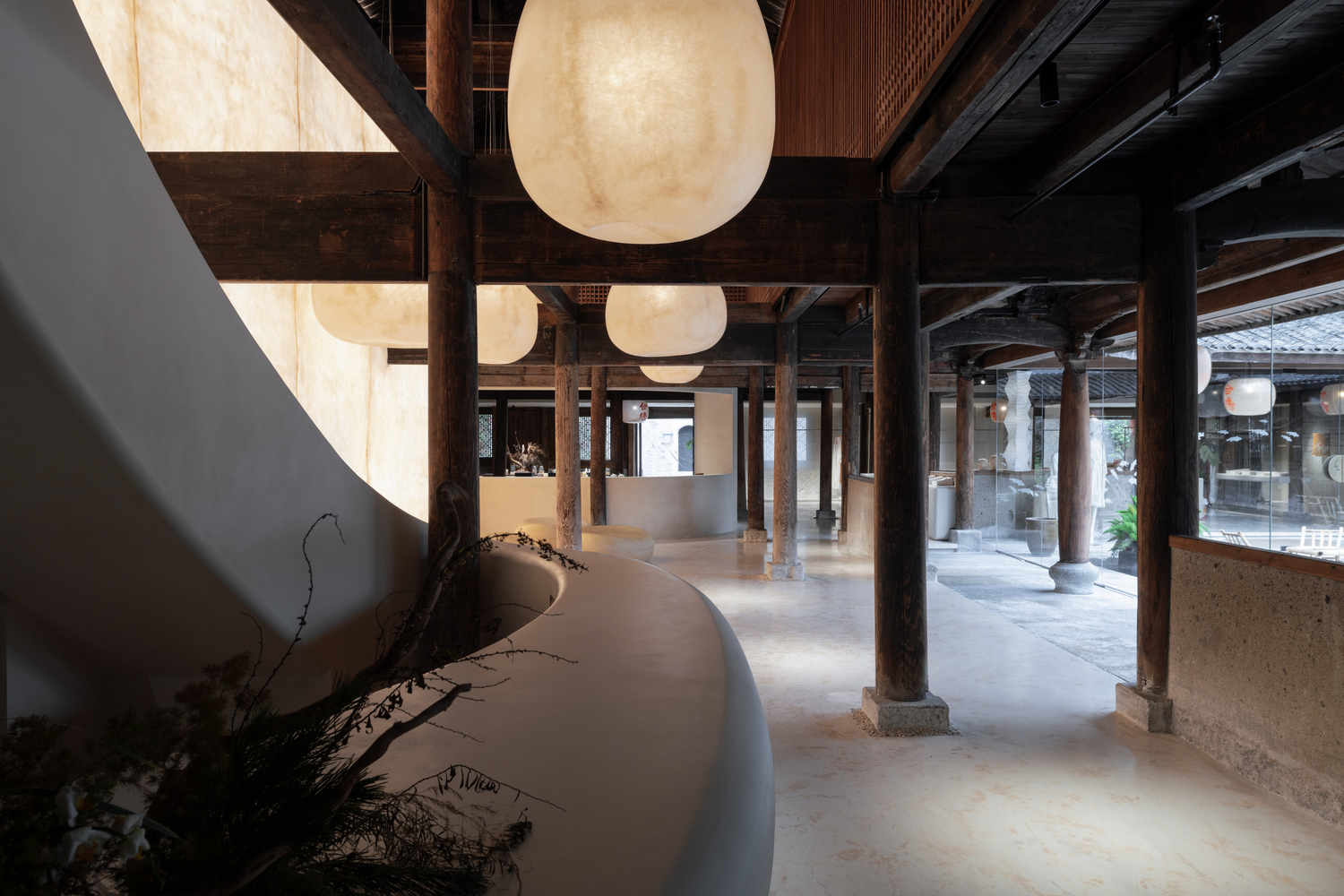
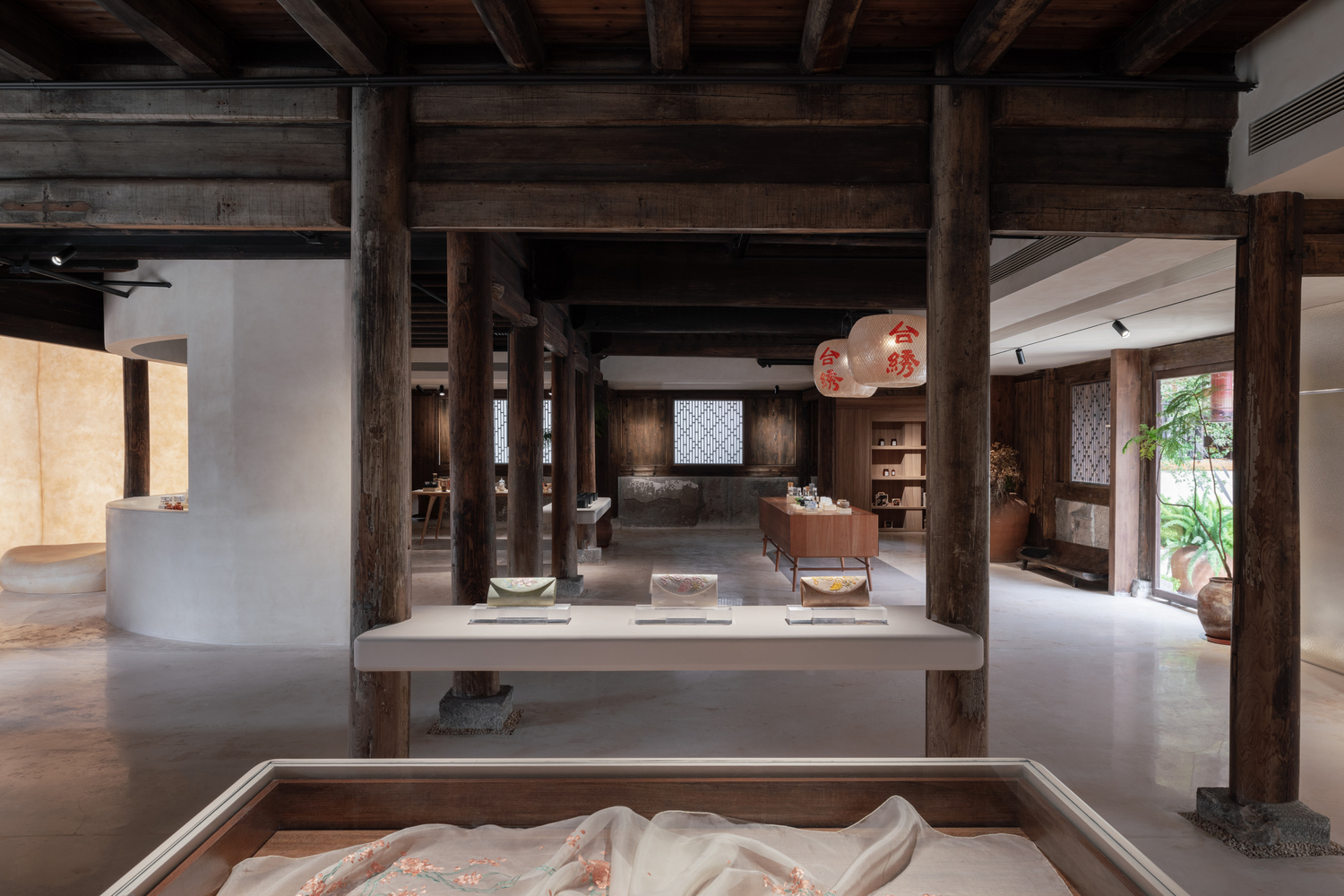
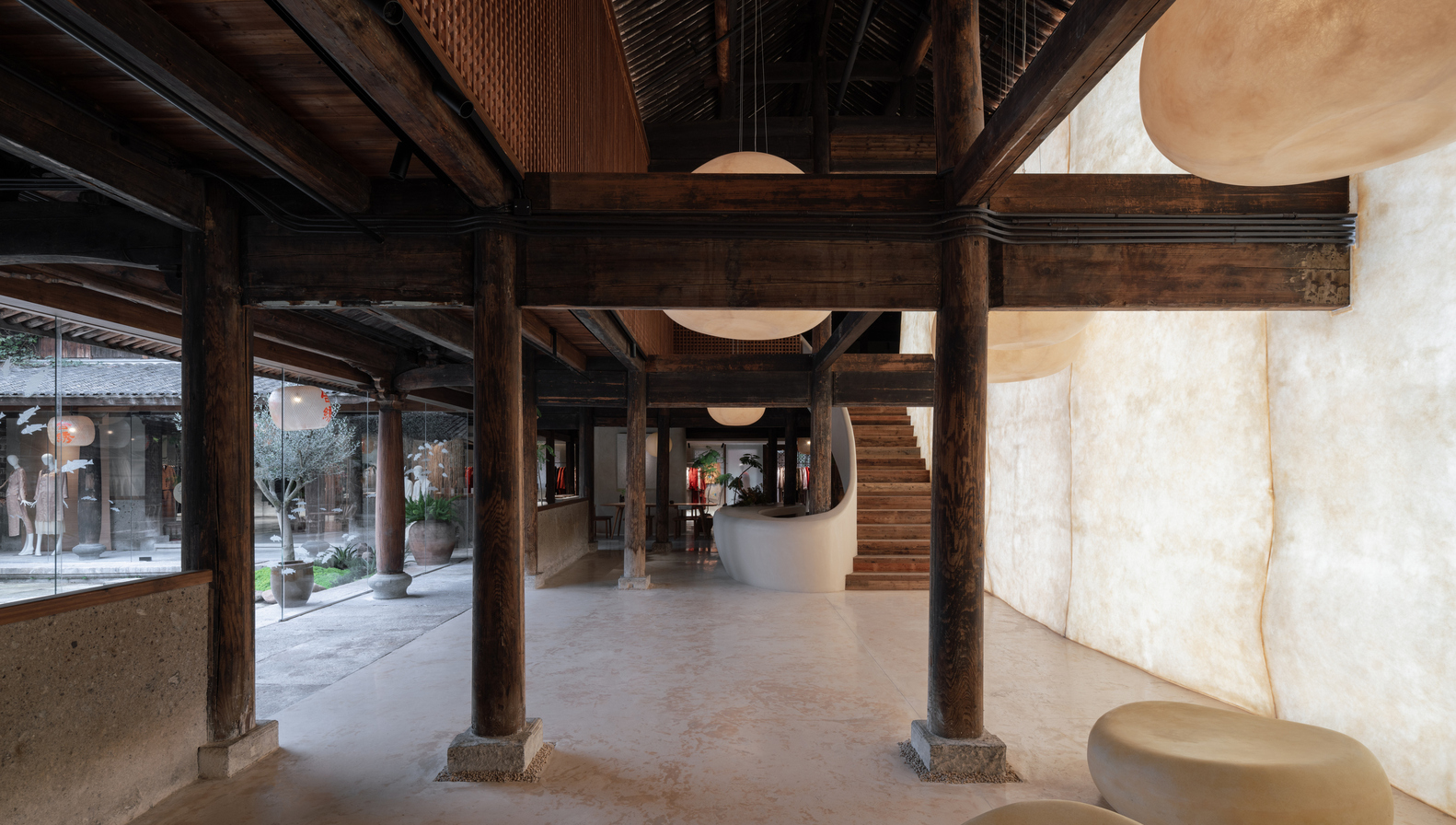
The stone-paved ground was replaced with fine-grained beige terrazzo for a unified elevation; salvaged stones repaired damaged courtyard paving. The three-bay central space was opened into a double-height volume, consistent with vernacular traditions.
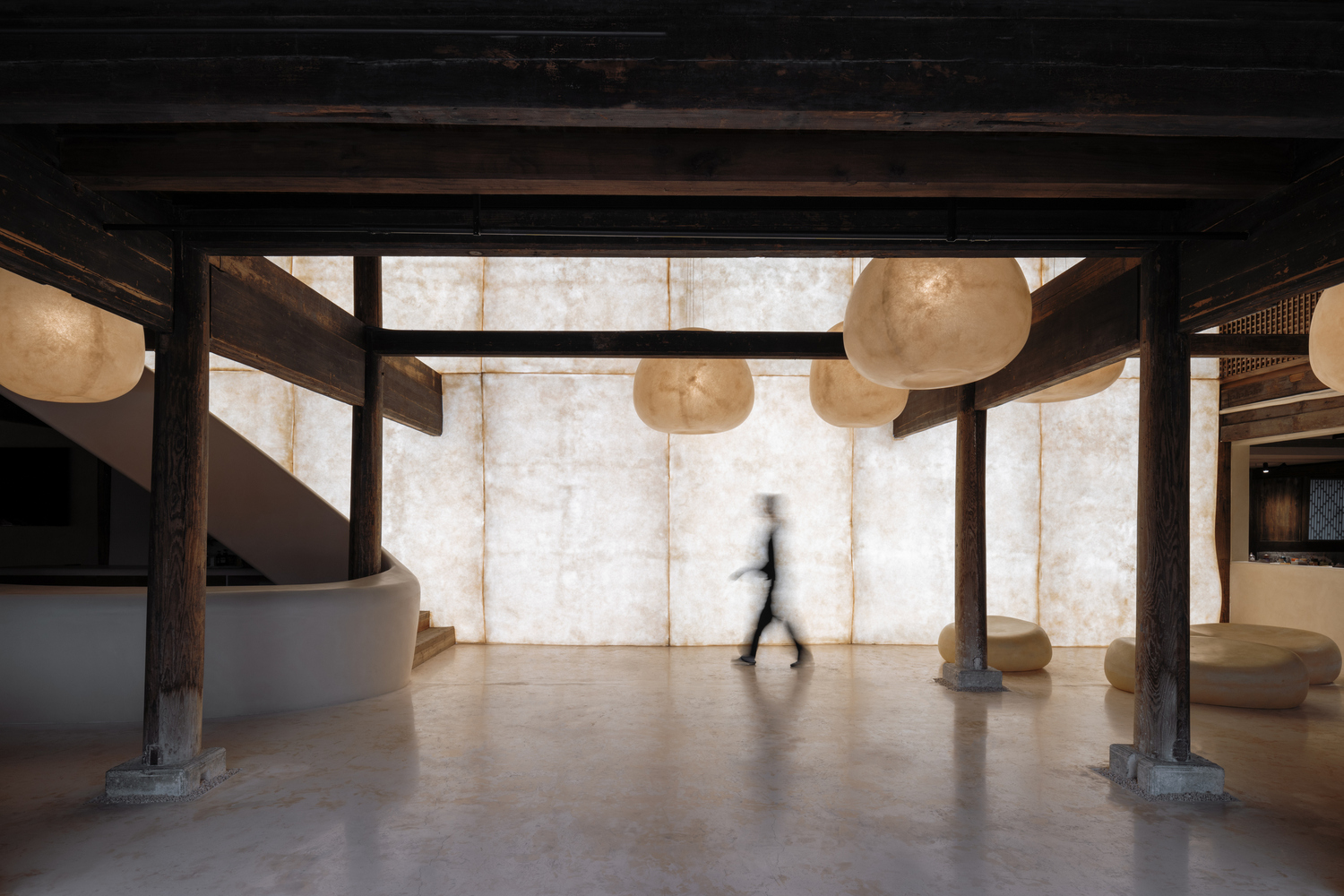
A sculptural, pleated glass-reinforced plastic (GRP) wall dominates the atrium, evoking draped silk while maintaining spatial legibility. Suspended amorphous lighting fixtures reference textile craftsmanship, complementing a slender main staircase that guides visitors to the second-floor gallery.
MATERIAL PALETTE
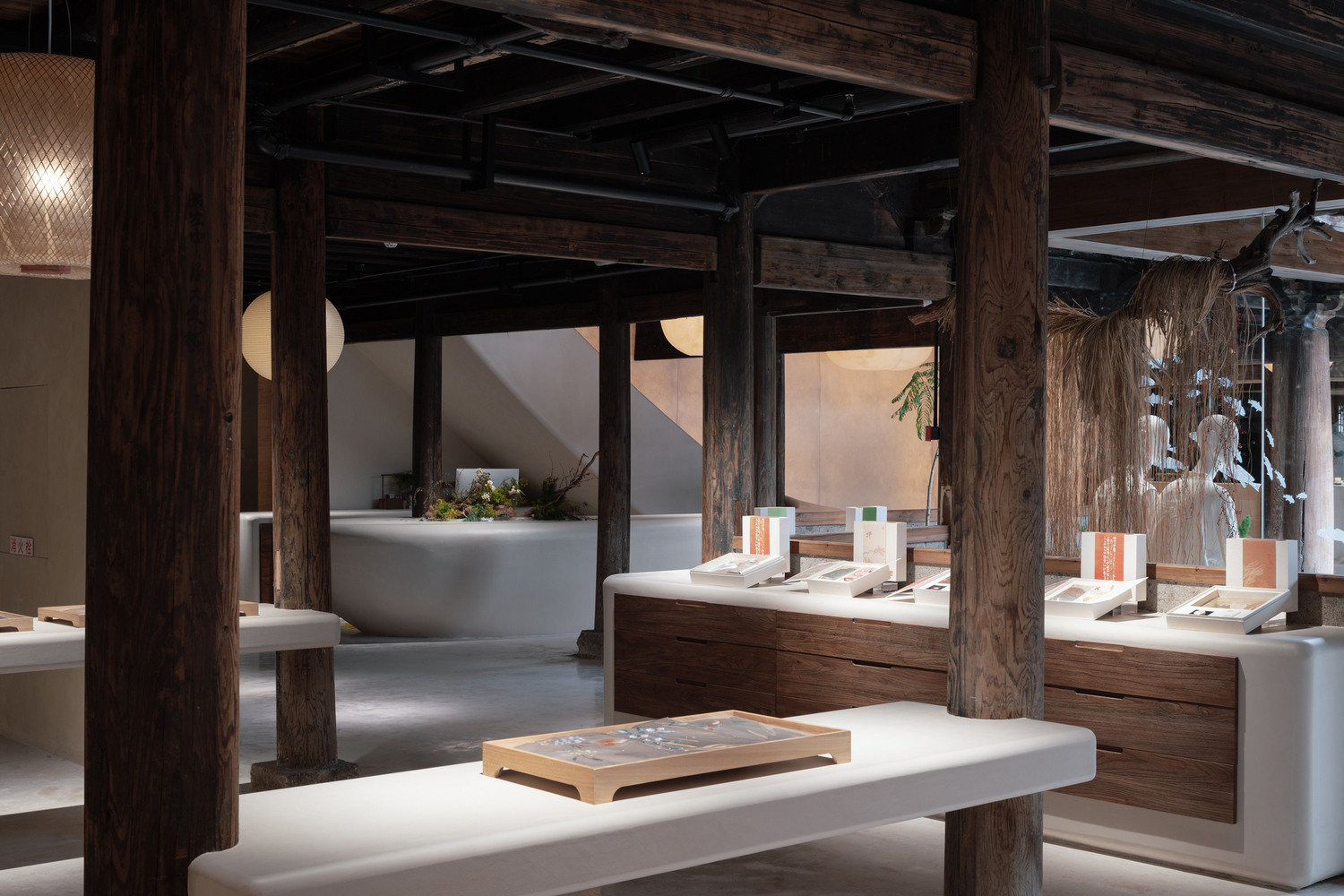
The ground floor harmonizes warm-white terrazzo with rich wood tones, balancing heritage and contemporary elements. Custom-designed details—such as textured wired glass panels serving as garment backdrops while revealing historic masonry—ensure functional flexibility and brand visibility.
SECOND-FLOOR GALLERY
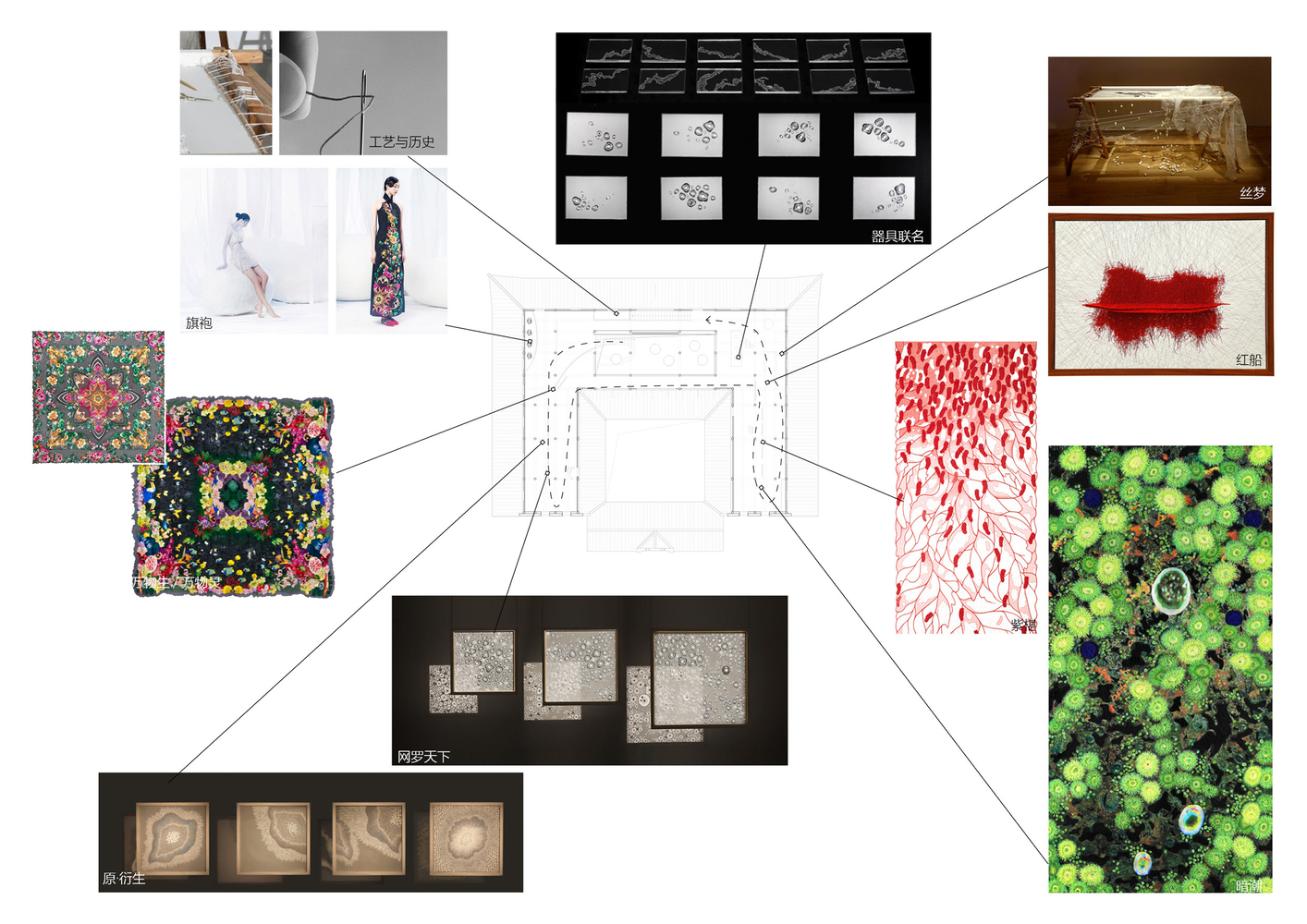
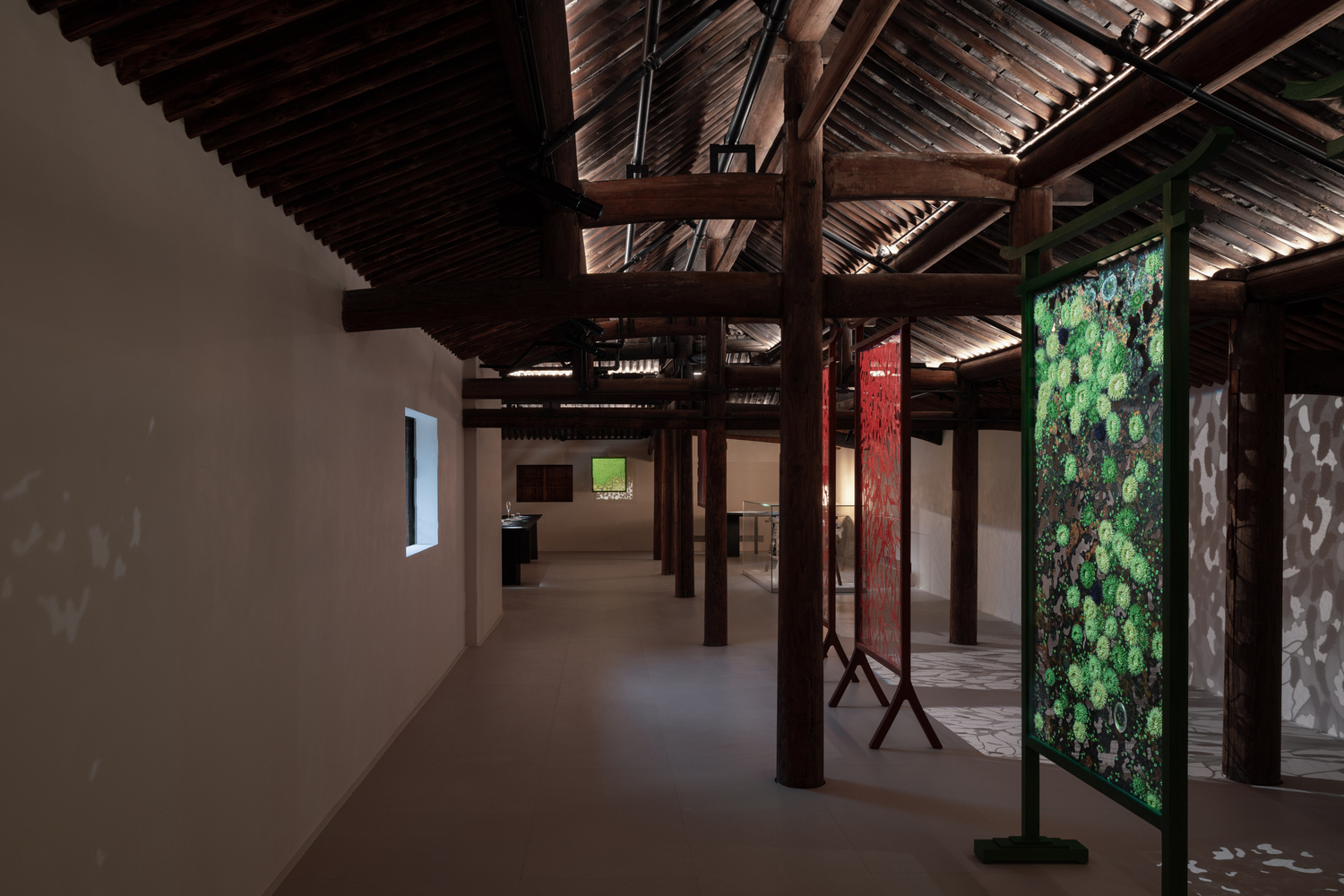
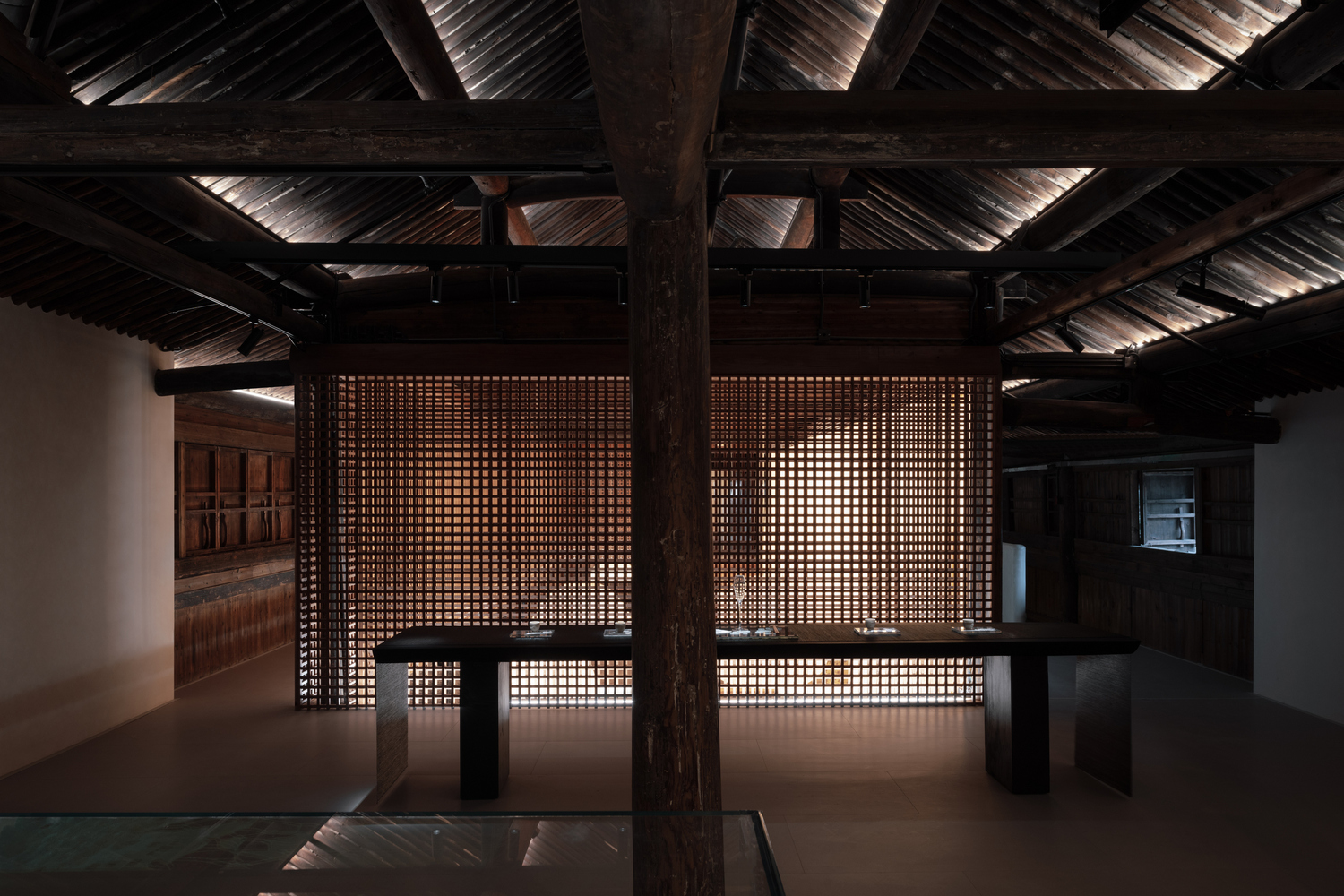
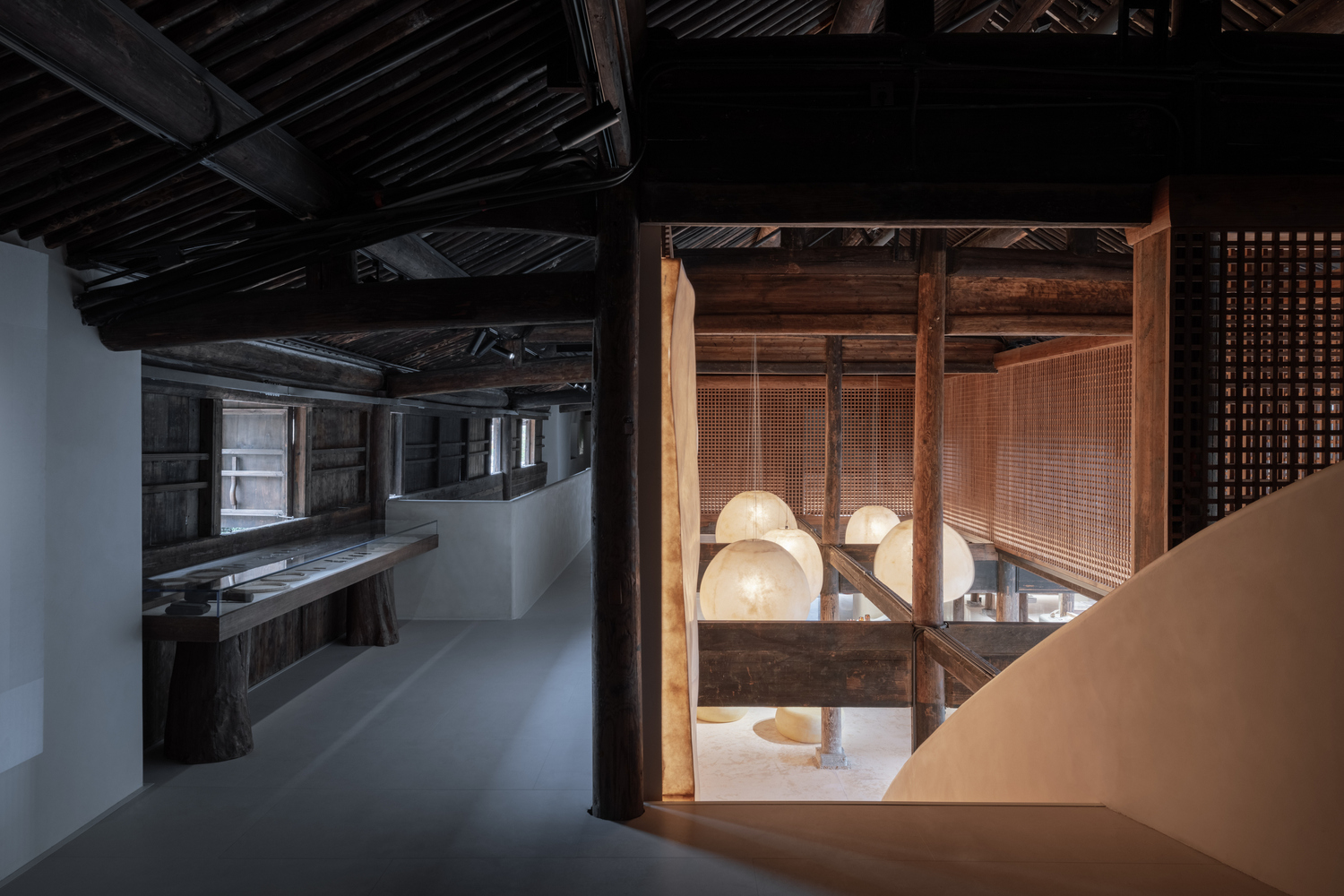
Divided into east and west wings by an ethereal grille-partitioned atrium, the gallery corridor forms a "historical passage" showcasing the lifelong works of Master Lin Xia. Precision lighting transforms shadows into exhibit components.
Visitors experience traditional embroidery's dialogue with modern art, framed by courtyard vistas. Due to structural constraints, uneven original floorboards were reconciled with sloped transitions and elastic underlays to improve acoustics and circulation.
HOLISTIC DESIGN APPROACH
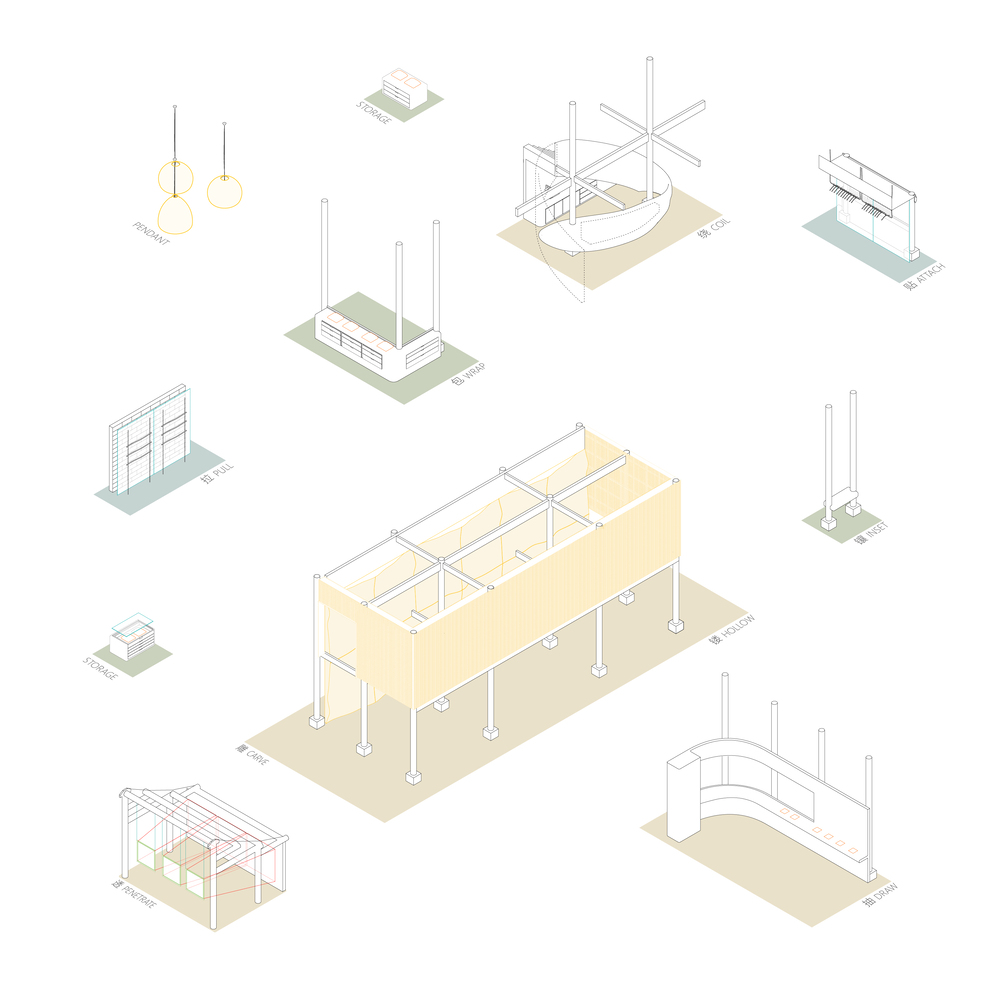
Taizhou embroidery techniques—pulling, carving, perforating, wrapping, twisting, inlaying—inspired spatial interventions.
The project adopted an inward-focused methodology, customizing everything from built-ins (e.g., free-form clothing racks) to translucent wall panels with bespoke linen textures. Collaborative improvisation resolved on-site discrepancies, repurposing demolition materials for new finishes.
EPILOGUE
The outcome embodies four principles: new-old collage, subtle integration, craft-as-construction, and organic morphology. By preserving temporal traces and spatial memory, the design achieves a cohesive equilibrium between artistic expression and operational pragmatism.