RAMI LIBRARY
Han Tümertekin Design & Consultancy
ARCHITECTS
Han Tümertekin Design & Consultancy
PRINCIPLE ARCHITECTS
Han Tümertekin, Zehra Uçar, Ferhat Zeycan
COORDINATOR
Metin Ali Biberoğlu
STRUCTURAL ENGINEER
Mehmet Uçar
LIGHTING CONSULTANT
Melike Çulcuoğlu
MINISTRY OF CULTURE AND TOURISM OF THE REPUBLIC OF TURKEY ARCHITECT IN CHARGE
Sonay Sakar
CONSTRUCTION COMPANY
Abma Construction Restorations, Llc & Kancul Construction
ARCHITECTURAL TEAM
Zeynep Tümertekin, İdil Arasan,alp Fahri Ardiç,muhammed Ali Arslan, Furkan Kanmaz,başak Özen,beyza Uysal, Merve Yilmaz
ELECTRICAL ENGINEER
Cengiz Kürkçü
LANDSCAPE DESIGNER
Cemil Aktaş & Pinar Aktaş
PHOTOGRAPHS
Cemal Emden
INDOOR AREA
36,000 M²
OPEN AREA
51,000 M2
AREA
87000 m²
YEAR
2023
LOCATION
Türkiye
CATEGORY
Library, Adaptive Reuse
English description provided by the architects.
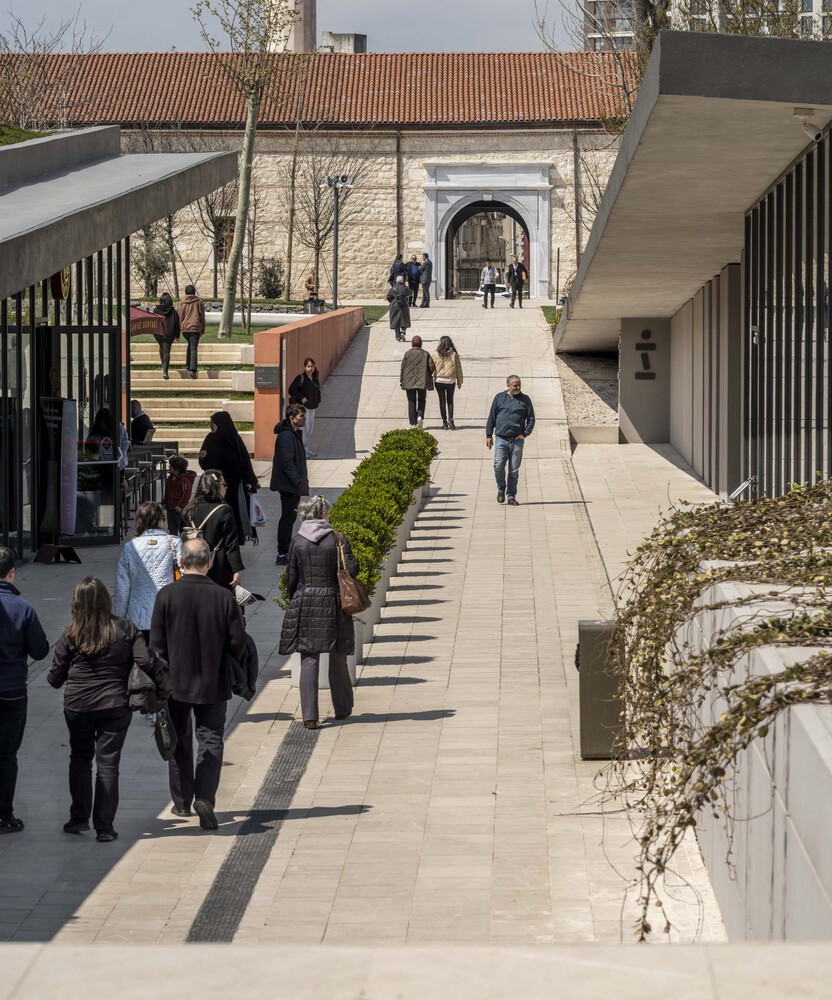
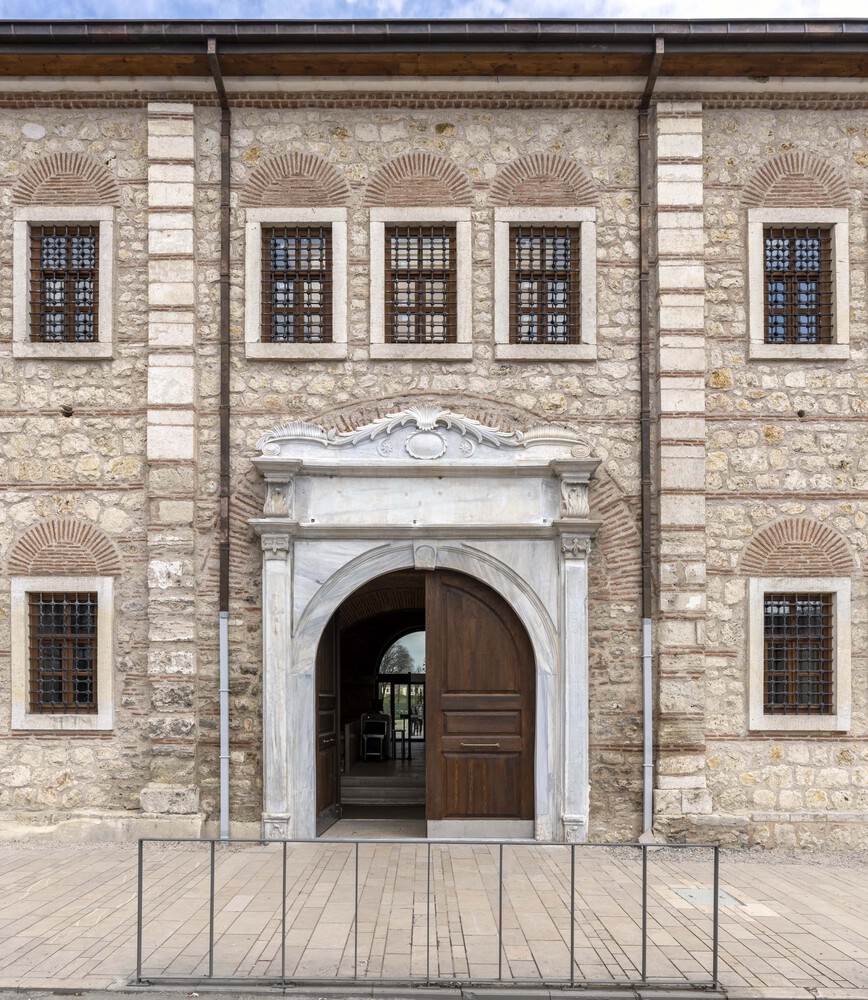
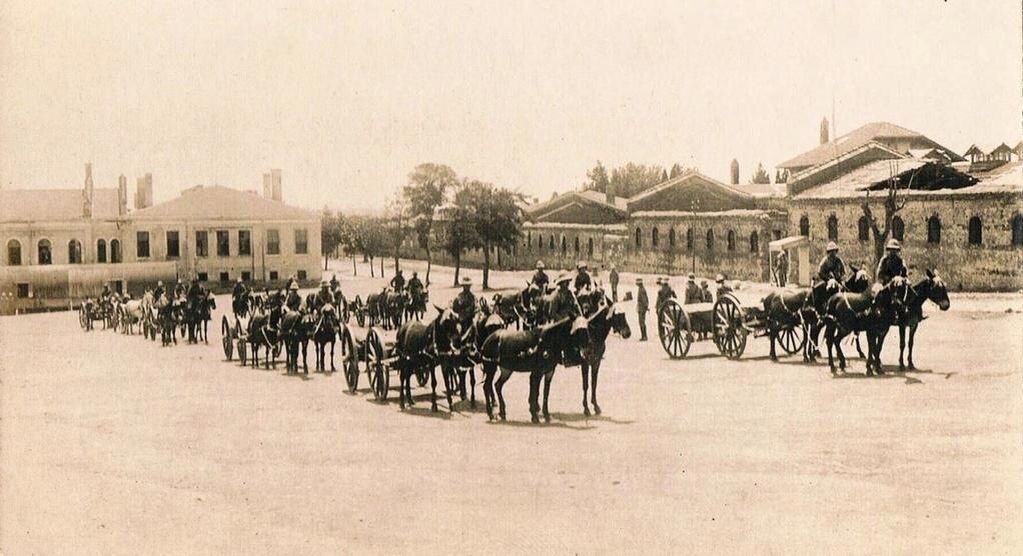
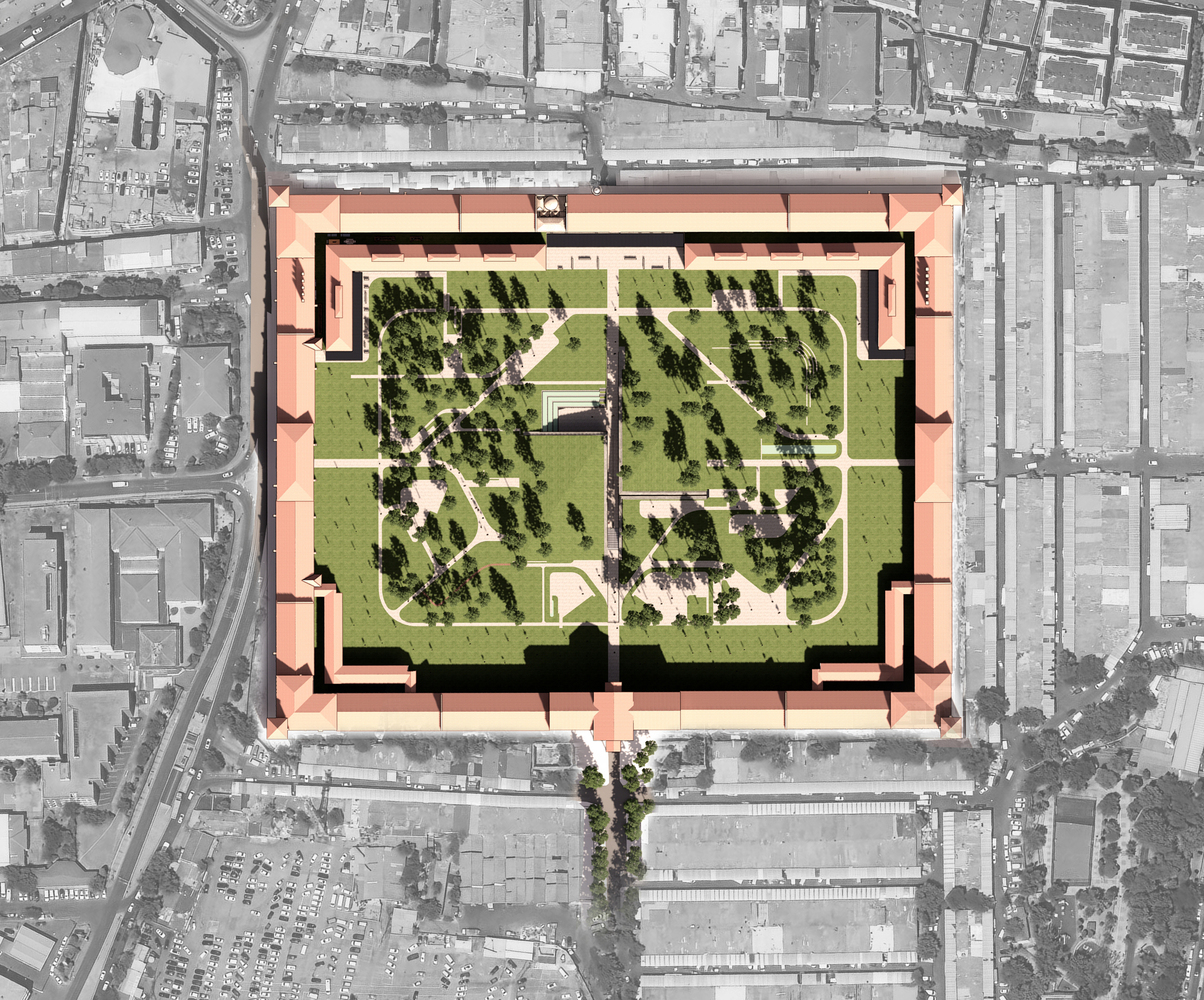
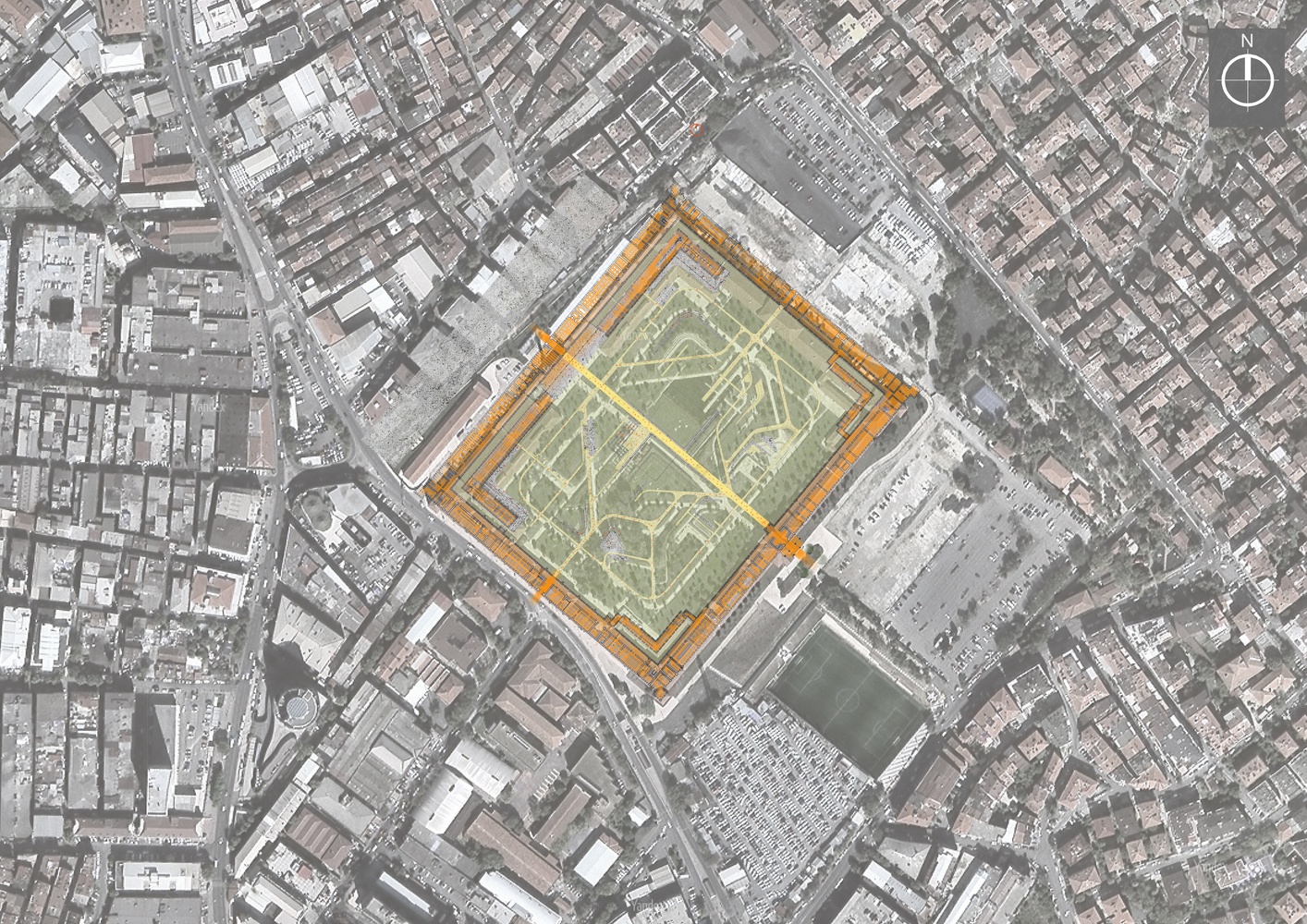
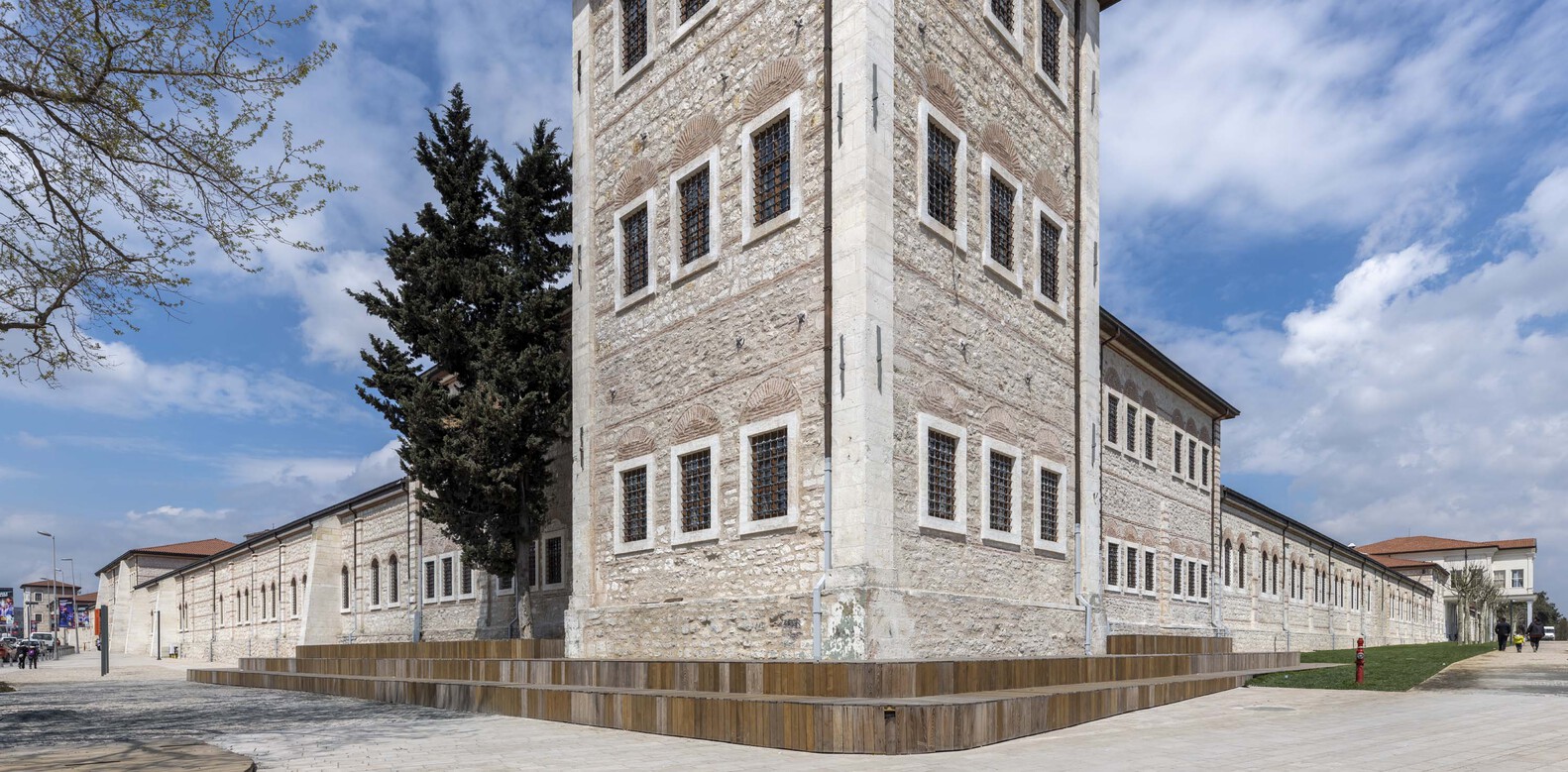
The Rami Library Project focuses on the adaptive reuse of the historic Rami Barracks, transforming the 19th-century military structure into a contemporary public library through a design strategy centred on clarity, spatial continuity, and minimal intervention.
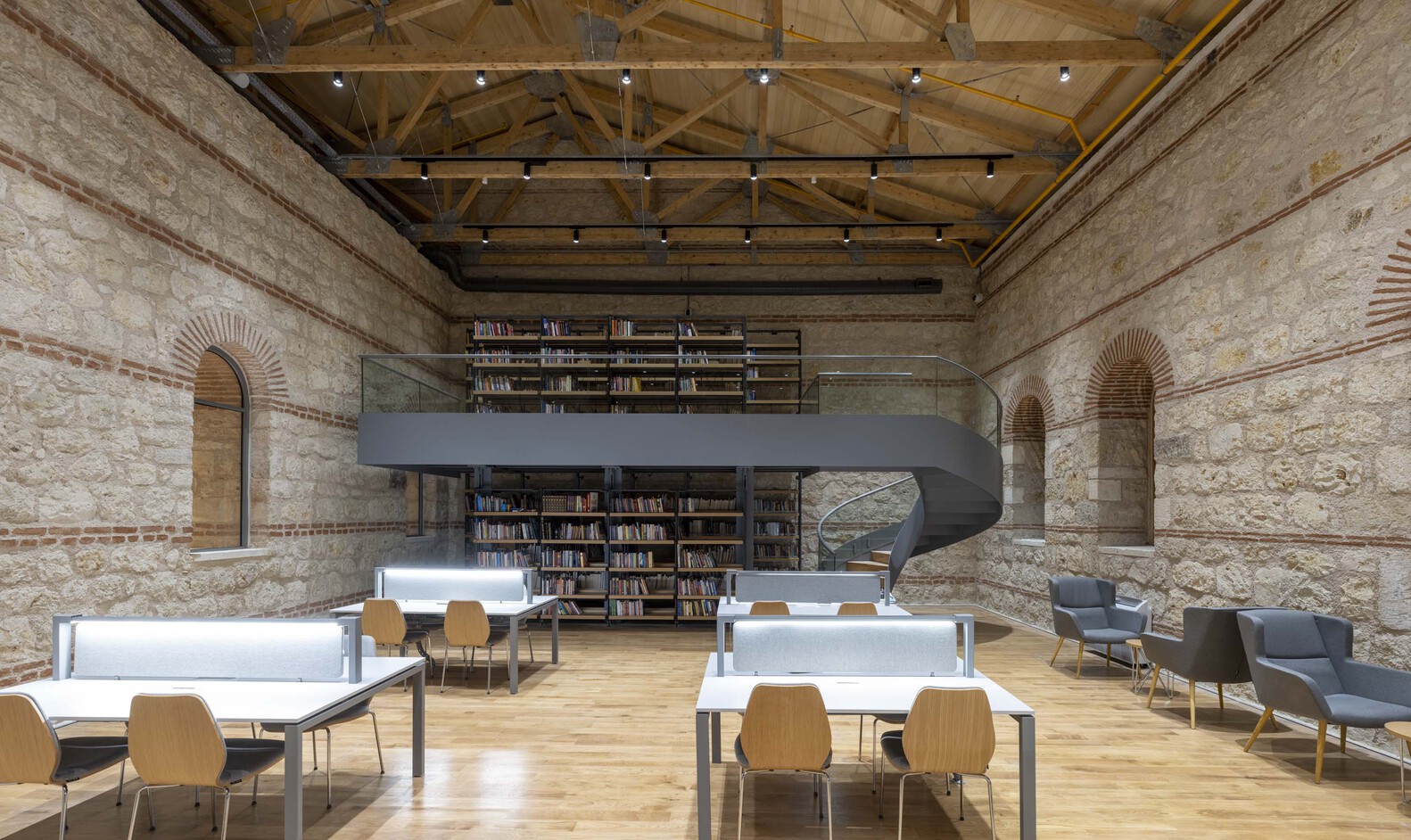
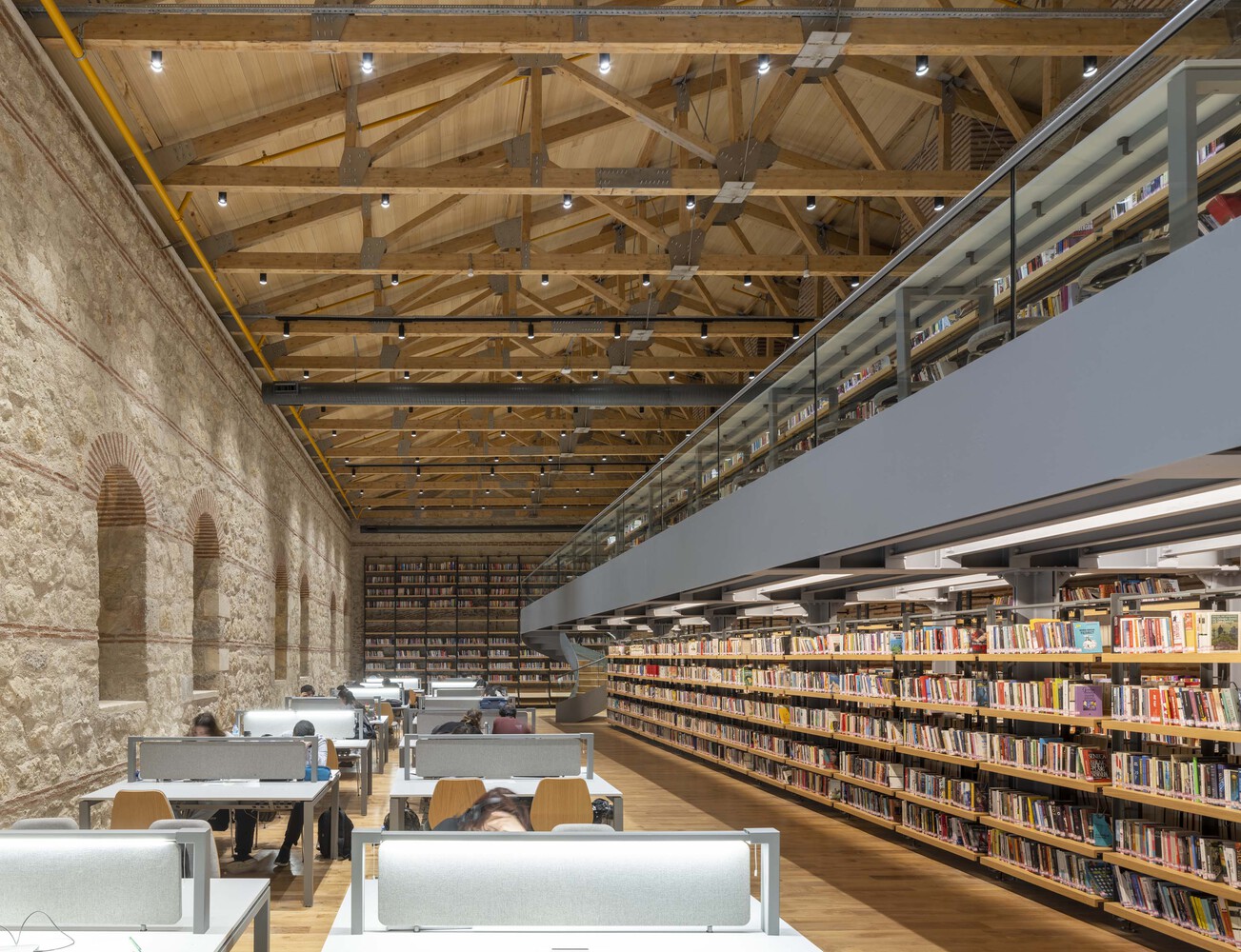
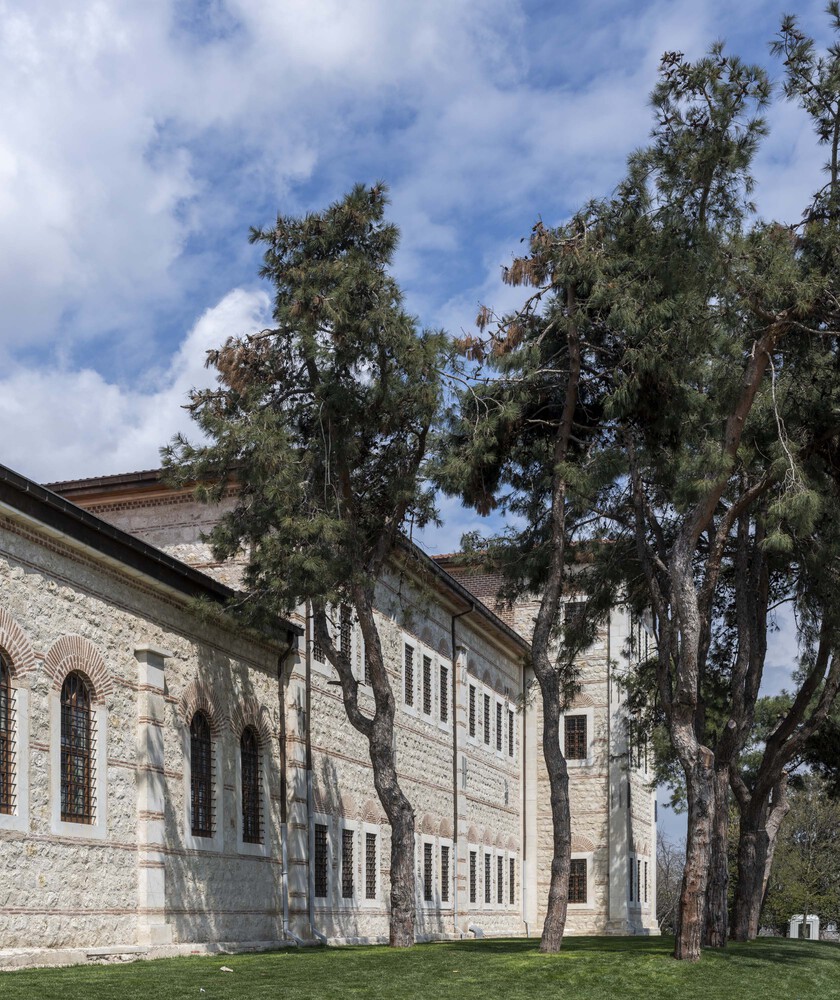
Built between 1826–1828 for the Asakir-i Mansure-i Muhammediye and attributed to Seyyid Abdülhalim Efendi, the large single-storey complex—organized around a monumental courtyard—offered a strong architectural foundation for its new function.
Our role was the repurposing and reprogramming of the existing buildings into a library, ensuring that new uses could be integrated without disturbing the essential qualities of the historic structure.
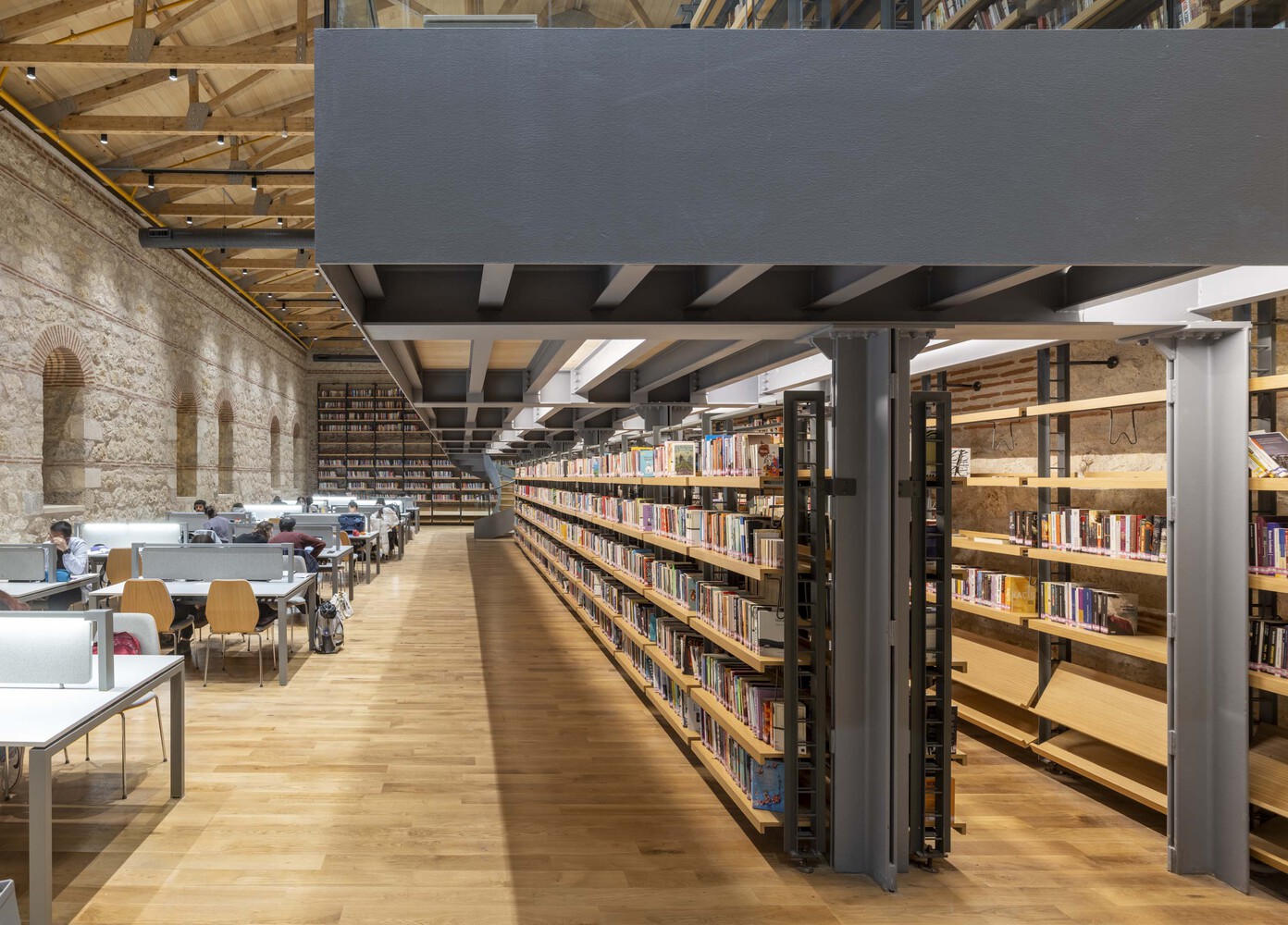
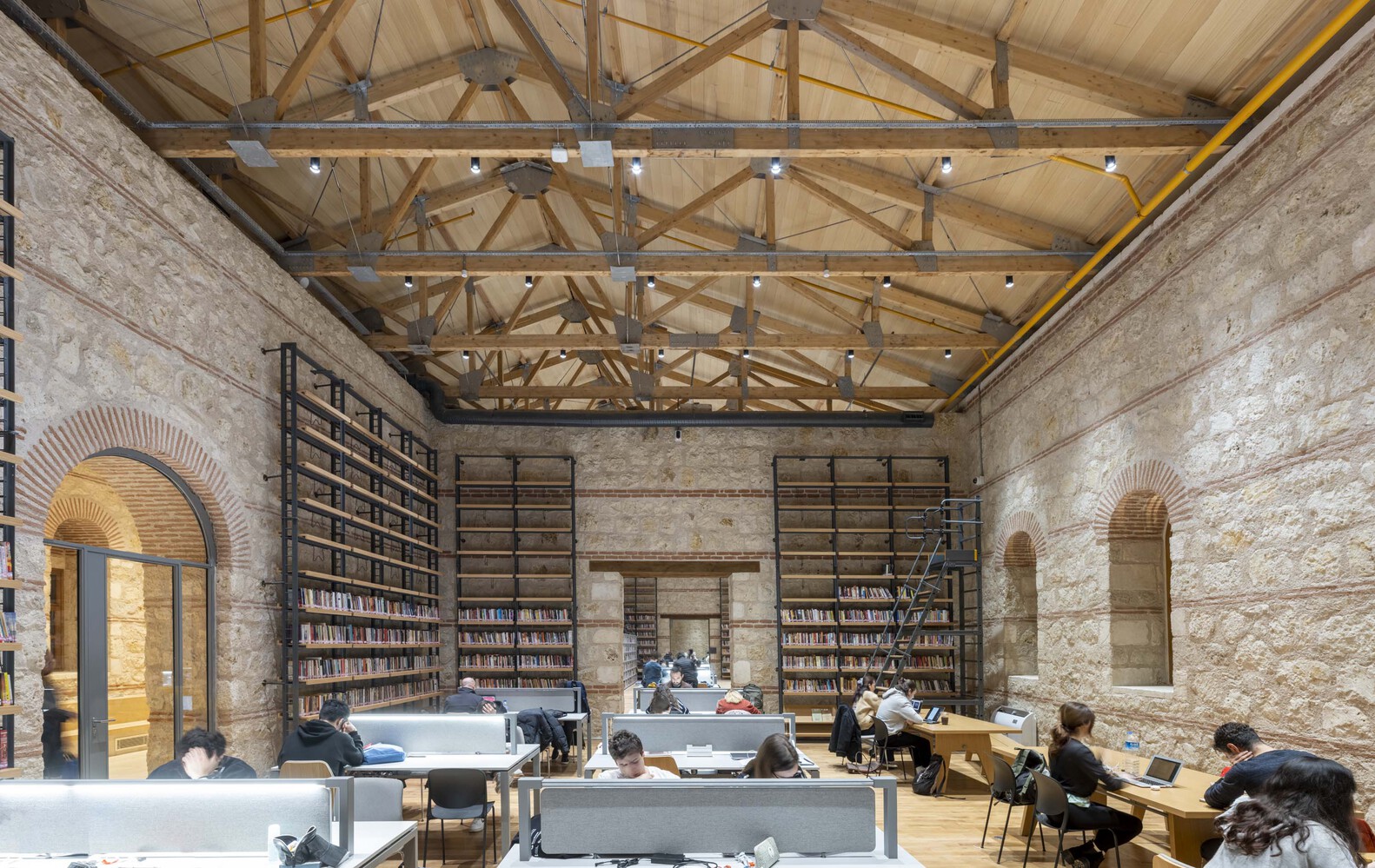
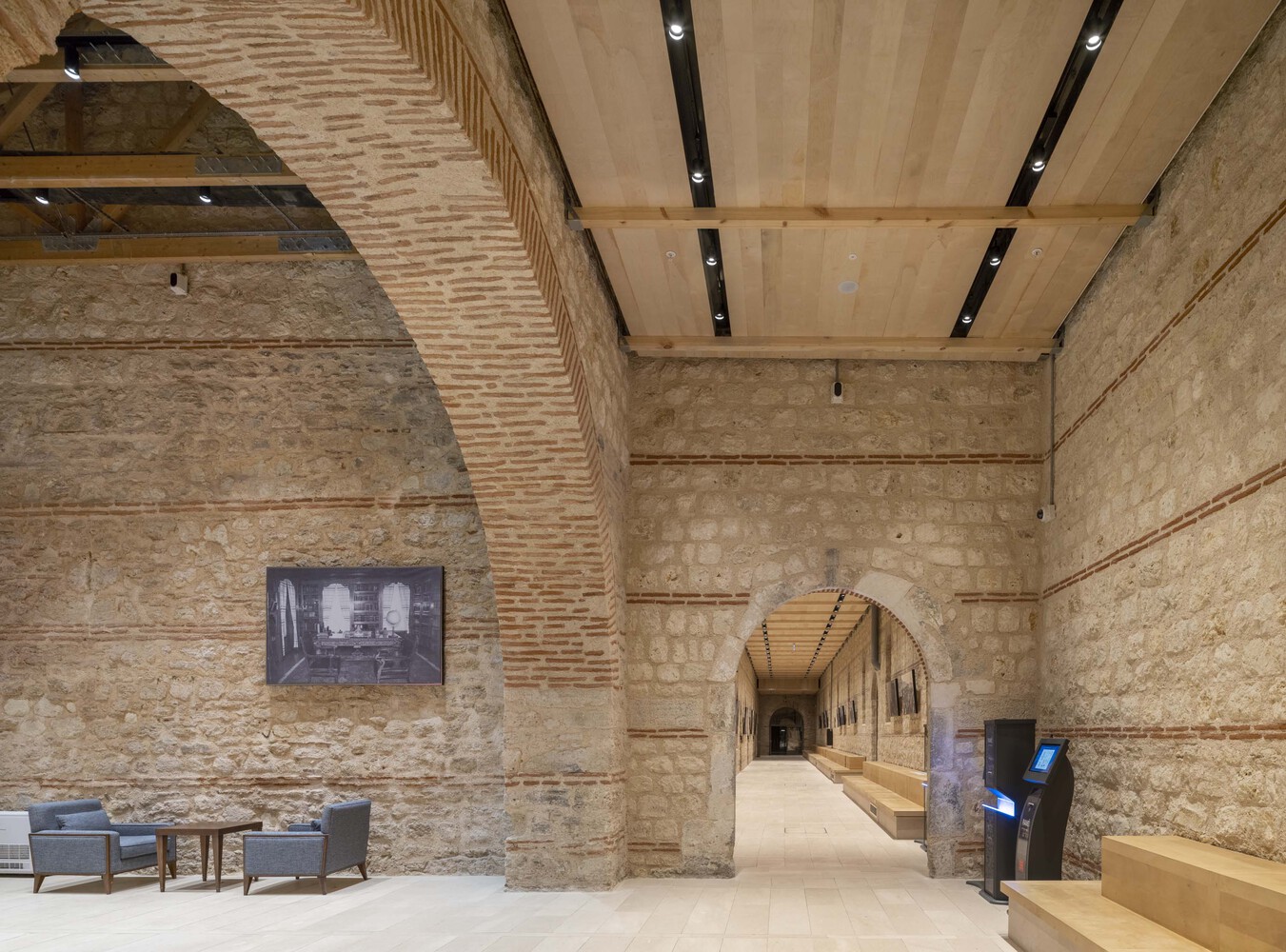
The design approach began with restoring the original spatial order by removing later additions that disrupted circulation and proportions.
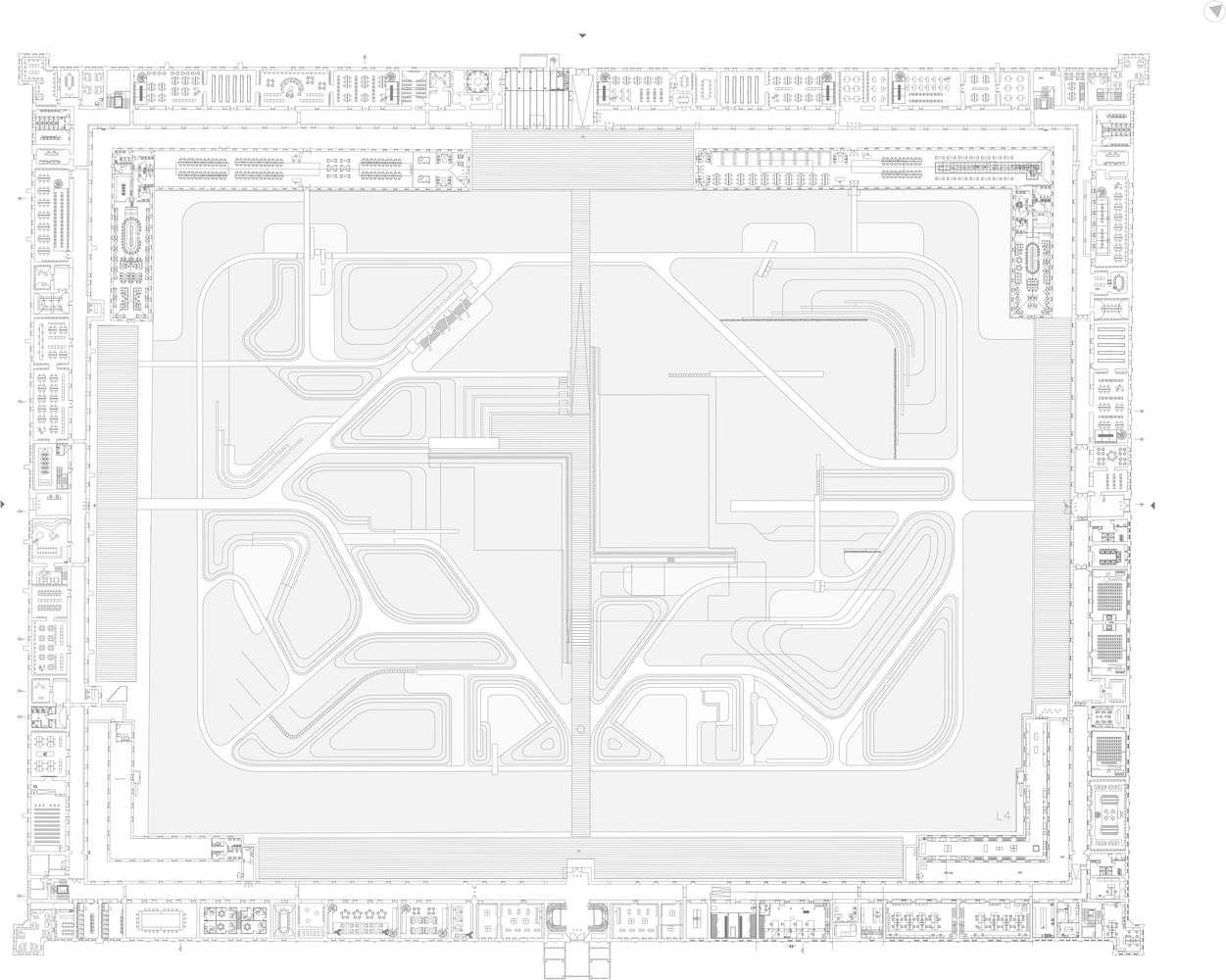
Once the building's inherent rhythm was re-established, new programmes—manuscript areas, reading rooms, children's and adult libraries, research spaces—were carefully placed within the existing envelope, using an architectural language that remains deliberately restrained.
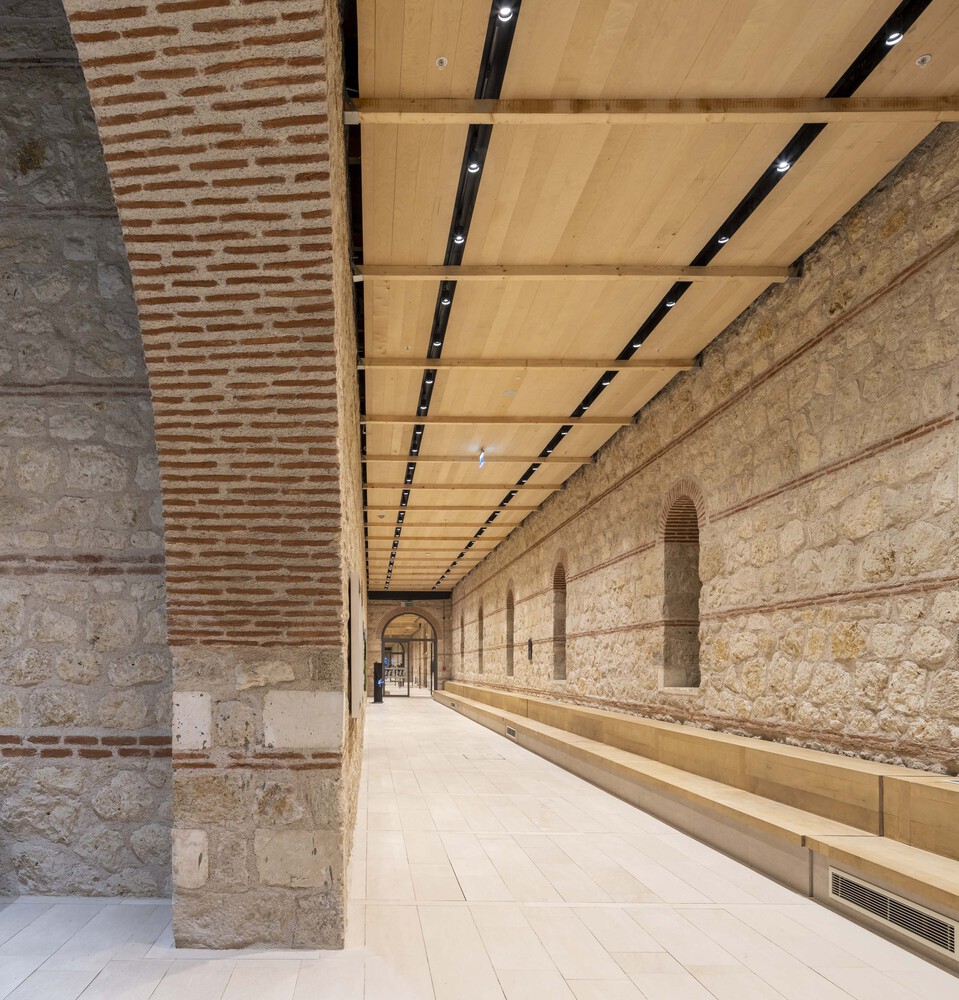
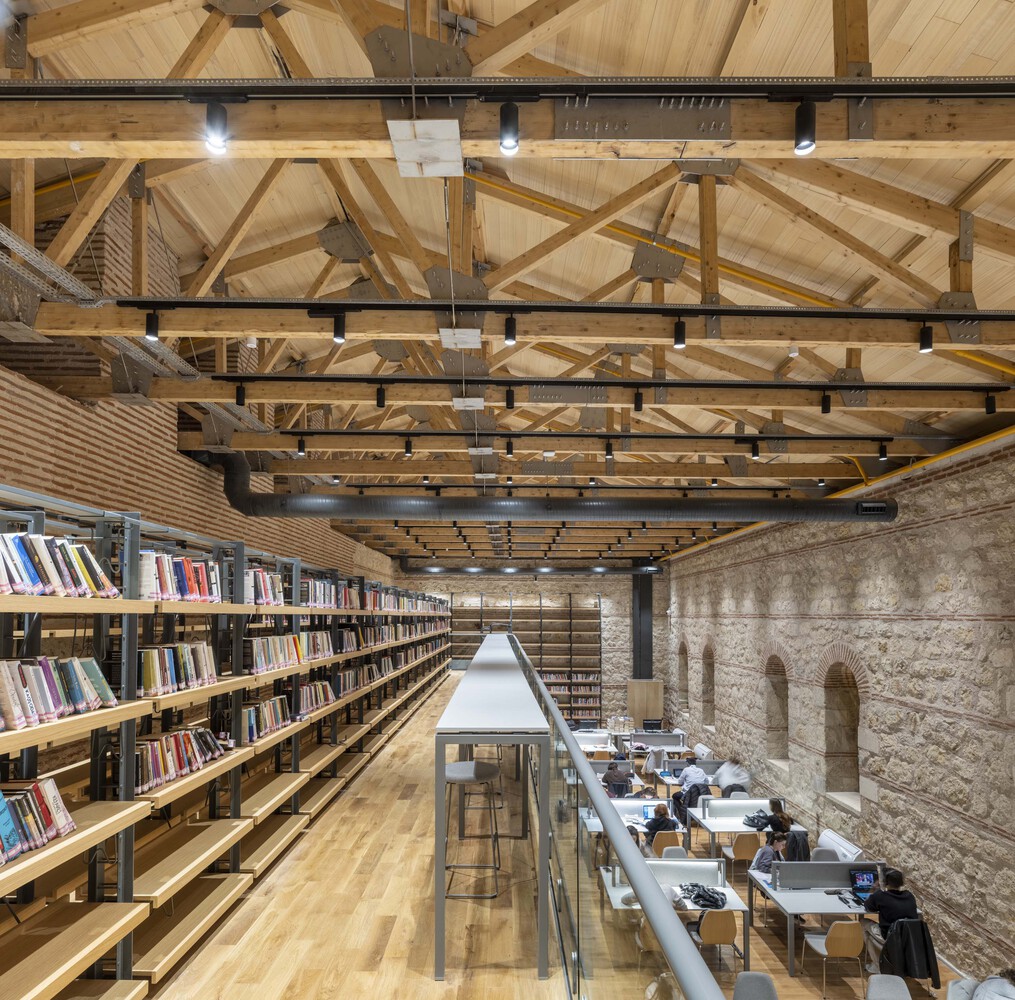
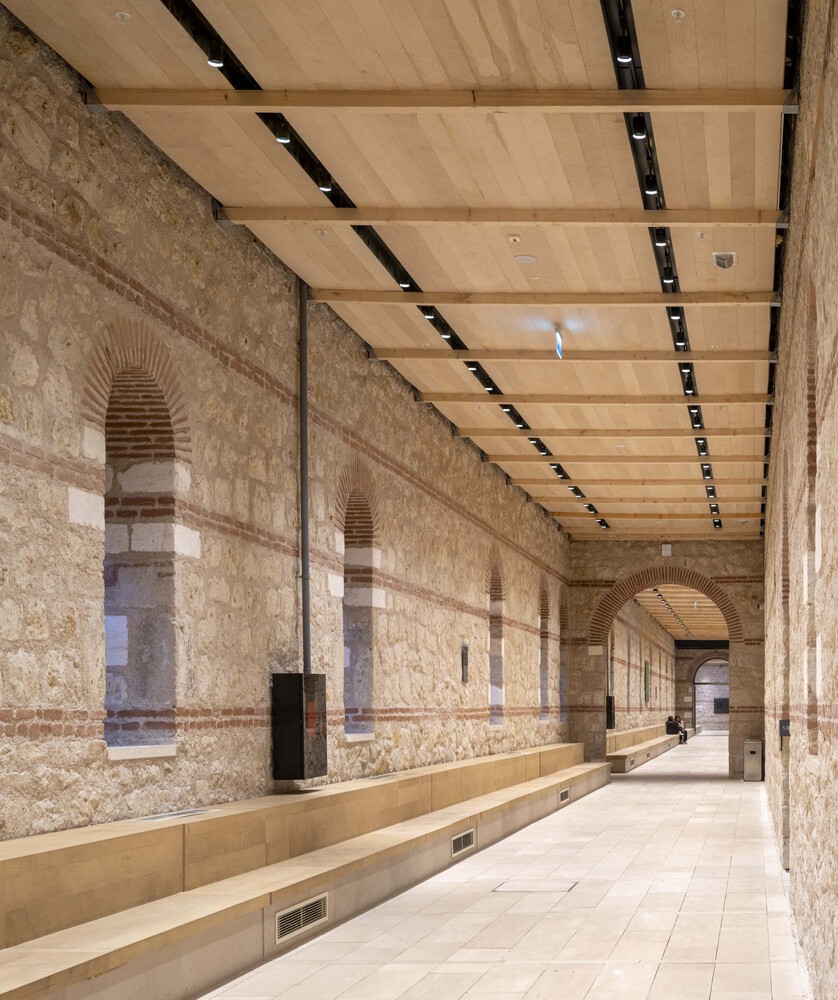
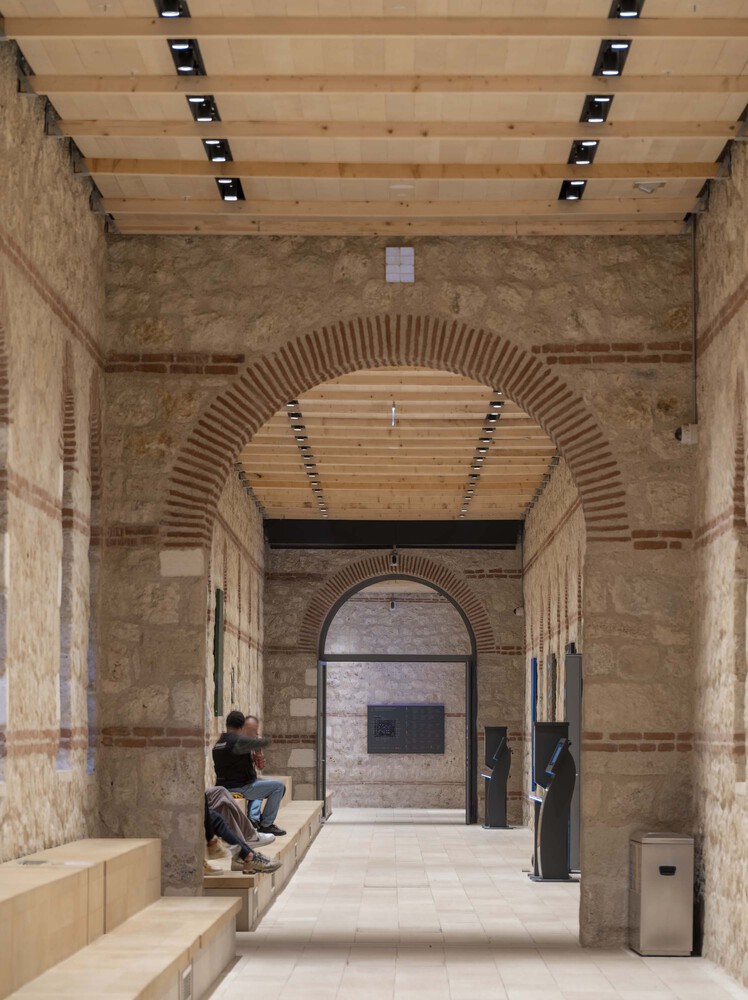
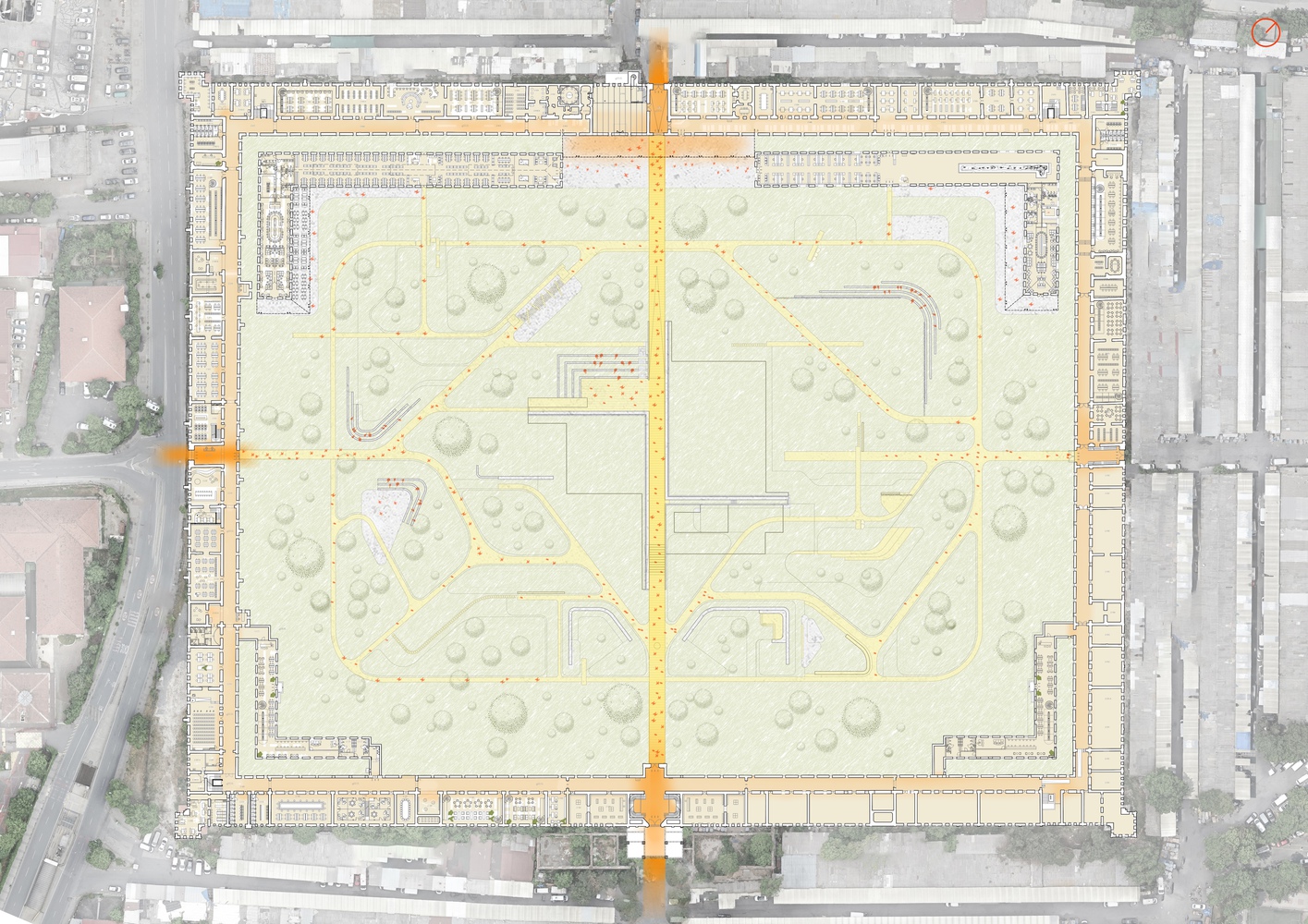
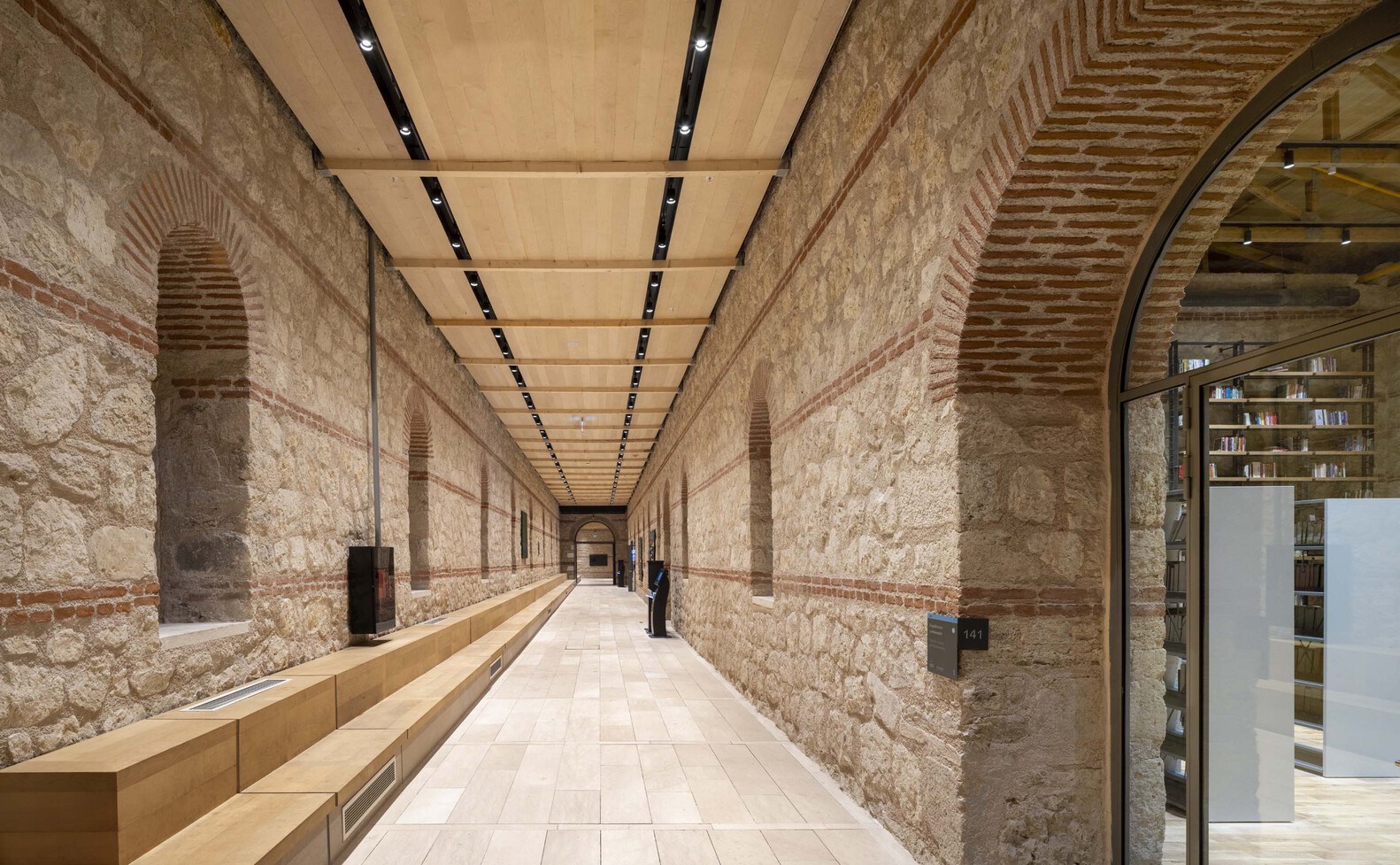
A central design element is the 5-metre-wide, 1.4-kilometre-long internal corridor, which acts as the main organisational device. It connects the various library functions while also serving as an informal social space. In one section, the corridor widens into amphitheatre-like seating, encouraging spontaneous gatherings and providing a flexible area for learning and interaction.
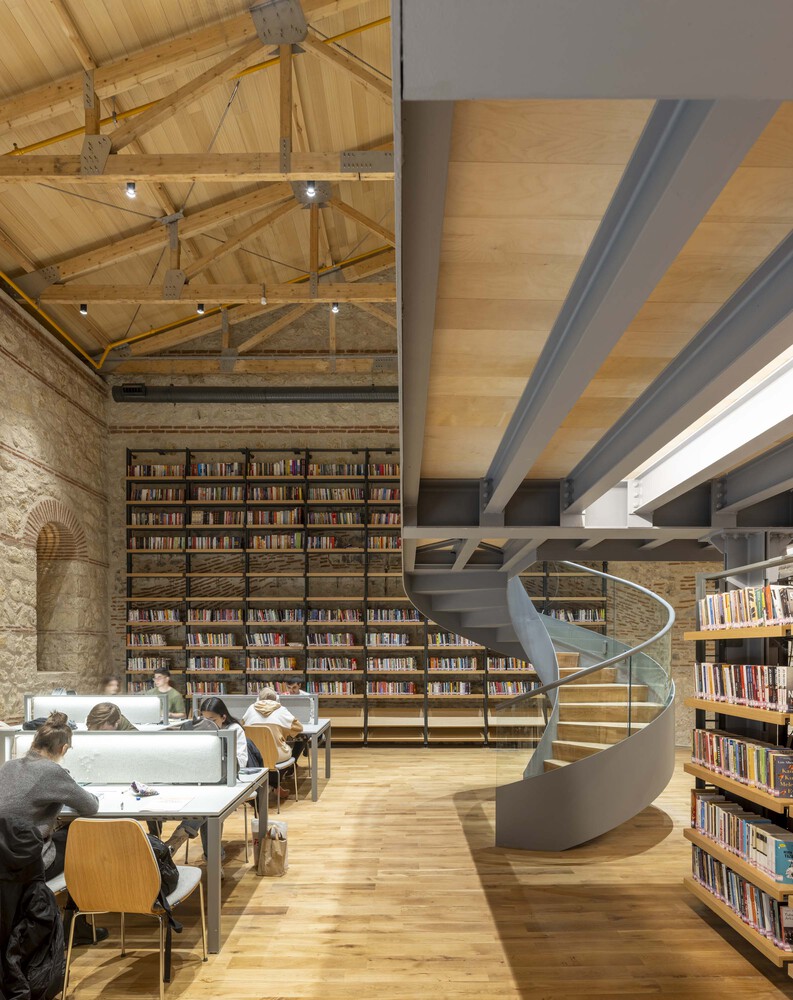
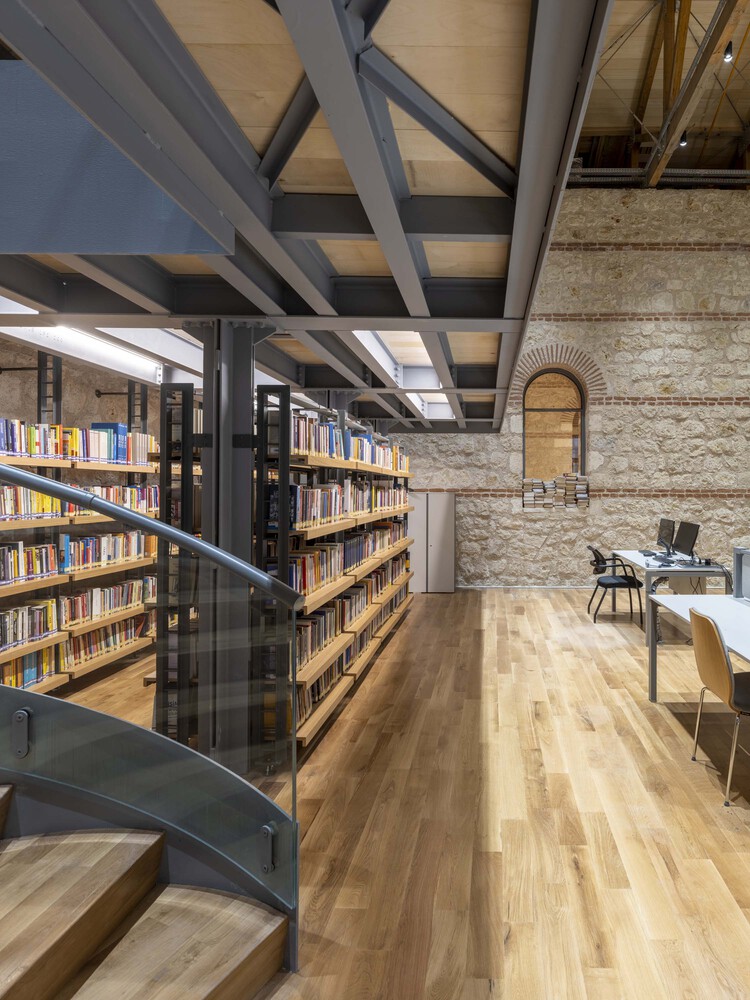
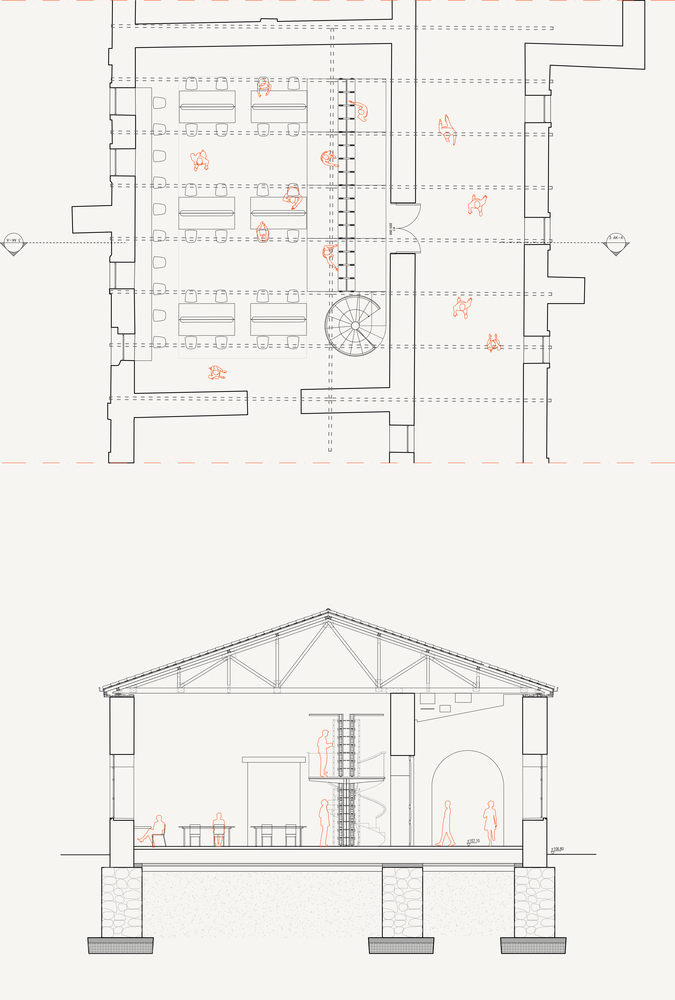
To meet contemporary spatial requirements within the historic shell, lightweight steel mezzanines were introduced as reversible structures.
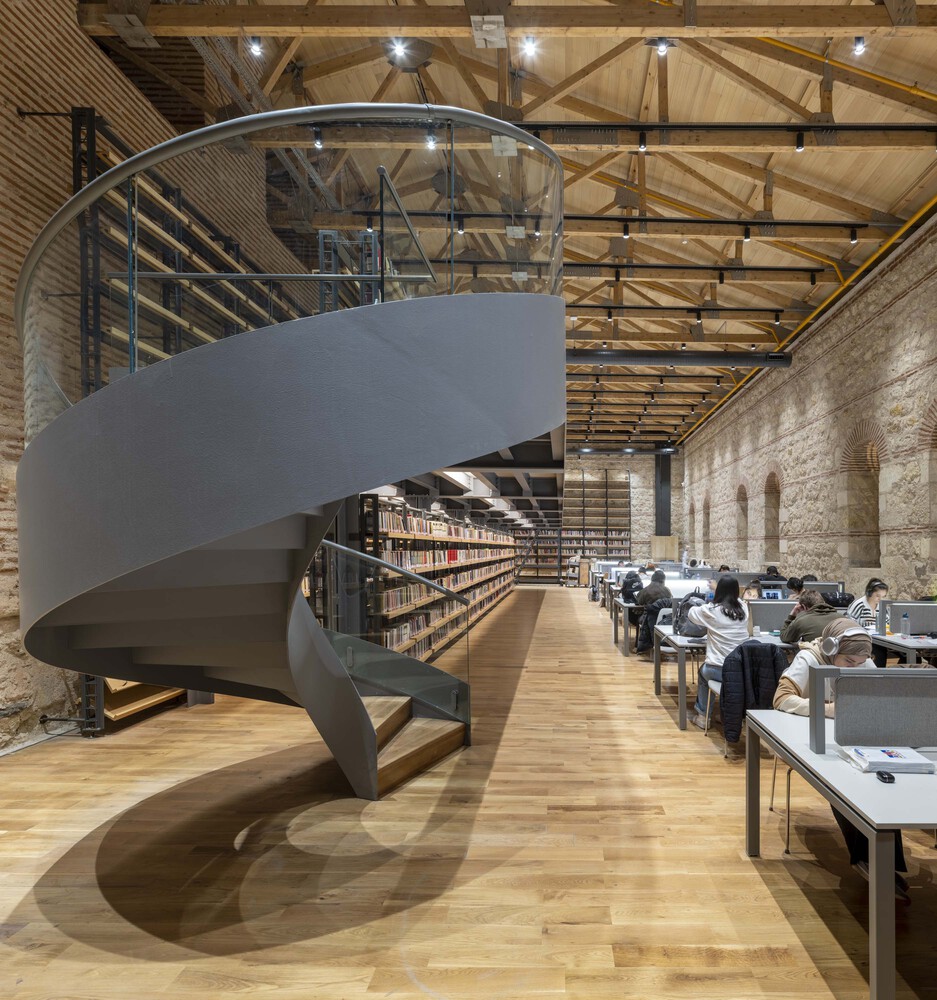
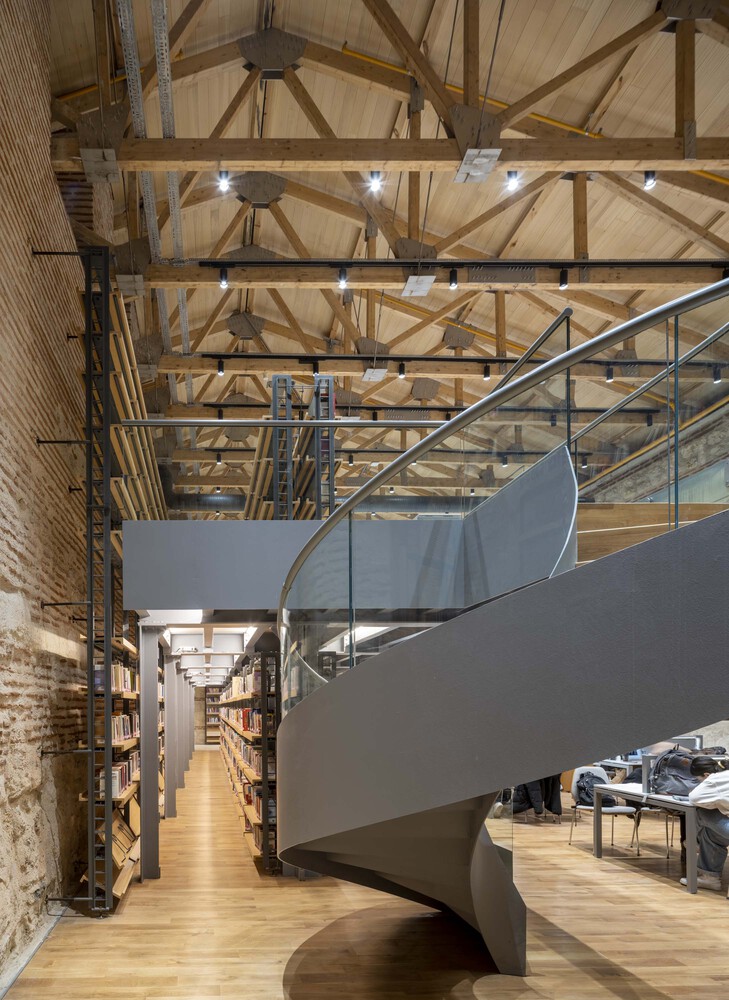
Supported by a simple steel system aligned with the bookshelves, these additions create new study and research areas while preserving the legibility of the original masonry architecture.
Their material expression—steel and timber—subtly differentiates new interventions from the historic fabric.
Since its opening, the library has quickly become a major cultural destination, welcoming 6,203,524 visitors as of April 17, 2025, with numbers expected to reach 7,240,019 by the end of the year—demonstrating the effectiveness of a design that transforms a historic barracks into a vibrant public learning environment.