
Skubianka House
SKUBIANKA HOUSE
Szcz Jakub Szczesny
ARCHITECTS
Szcz Jakub Szczesny
DESIGN TEAM
Szcz Jakub Szczęsny
PHOTOGRAPHS
Nate Cook
AREA
162 m²
YEAR
2025
LOCATION
Skubianka, Poland
CATEGORY
Residential Architecture, Houses
English description provided by the architects.
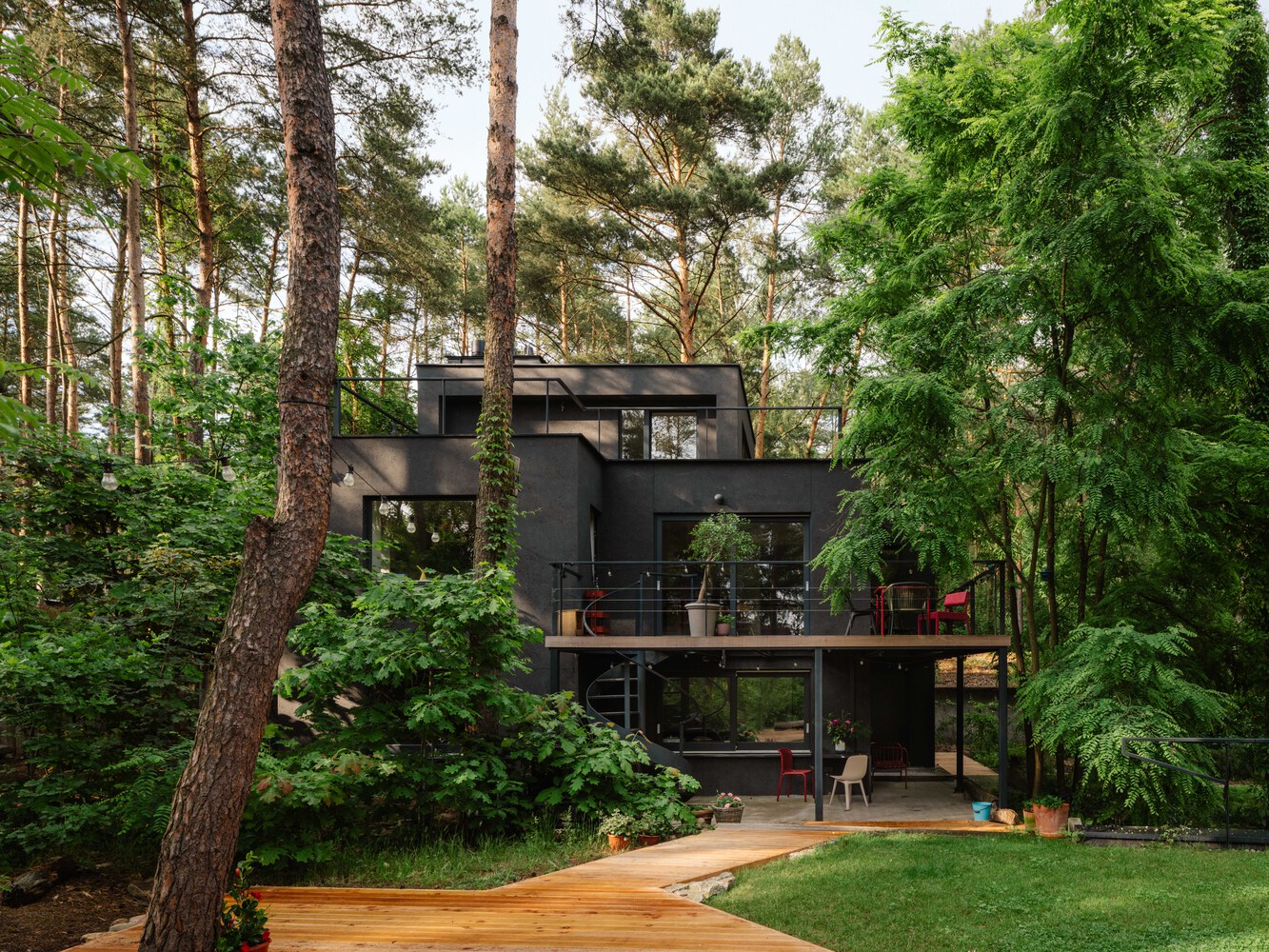
The house is located in one of the villages near Warsaw, close to a river, surrounded by a gently sloping mixed forest.
The owners say they bought it by accident when they met a real estate agent while walking their dog, who led them to a pyramid-like building hidden among the trees. It turned out to be an uninhabited residence, which the local militia commander had dreamed of owning.
The building was constructed between 1976 and 1981 during a period of crisis and low availability of building materials.
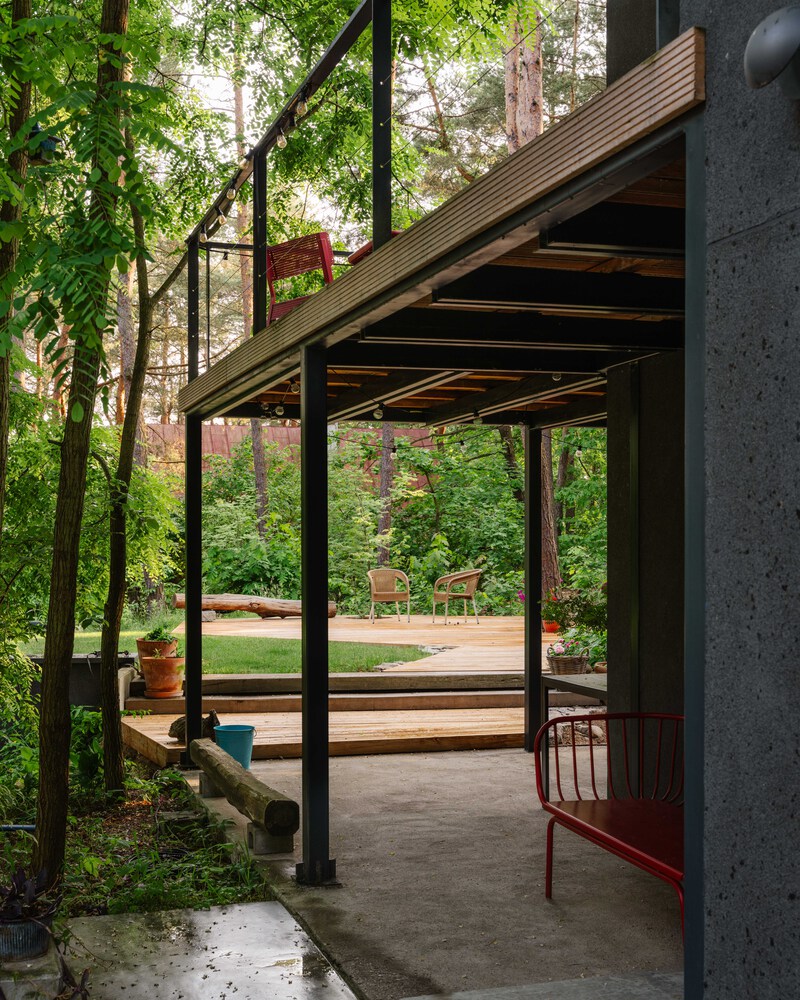
It was built from whatever could be obtained from construction sites and renovations of infrastructure facilities: for example, the ceilings were made of tram rails, which were laid at a slight slope above the ground floor, as they pierced through the outer wall and became part of the terrace structure.
Thanks to its slight slope, the terrace was naturally drained. At the same time, the floor in the living room behind the wall had a noticeable slope, and the wall was blackened by the cold and moisture penetrating through the rails.
The original construction documentation consisted of a few A4 pages with very sketchy drawings and one page of laconic description.
At the beginning of the process, I made it clear to the clients that renovating this building would probably be more expensive than building a new one, and certainly much more labor-intensive.
However, the owners assured me that they wanted to keep the stepped shape of the building, that they were not afraid of low ceilings, and that they wanted to be in contact with the green surroundings.
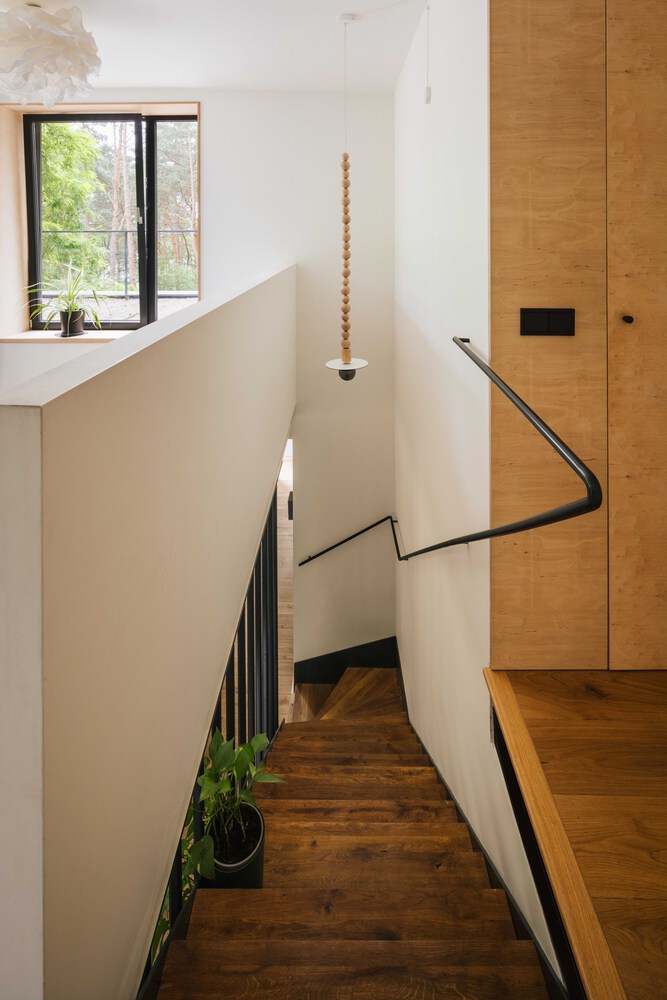
Therefore, we introduced large glazing, specializing in windows that can be opened, mainly for ventilation, and those that offer a view, usually unopenable and panoramic.
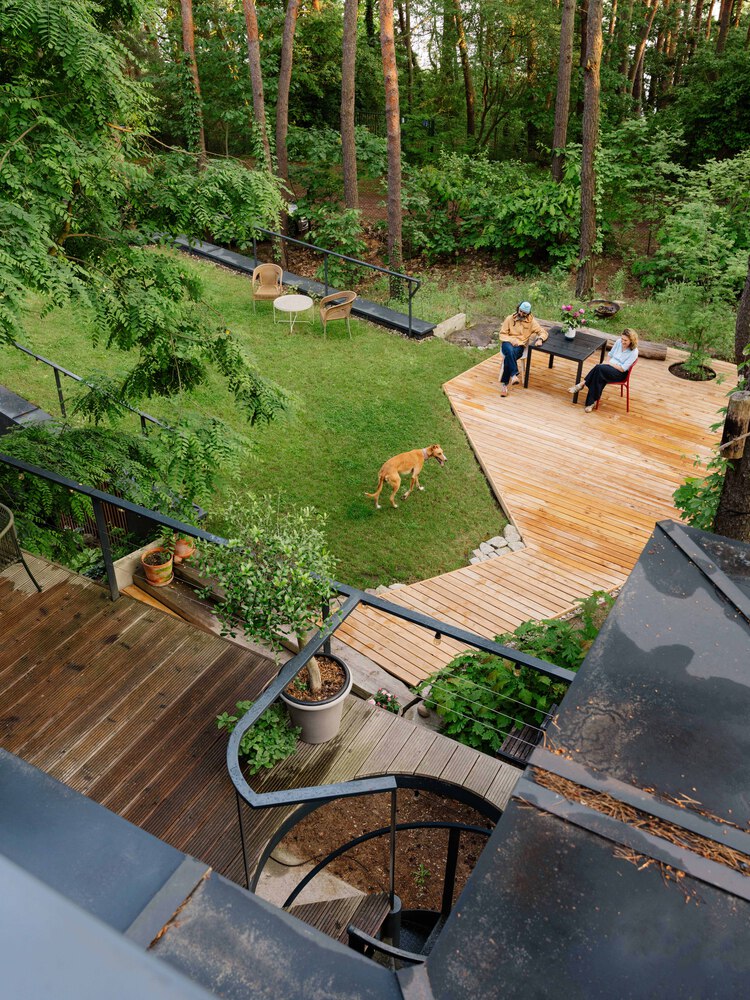
Also, for the sake of visual continuity, and especially the view of the sloping plot and the river, the clients decided on a radical move: on their own responsibility, they decided not to have any railings on the top level, which were ultimately limited to posts and balustrades.
Fortunately, no small children were to live here: the house was to be used only by a mature couple and their two adult daughters, who visited occasionally.
Initially, the building was intended to serve as a second home, i.e., for seasonal and weekend stays, but, as the clients stated, as the interior work progressed, they realized that the place was so relaxing that they were less and less inclined to return to their apartment in Warsaw.
Despite the long completion time, complicated by, among other things, the pandemic, they remember living in the never-ending interior construction as an exciting time of creation.
The owner of the house is skilled with his hands, so with the help of friends, he built most of the furniture, made metalwork elements, and a door with a hydraulic lift for the underground storage room created in the repair channel in the garage, which became a workshop.
His daughters, who are art students, helped with the design of some of the bathrooms.
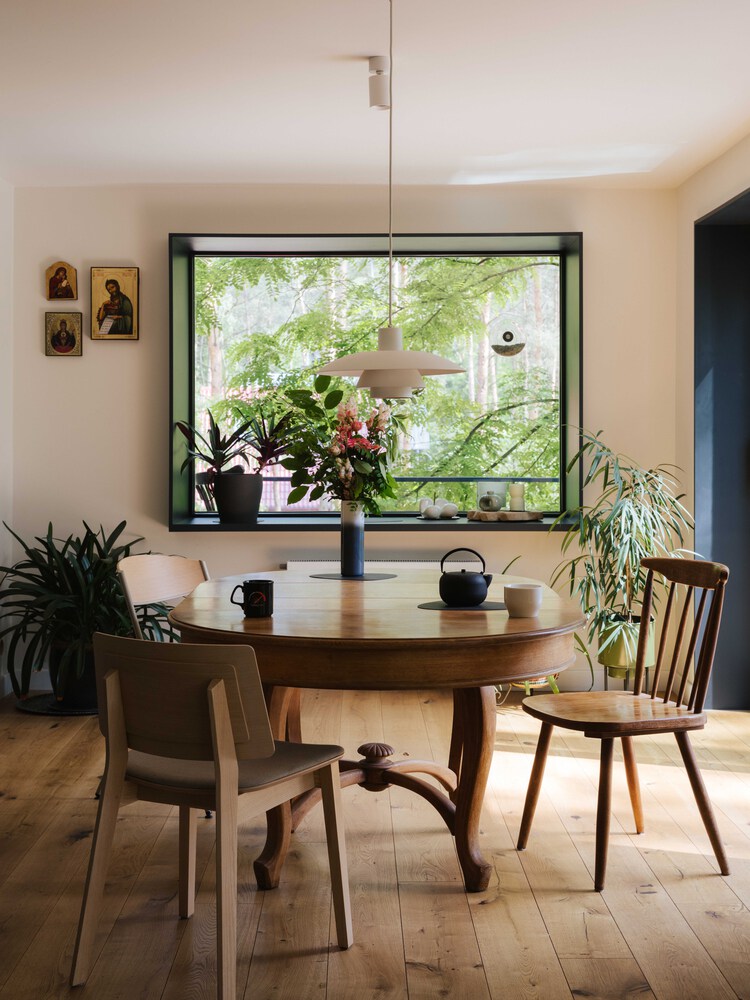
Our common goal was to discreetly hide the abode among the trees and create a contrast between the camouflaged exterior (I initially suggested literally covering the building with a military camouflage-alike mural) and the warmth of the eclectic interior.
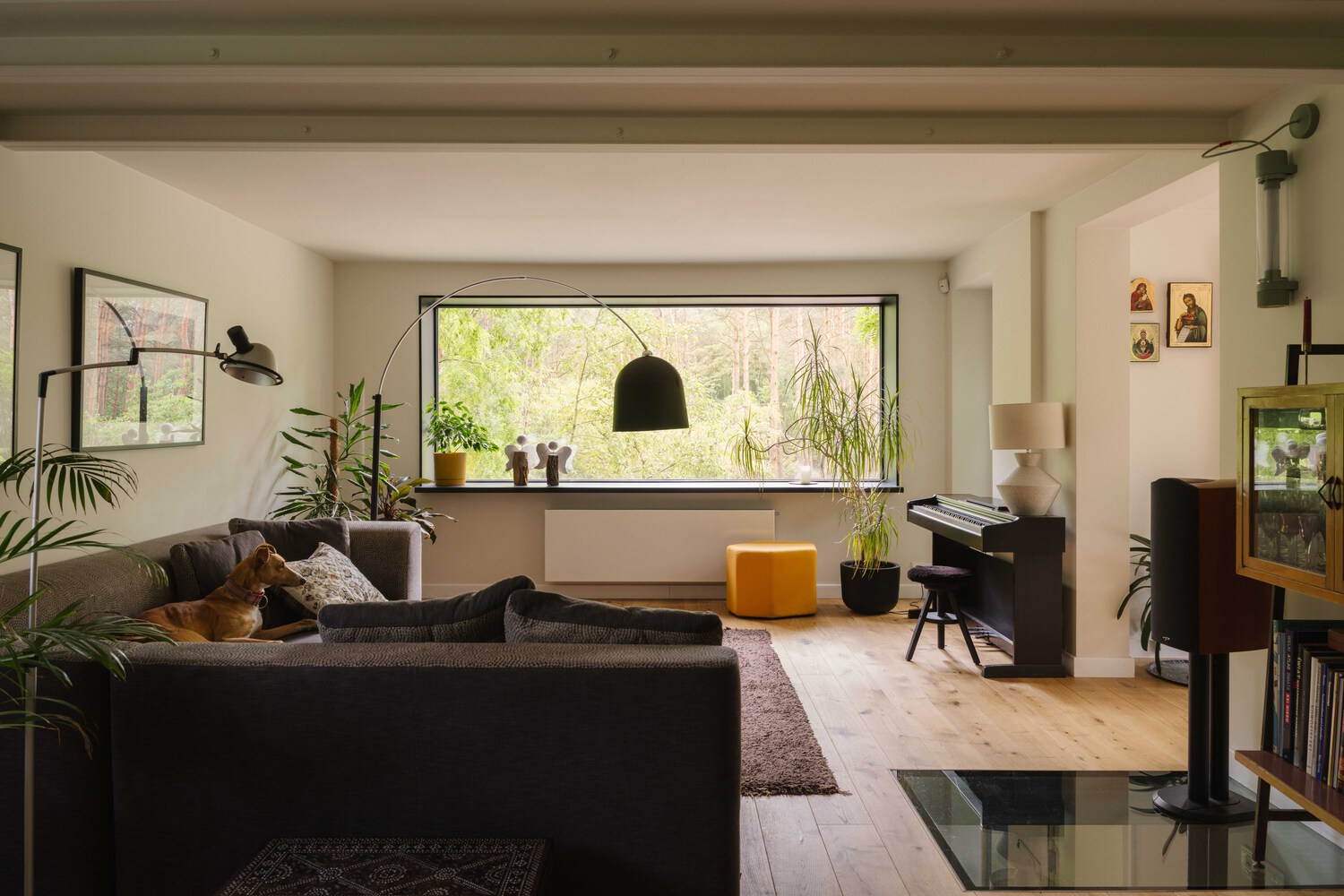
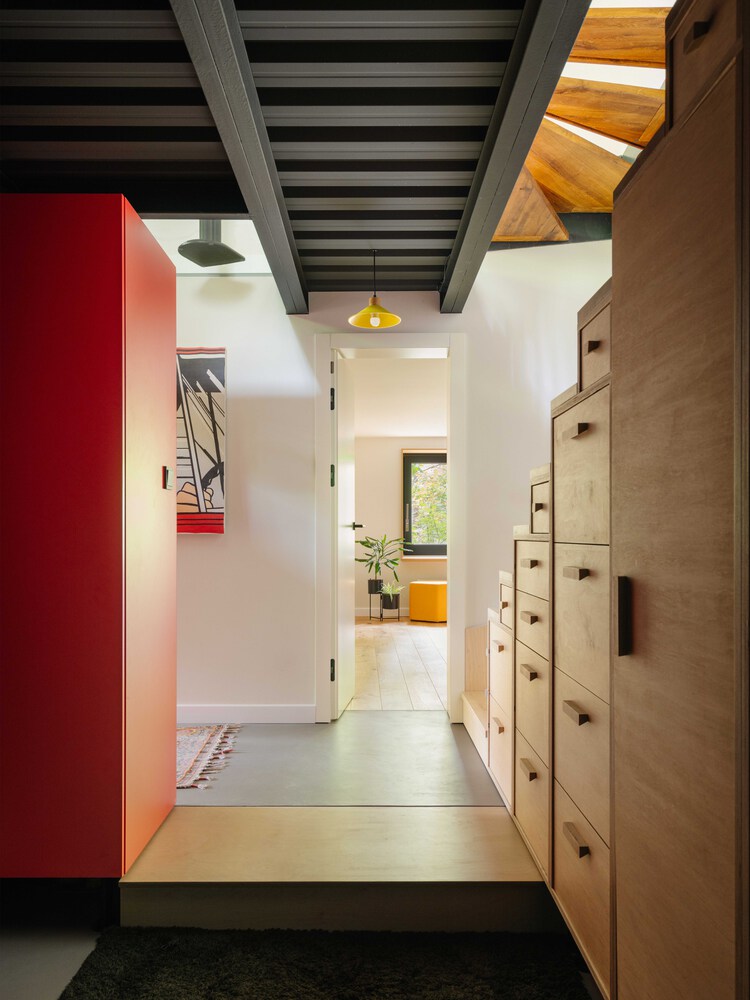
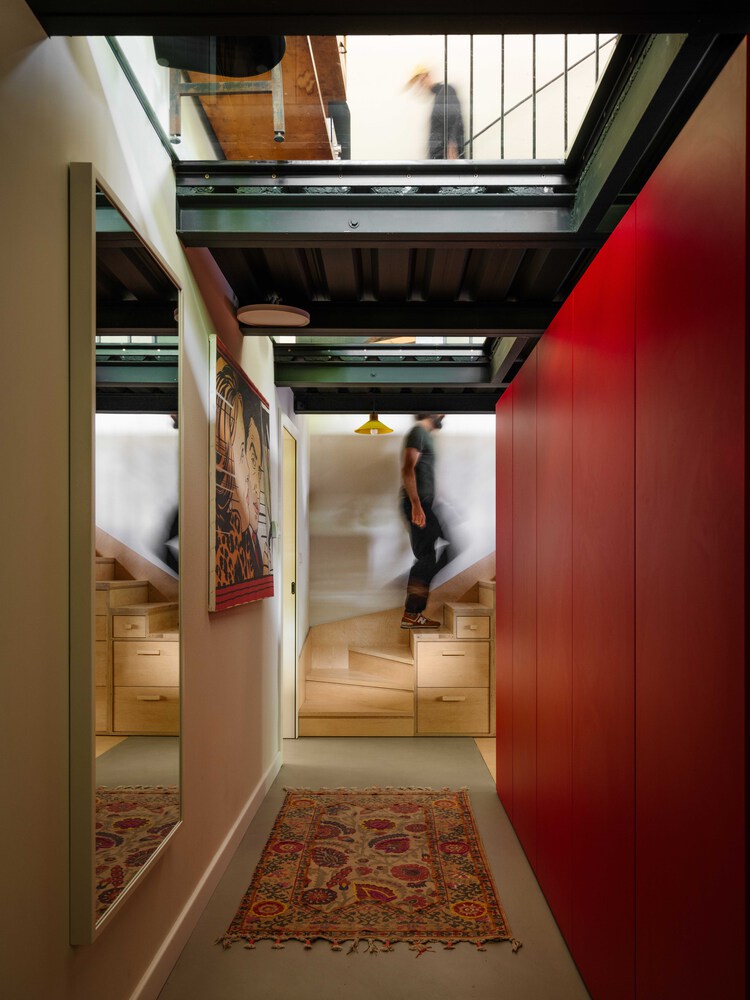
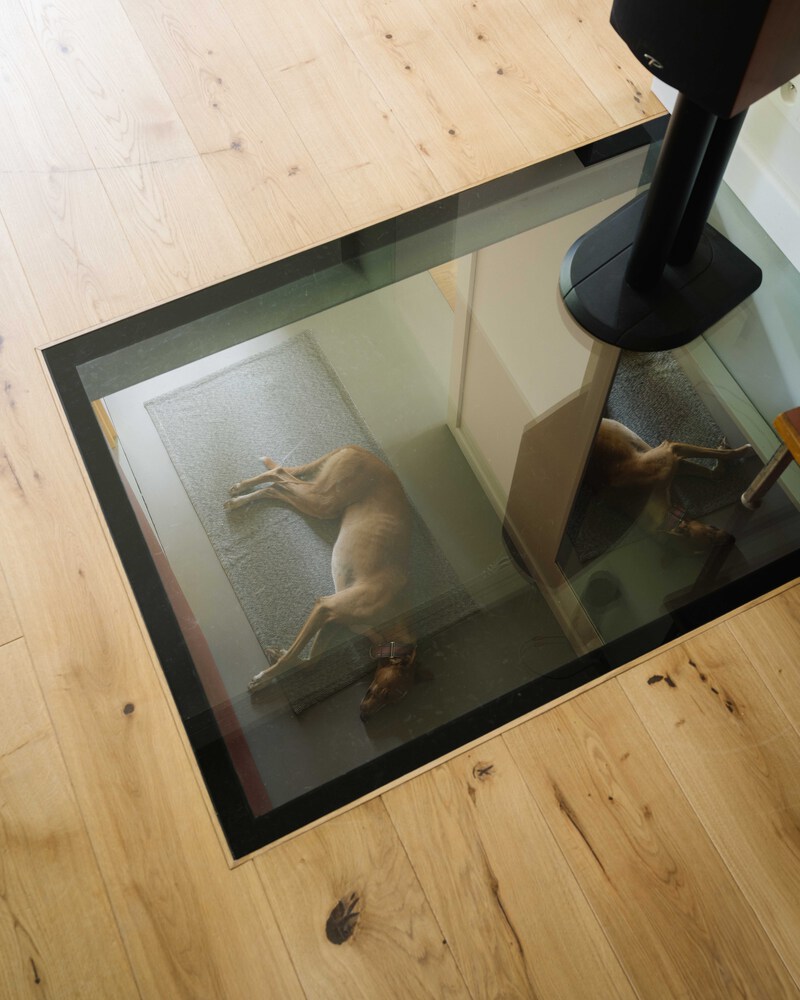
During the process, we proposed floor skylights in the terrace to illuminate one of the guest bedrooms and in the living room to illuminate the corridor on the ground floor, which gives surprising effects of vertical visual continuity.
Personal involvement in the construction is evident in the atmosphere of the interiors, which do not look like they were designed "from above" by someone who was not emotionally, temporally, or financially involved in the construction.
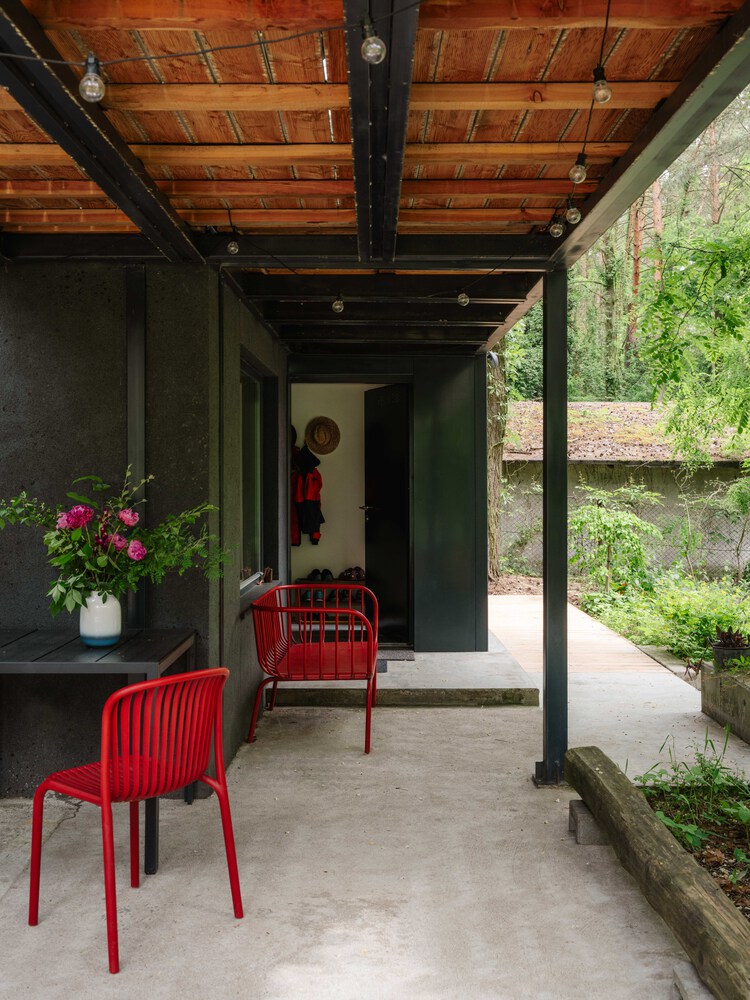
In short, you can see the heart that went into most of the details.
The building was to be as simple and subdued as possible. The windows were to attract attention, with additional wide steel frames and red accents in the interior.
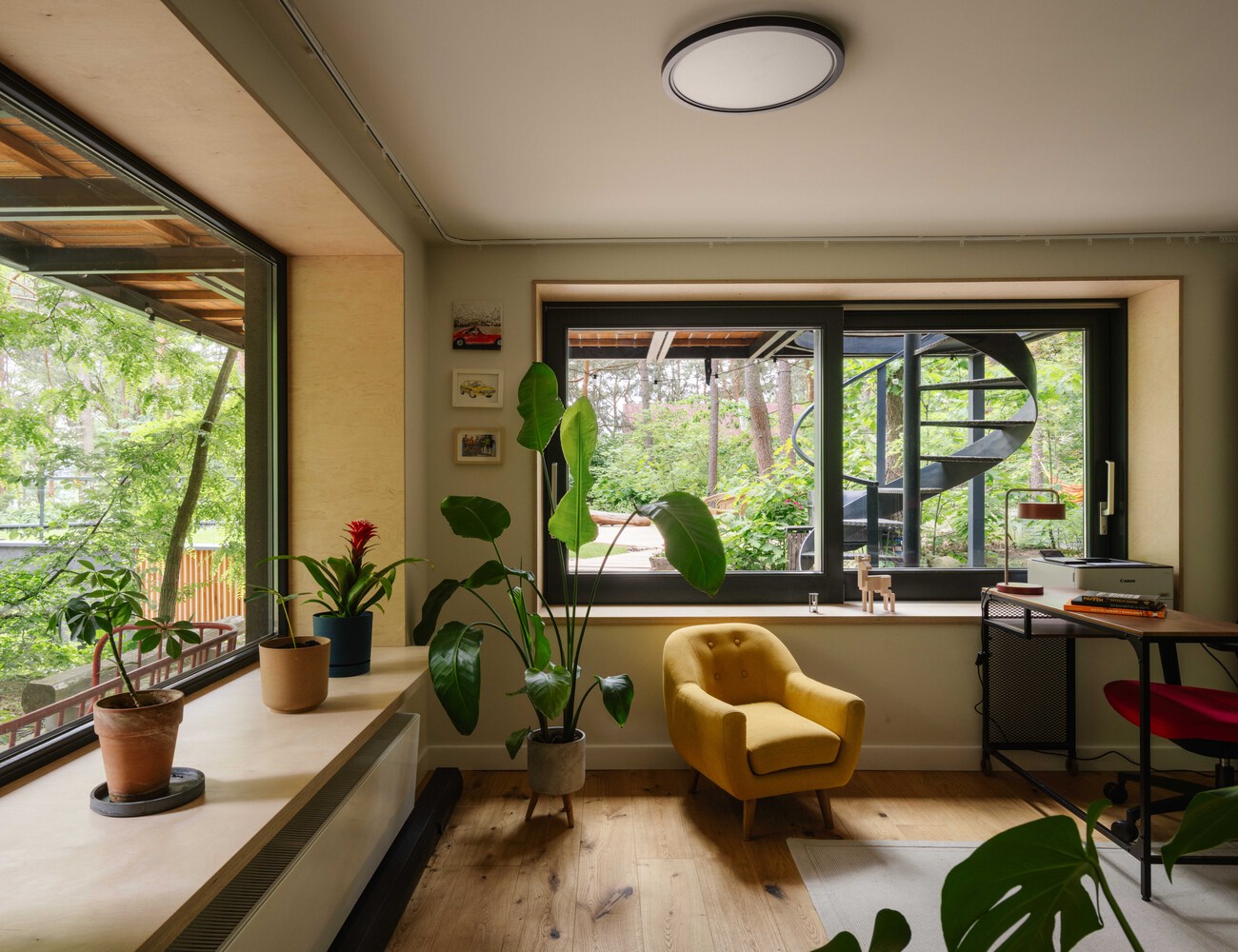
The house was designed to raise the level of the living area and enjoy a better view: above the low ground floor, where there are two guest bedrooms for the daughters, a study and a bathroom with a boiler room, there is a kitchen with a dining area and a living room with an additional toilet and a new terrace (the old one had to be dismantled).
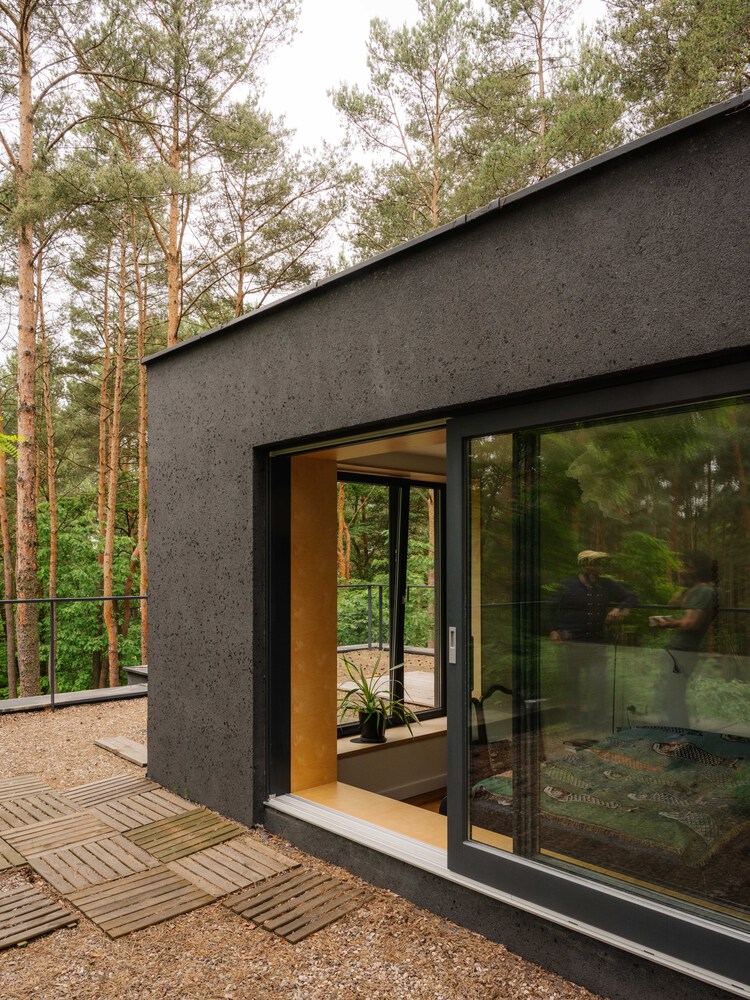
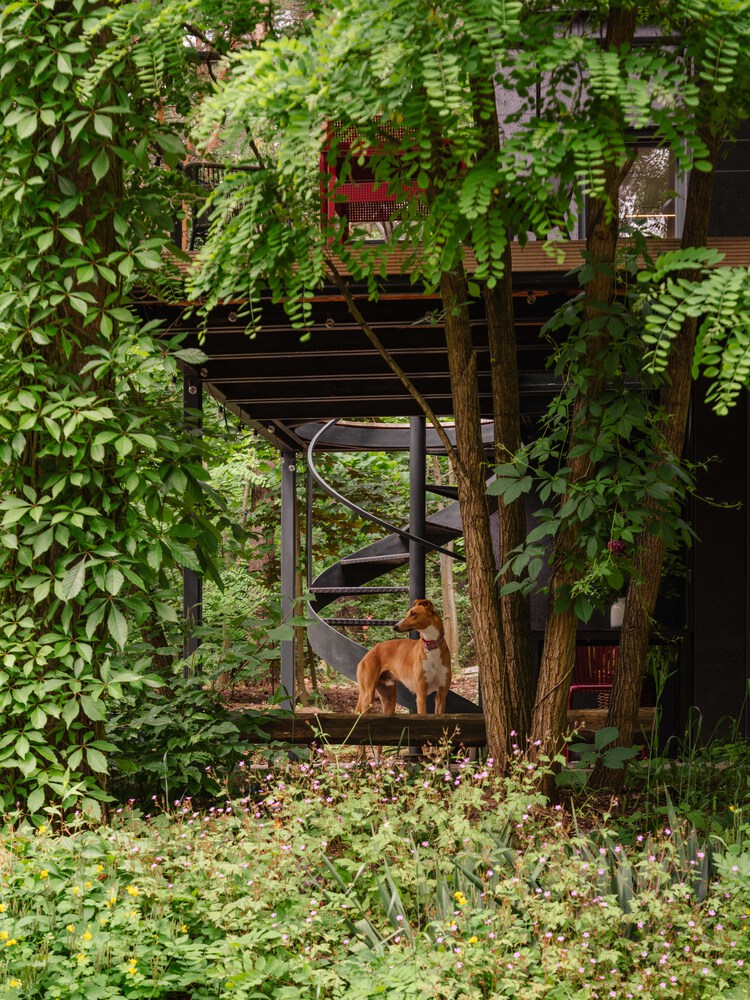
Above, there is the master bedroom with a view of the forest and the river, a small bathroom, and two terraces.
During the construction, the clients decided to change the original location of the garage and cover it with a green roof, which can be accessed from the higher part of the plot.
According to the residents of the house, people in the area called it a "block" and considered it ugly due to its rectangular shape and lack of at least a gable roof.
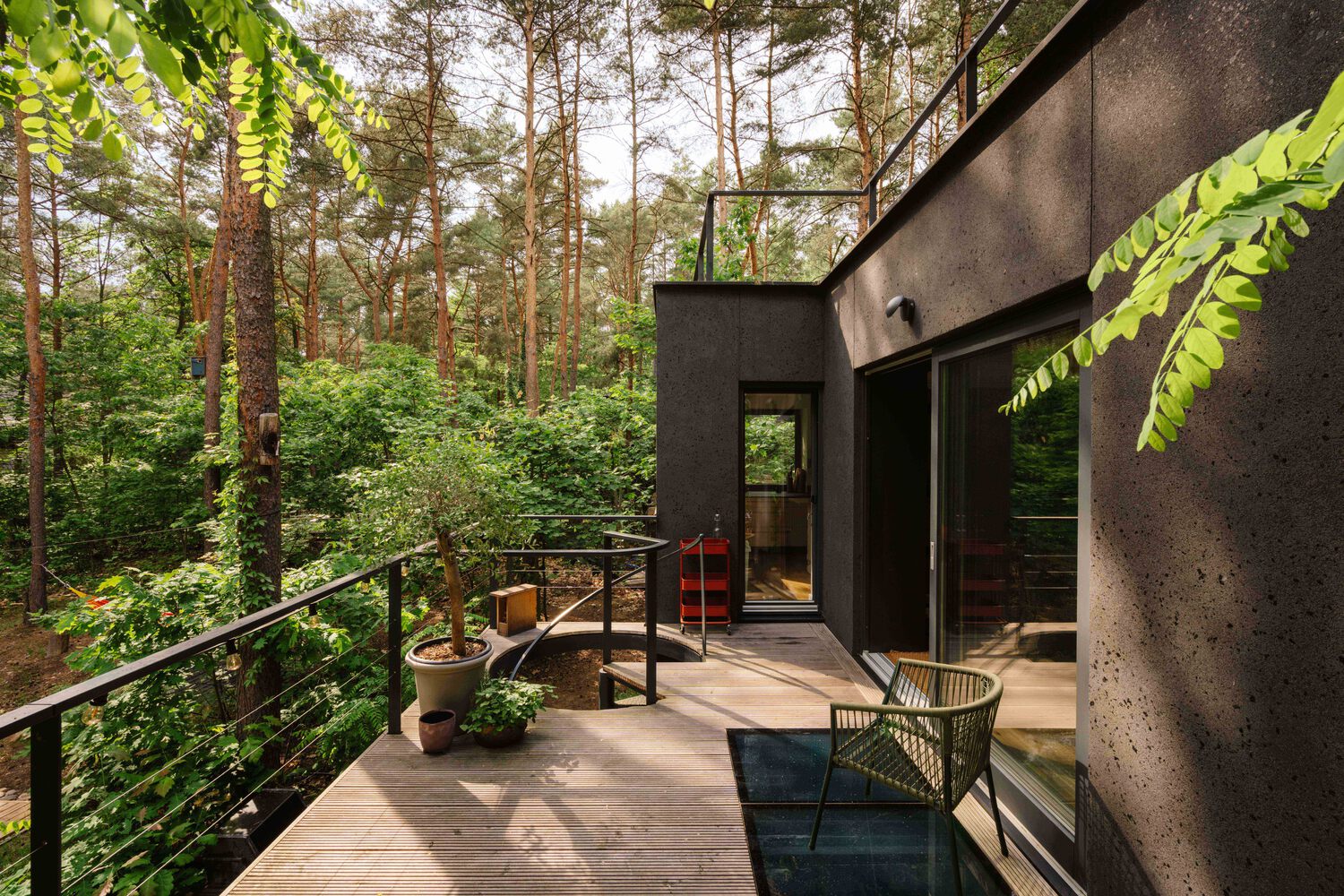
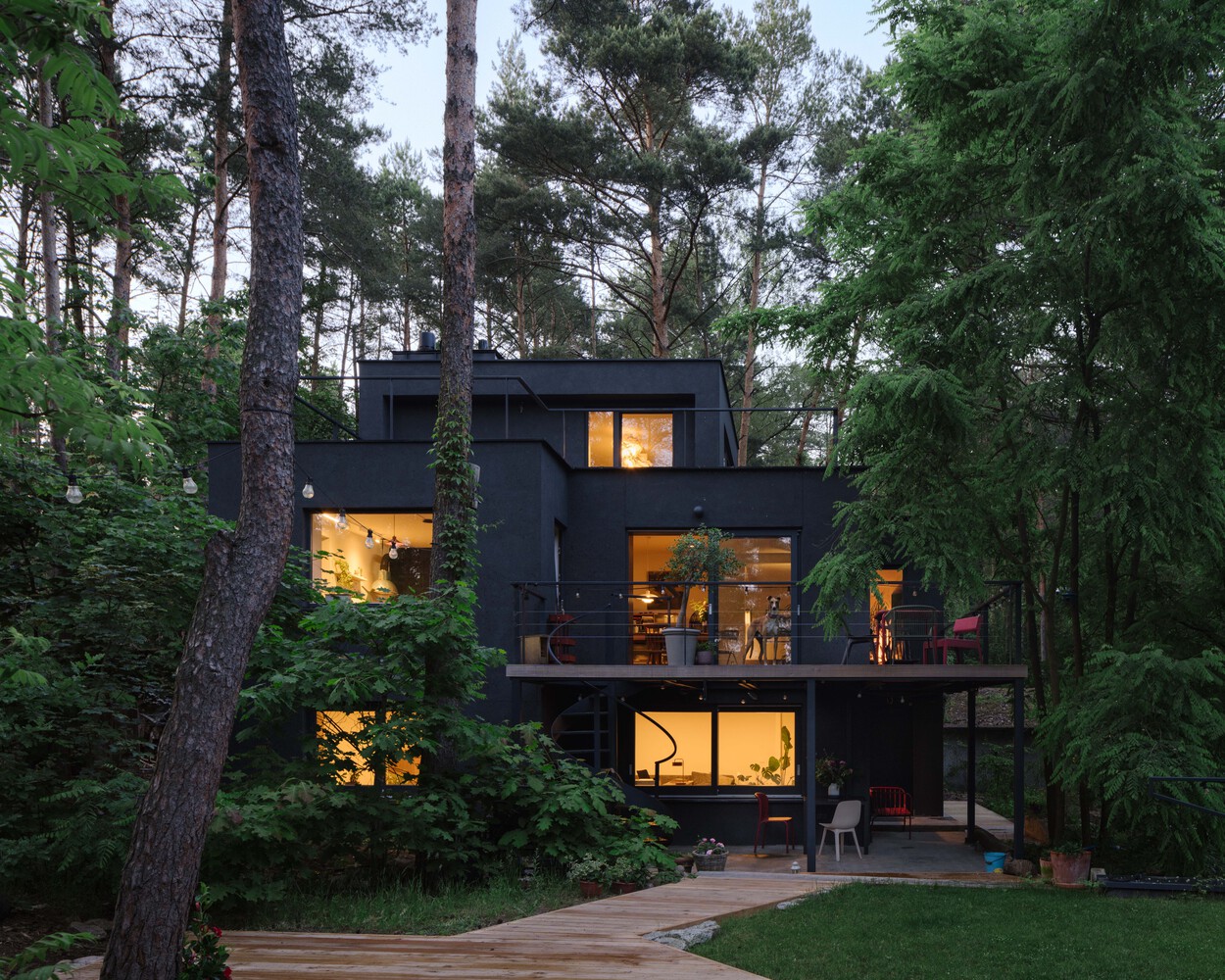
However, it was precisely this set of shapes resembling figures from the game Tetris that attracted the current owners so much that they bought the house without hesitation and did not even think about replacing it with another one.
All the interiors are low: the ground floor, at 212 centimeters, is a testament to the legal restrictions of the Polish People's Republic, when low floors that did not meet the height requirements for usable space were built to circumvent space restrictions.
Even the first floor and the "kiosk" with the master bedroom are only 250 cm high. After the introduction of panoramic windows and skylights in the living room floor, the interiors are very cozy but not claustrophobic, reminiscent of Scandinavian homes, where space was kept to a minimum due to the cost of heating.
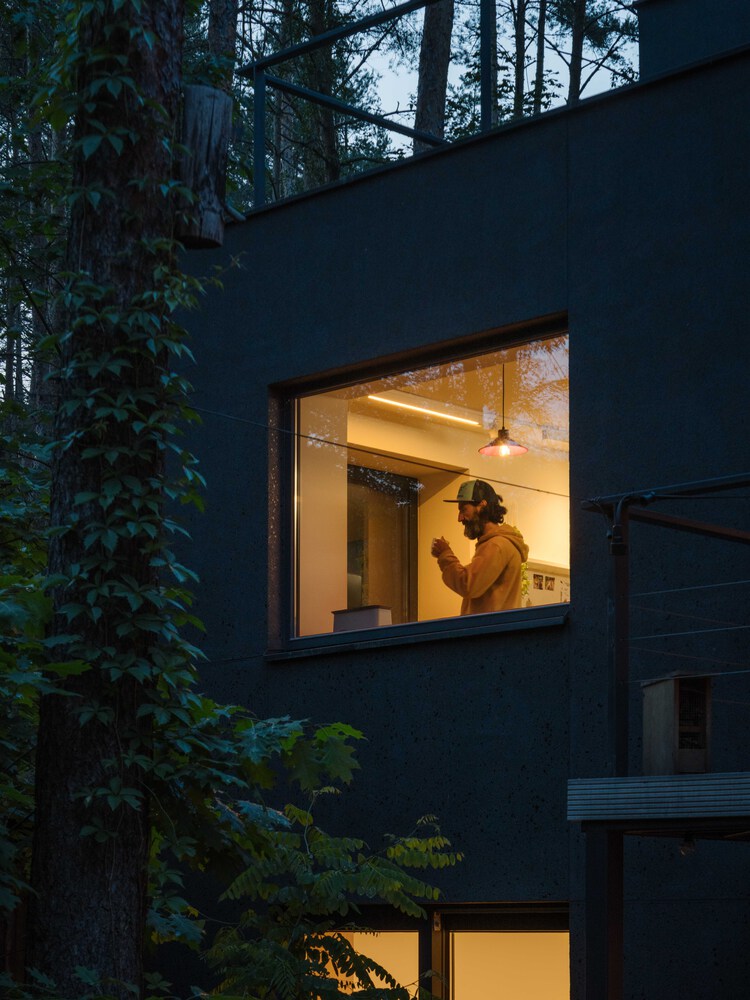
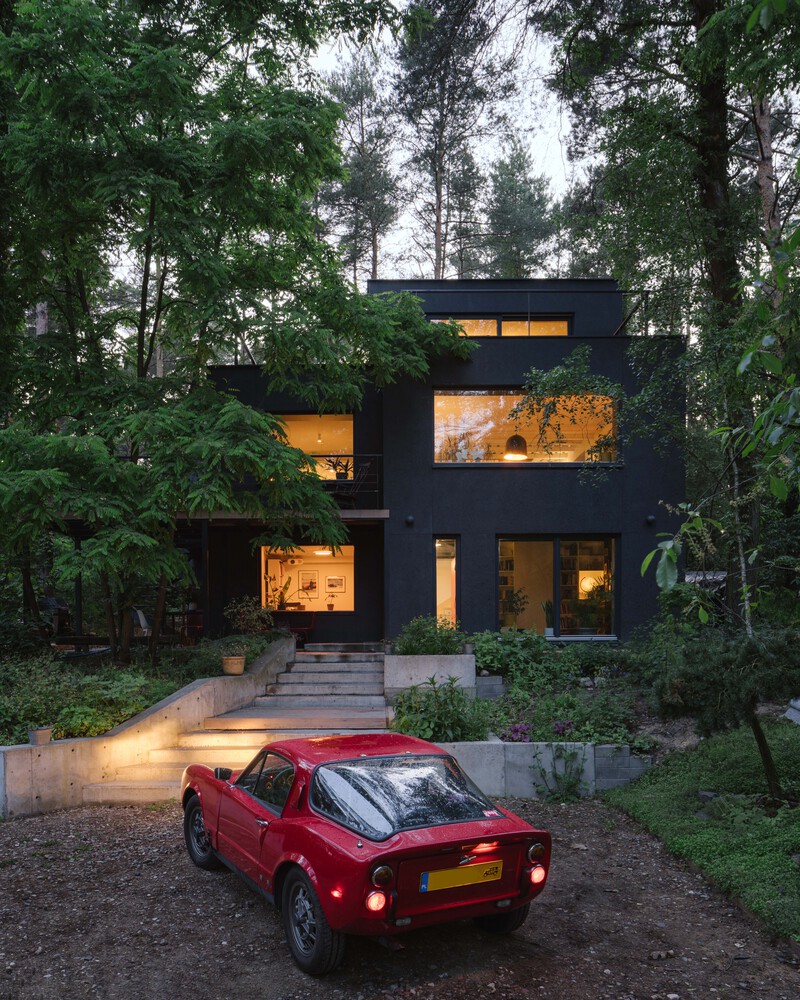
The owner admits that the entire investment is an experiment for him, but after about five years of construction, he and his family were honestly fed up with new ideas and iterations.
To finish the investment, they had to grit their teeth and work for another two years.
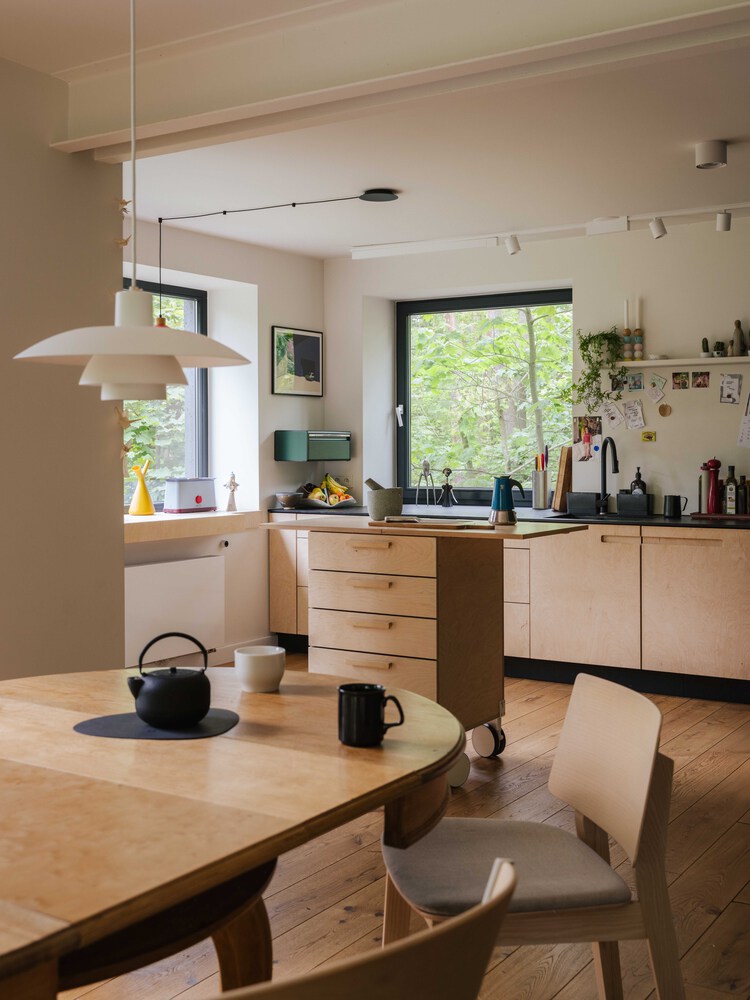
The iterations mainly concerned the layout of the land and the interiors, for which the owner built, among other things, kitchen units, a kitchen extractor fan from an old industrial lamp, and a foldable kitchen island on wheels reminiscent of Antonio Citterio's furniture for Vitra, which had been lying around for almost 30 years waiting for an opportunity to become important decorative elements.
The furniture is a hodgepodge of artifacts from literally everywhere, ranging from furnishings from the previous apartment to so-called "useful items," i.e., objects that had been lying around indefinitely on shelves in the family's garages and basements.
The owner of the house claims that he still has a lot of "useful items" in his new garage and that they are waiting for their turn when he builds a sauna, which he intends to put at the back of the house. „The problem with this place is that it's too cool. It's demotivating because even though we have fiber optics, we just don't feel like opening our laptops. We live in the illusion of a permanent vacation, " he said.