Botijo House
ALE Estudio
CONSTRUCTION
C.Jofemar S.L.
GRAPHIC DEVELOPMENT AND WORK
María González
COMMUNICATION AND LAYOUT
And Layout: María Ramos
BUILDER
Dasepa construciones
PROGRAM
Collective housing building
MANUFACTURERS
Ceràmica Ferres, Cinca, Cortizo, Cubro
PHOTOGRAPHS
Juan Aragonés
AREA
3929 ft²
YEAR
2024
LOCATION
Madrid, Spain
CATEGORY
Sustainability, Residential
English description provided by the architects.
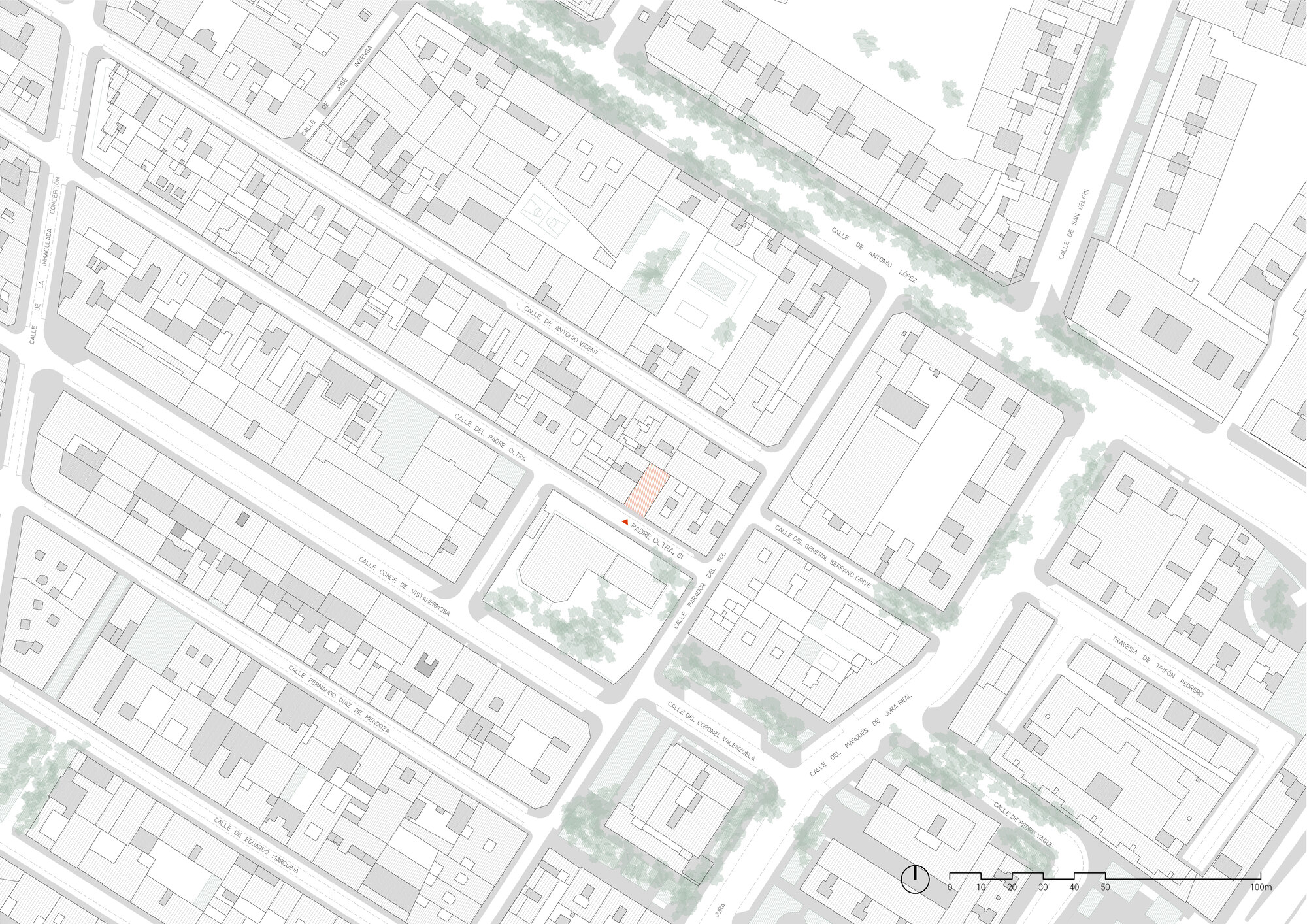
The Botjio house is located on a street where low houses are interspersed with small industrial buildings of the early 20th century.
It is a neighborhood within the neighborhood, with a reduced scale.
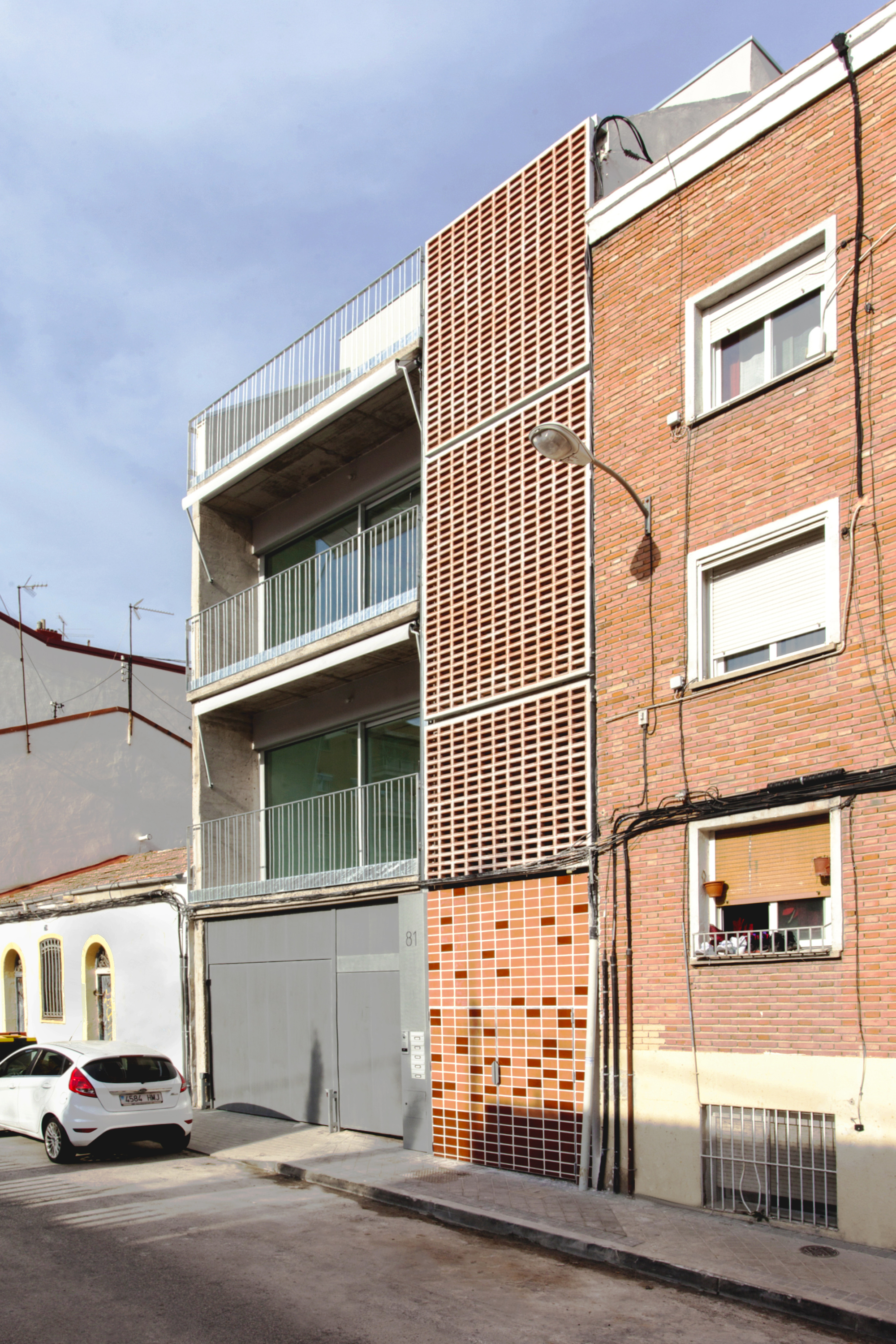
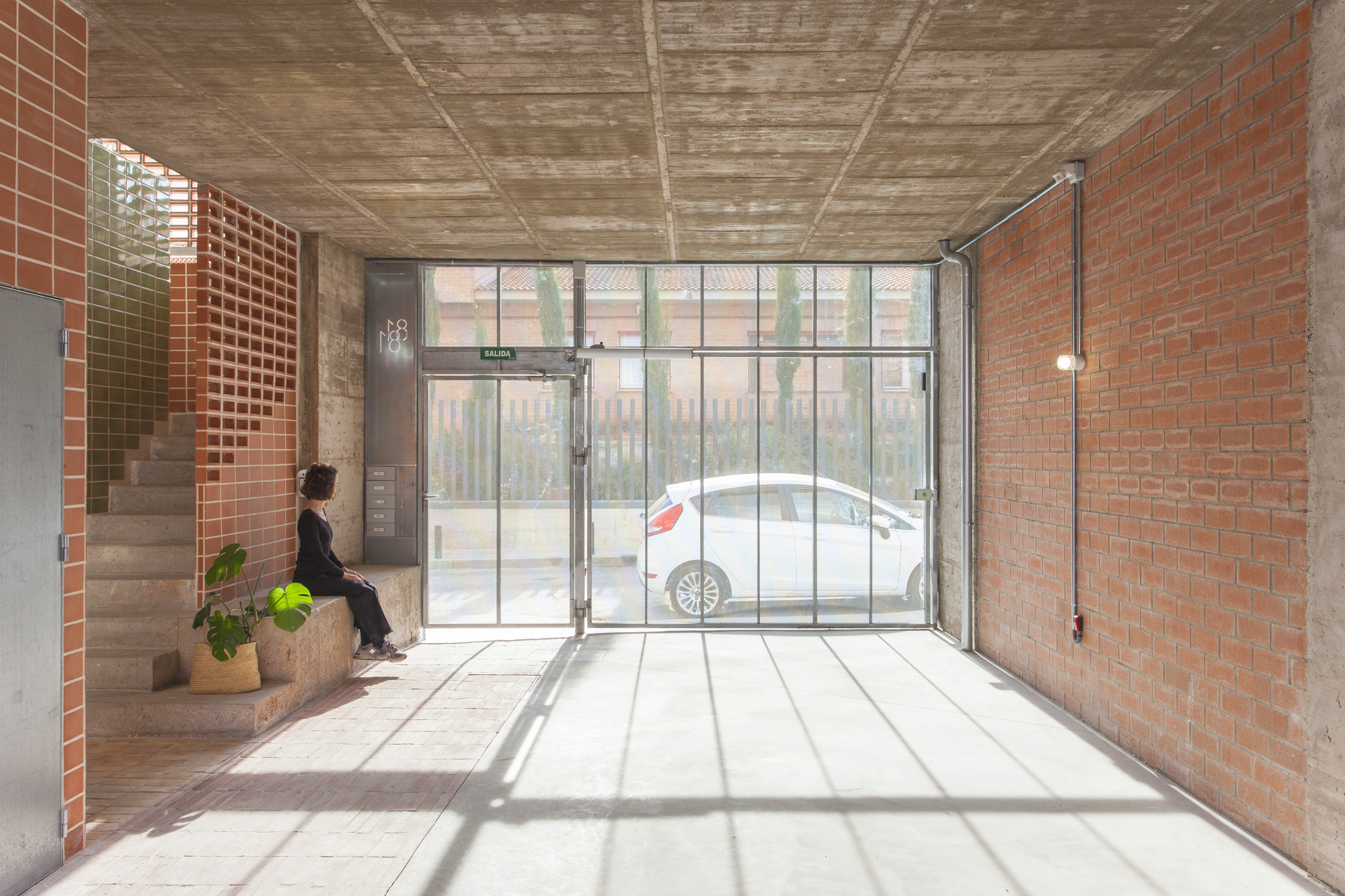
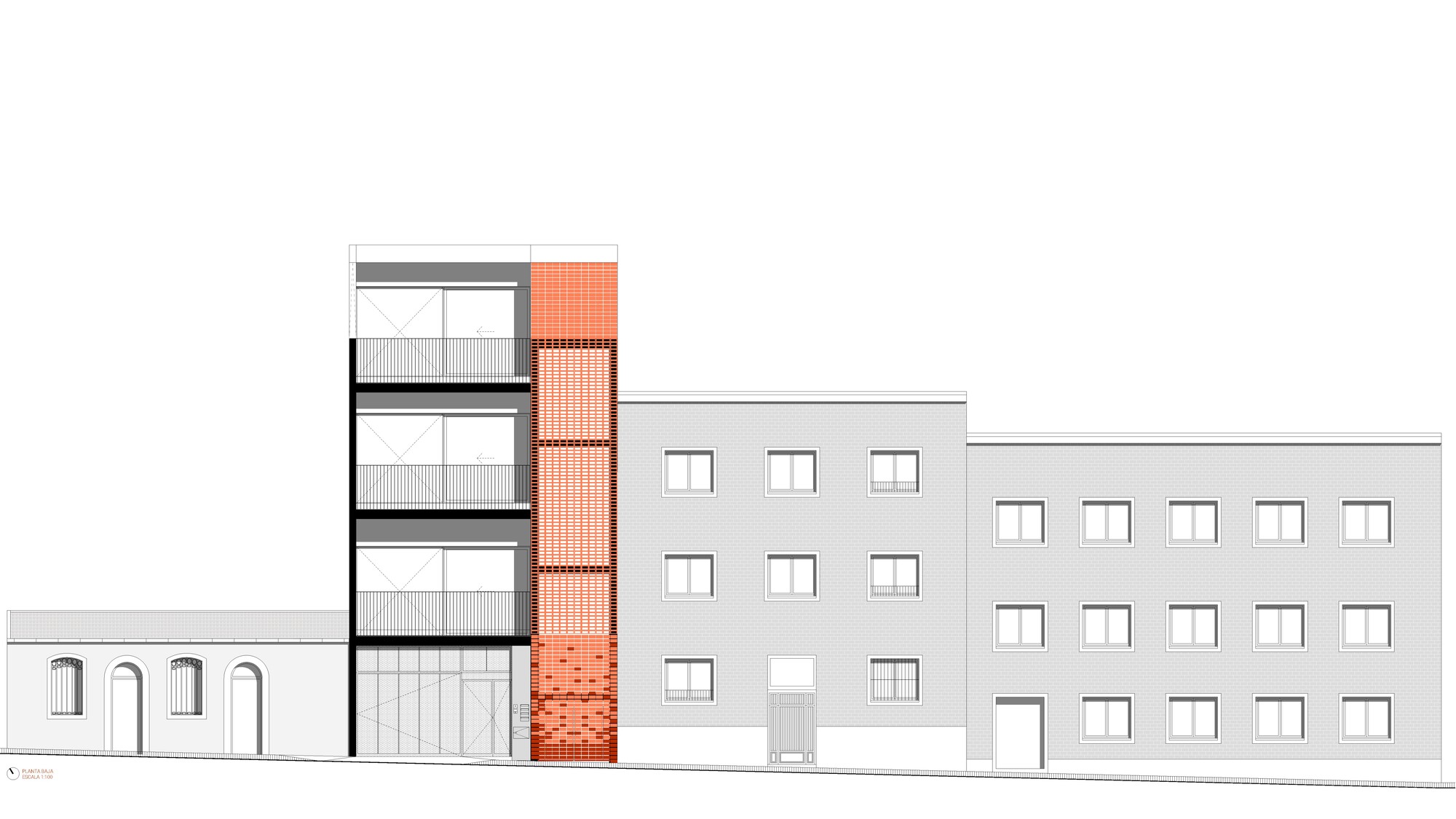
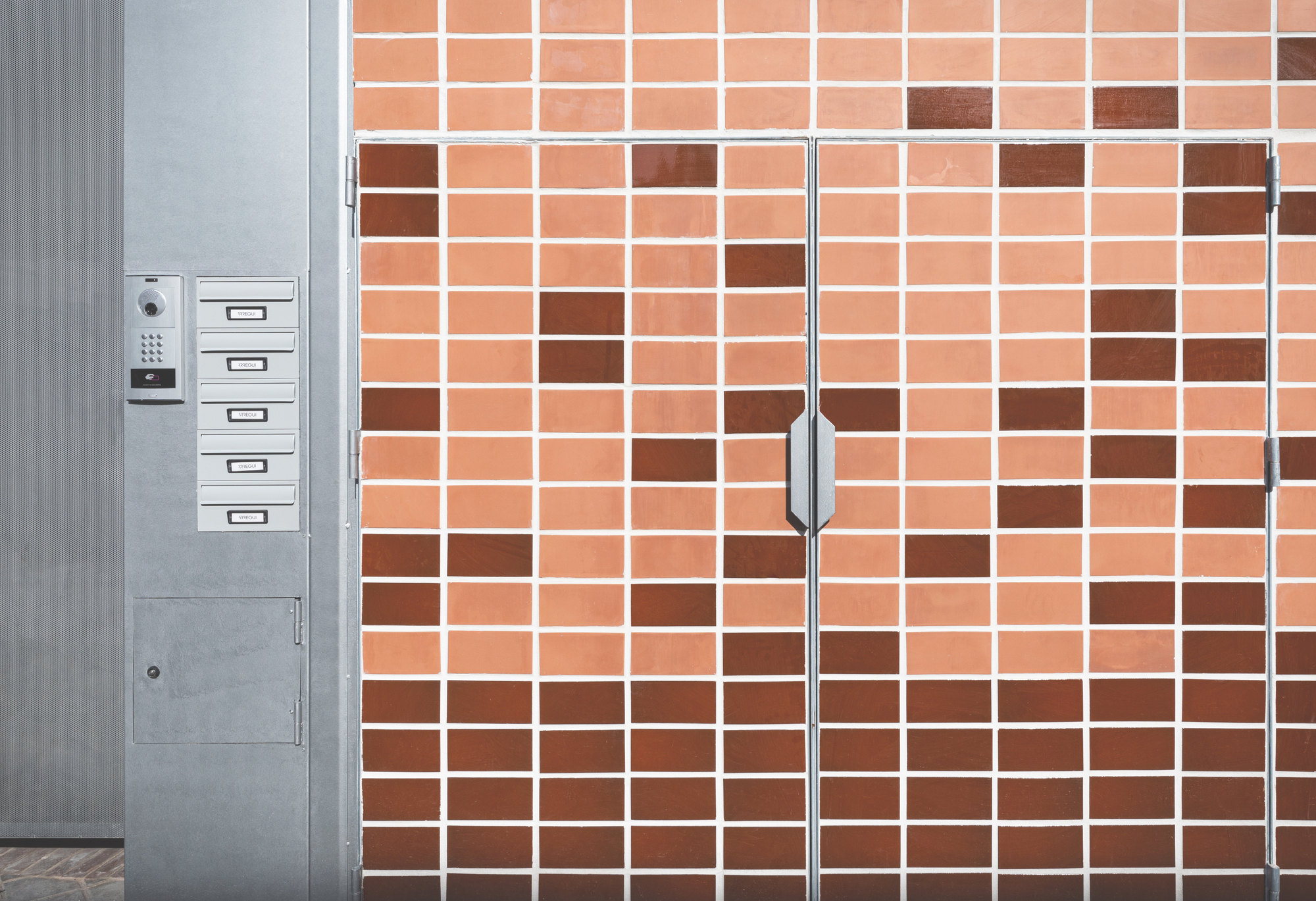
Red brick is the predominant material that colors the street. Its ceramic wraps both the low houses and the industrial warehouses, creating a homogeneous landscape despite the diversity of uses.
The project takes up the elements that characterize the environment: the materials such as brick, but also the exposed concrete and galvanized steel, which although to a lesser degree, splash the buildings in the area.
From this attentive gaze emerges the most emblematic piece of the complex: a ceramic latticework behind which the stairwell is hidden.
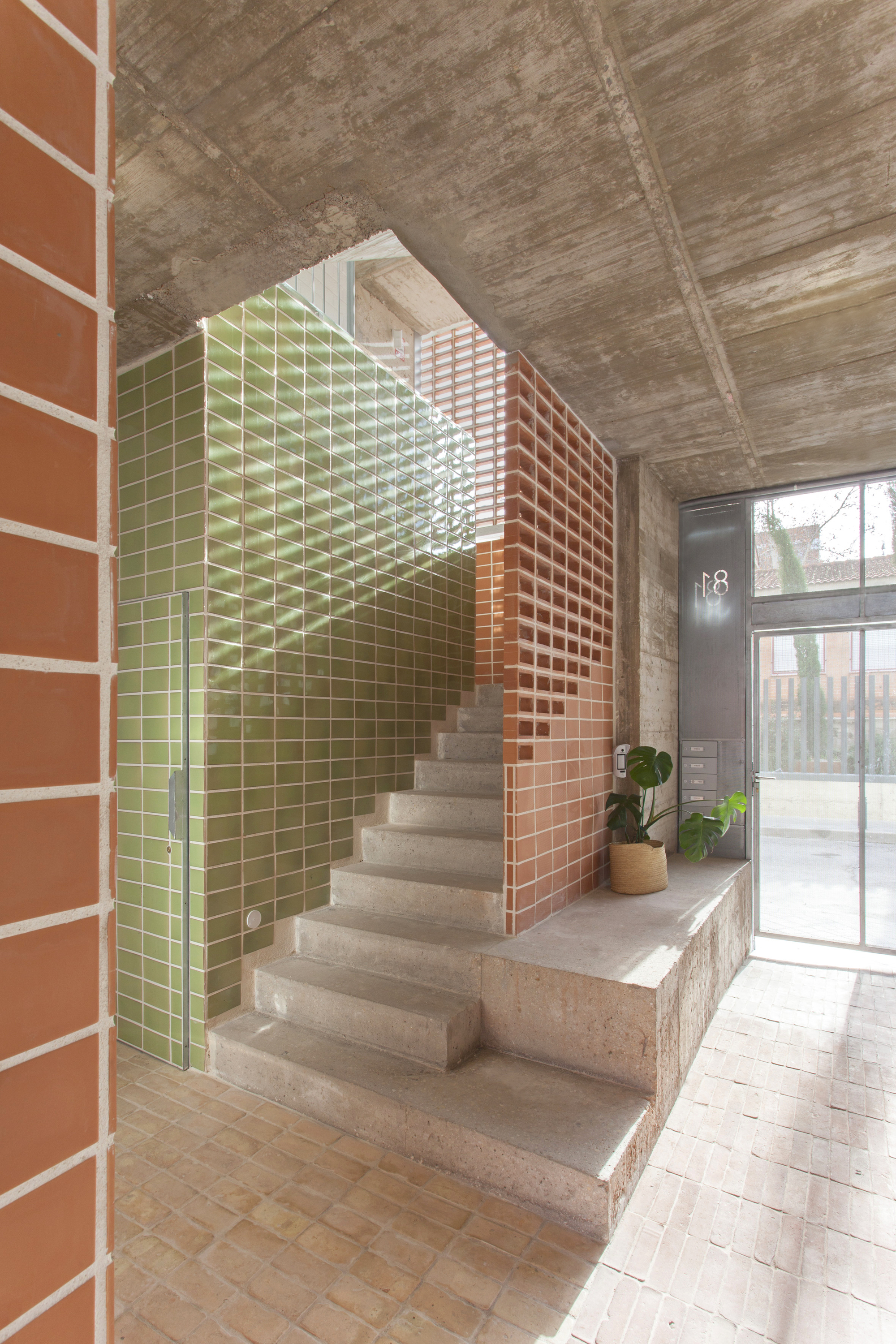
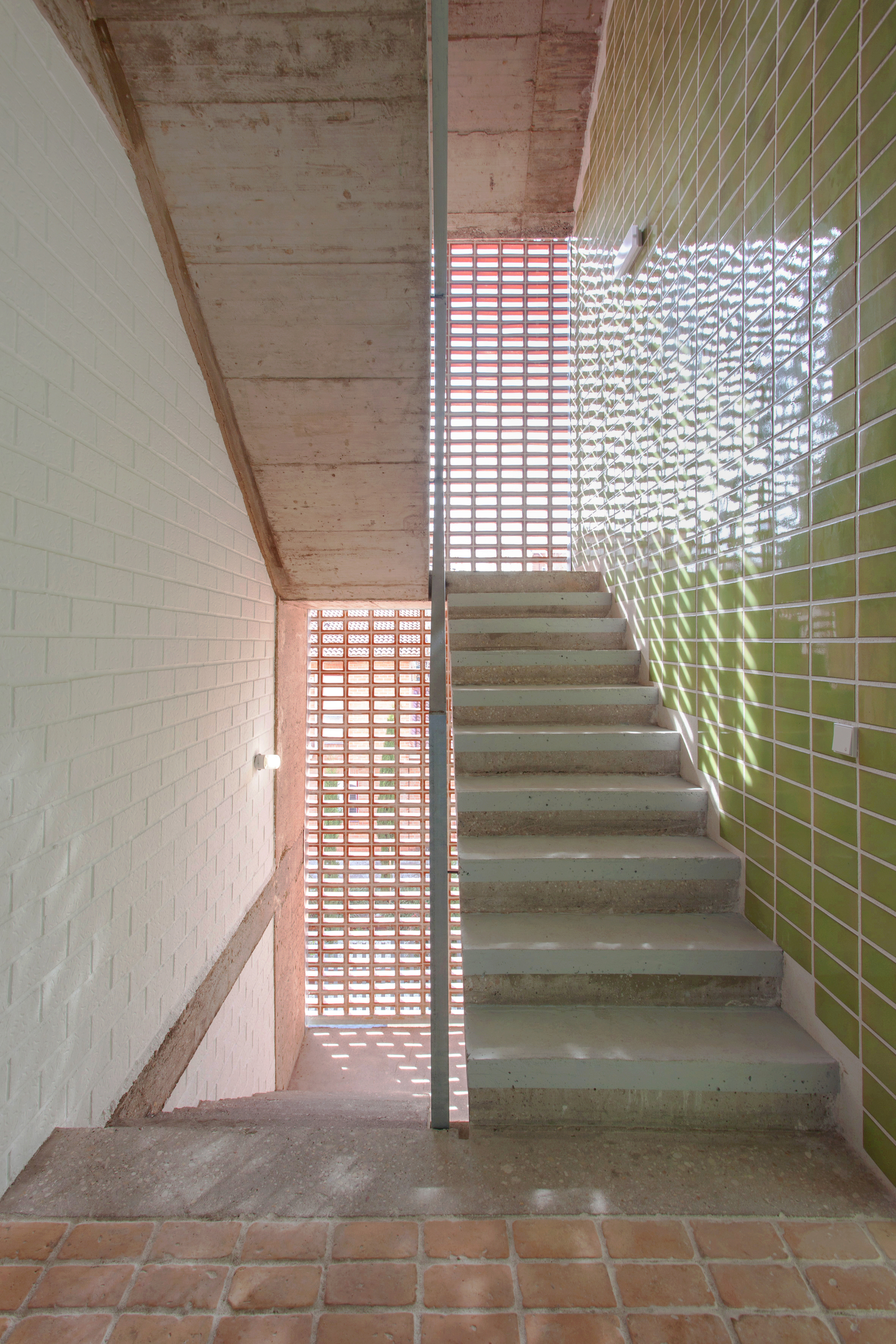
The lattice on the façade appears as a large seam of brickwork that intertwines itself with the neighboring building.
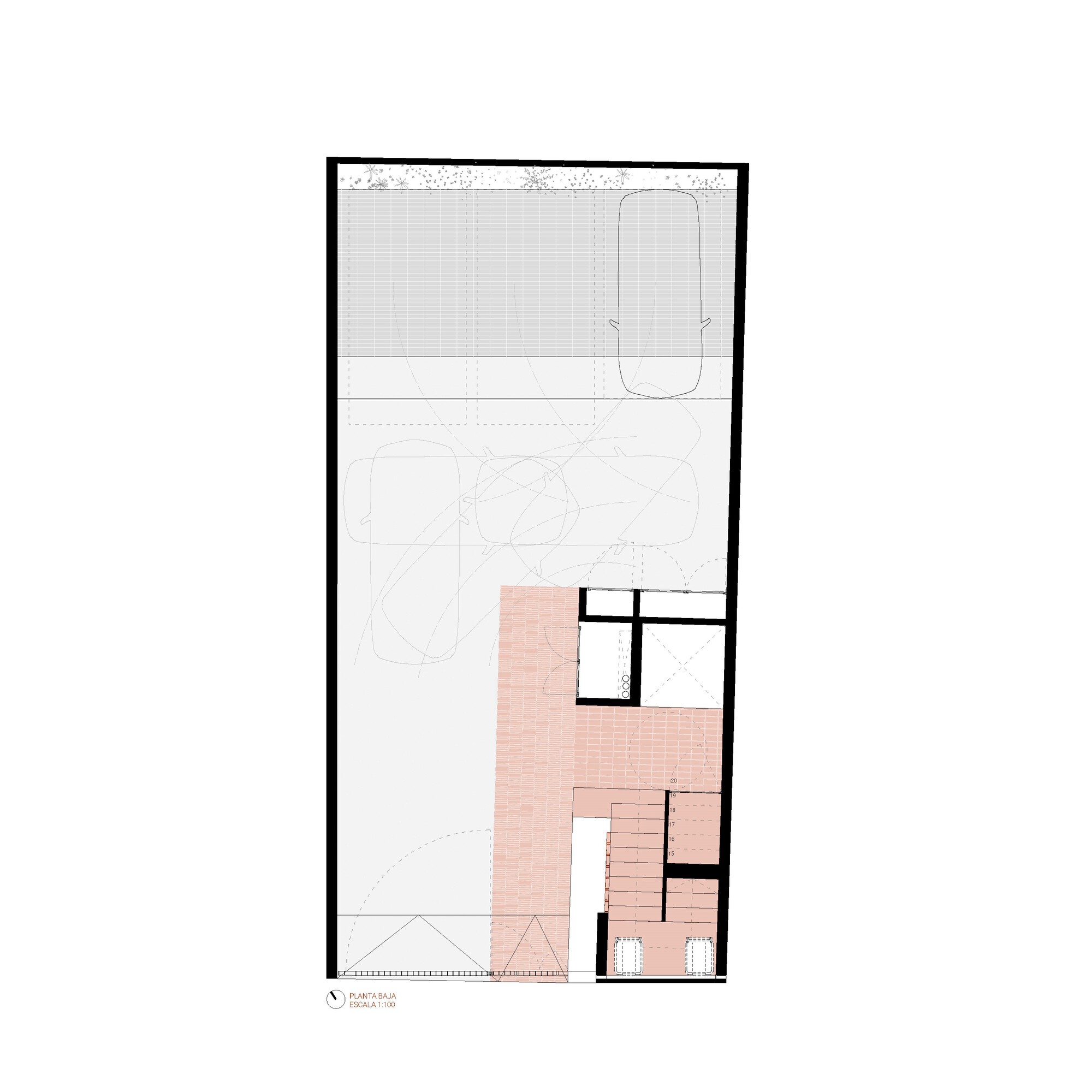
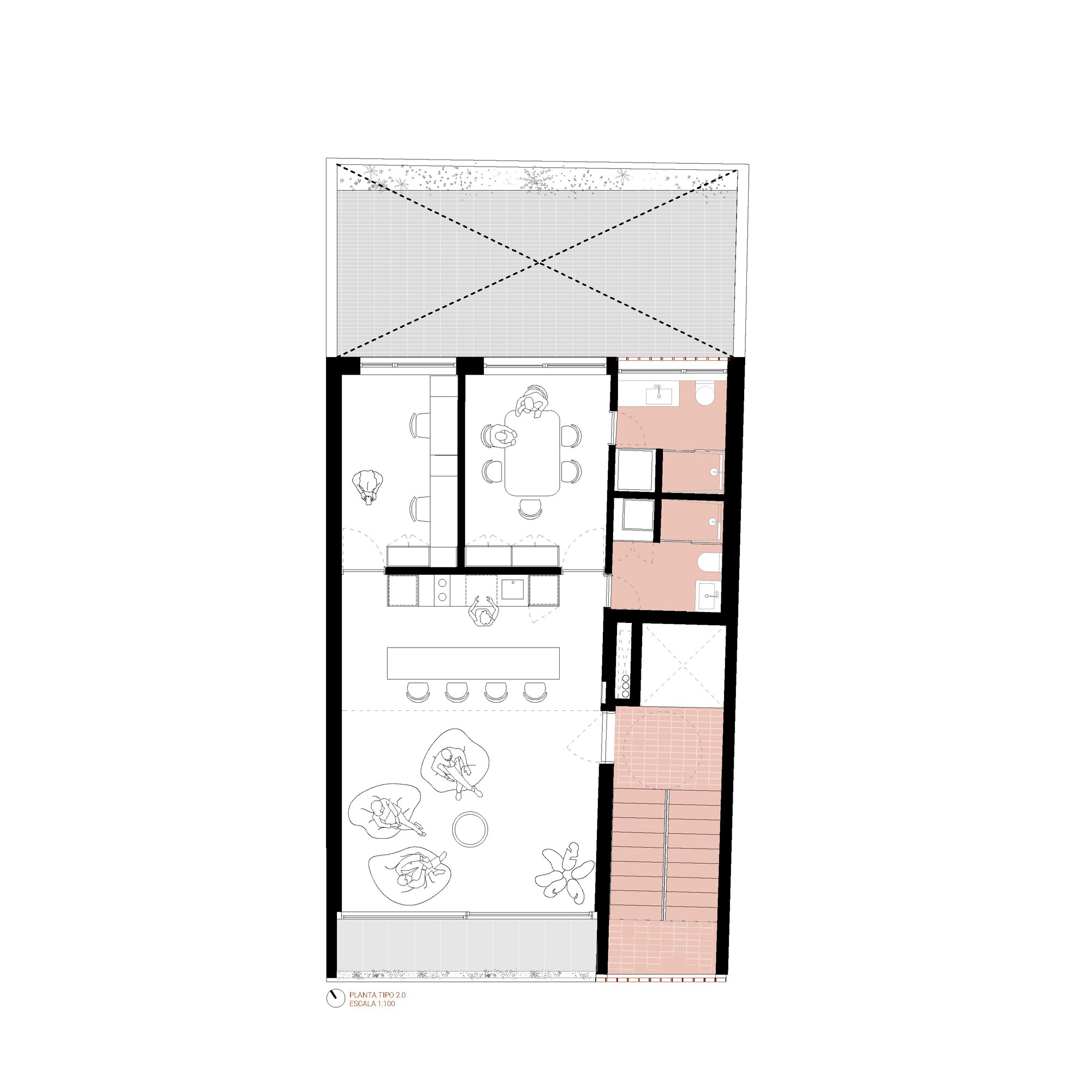
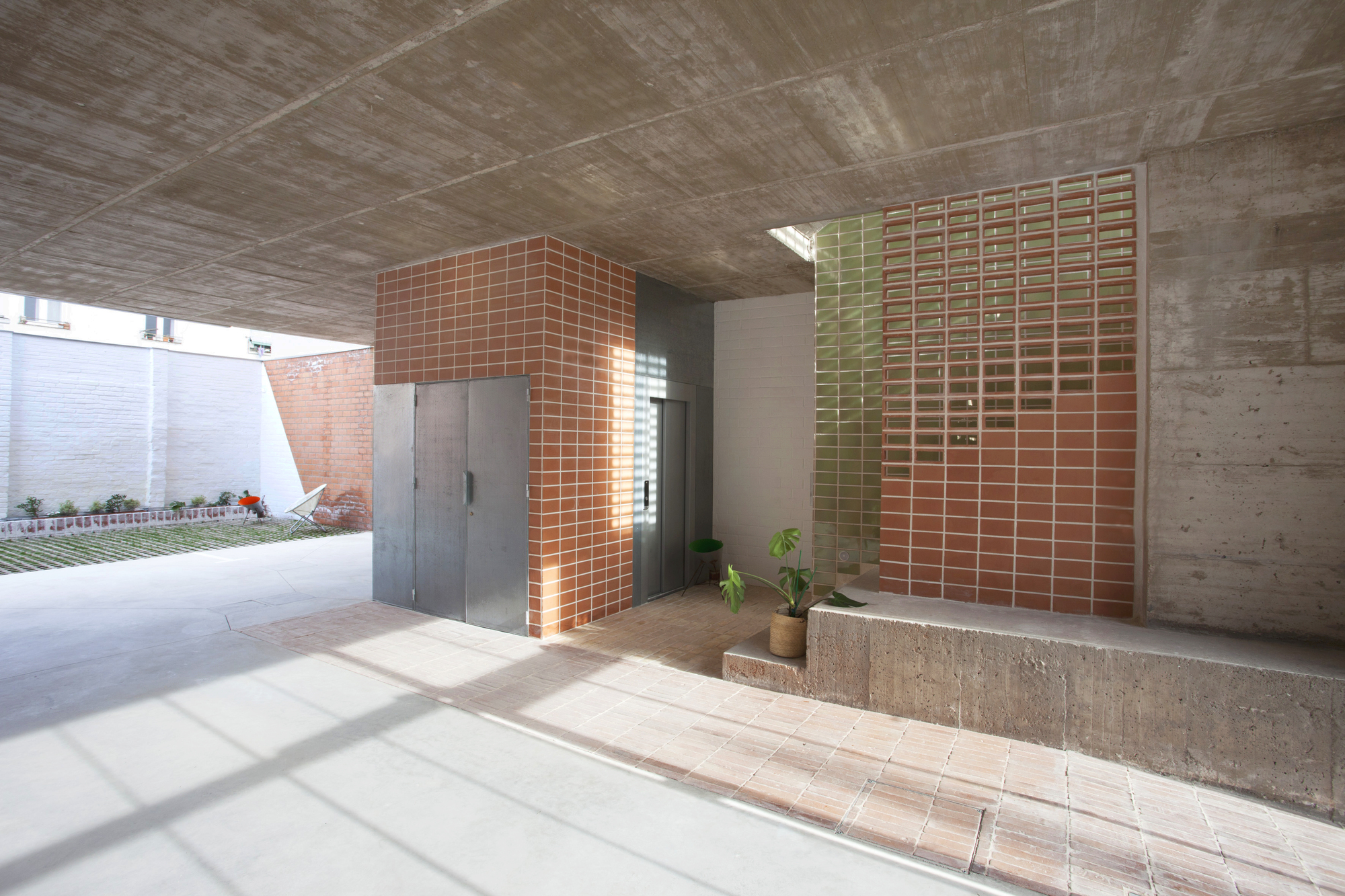
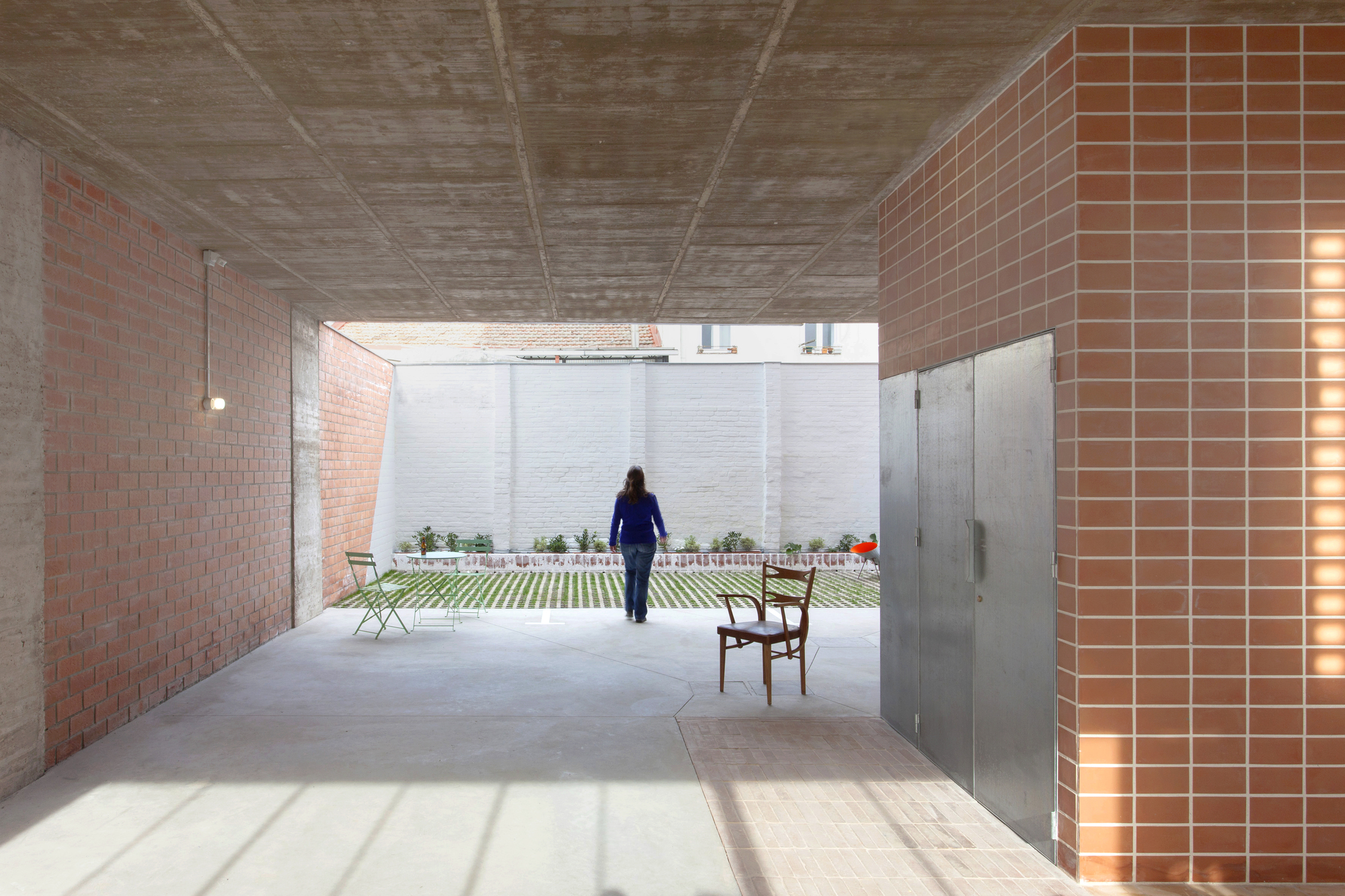
The access floor is freed for common use, thus creating an intermediate space where people can sit and live together.
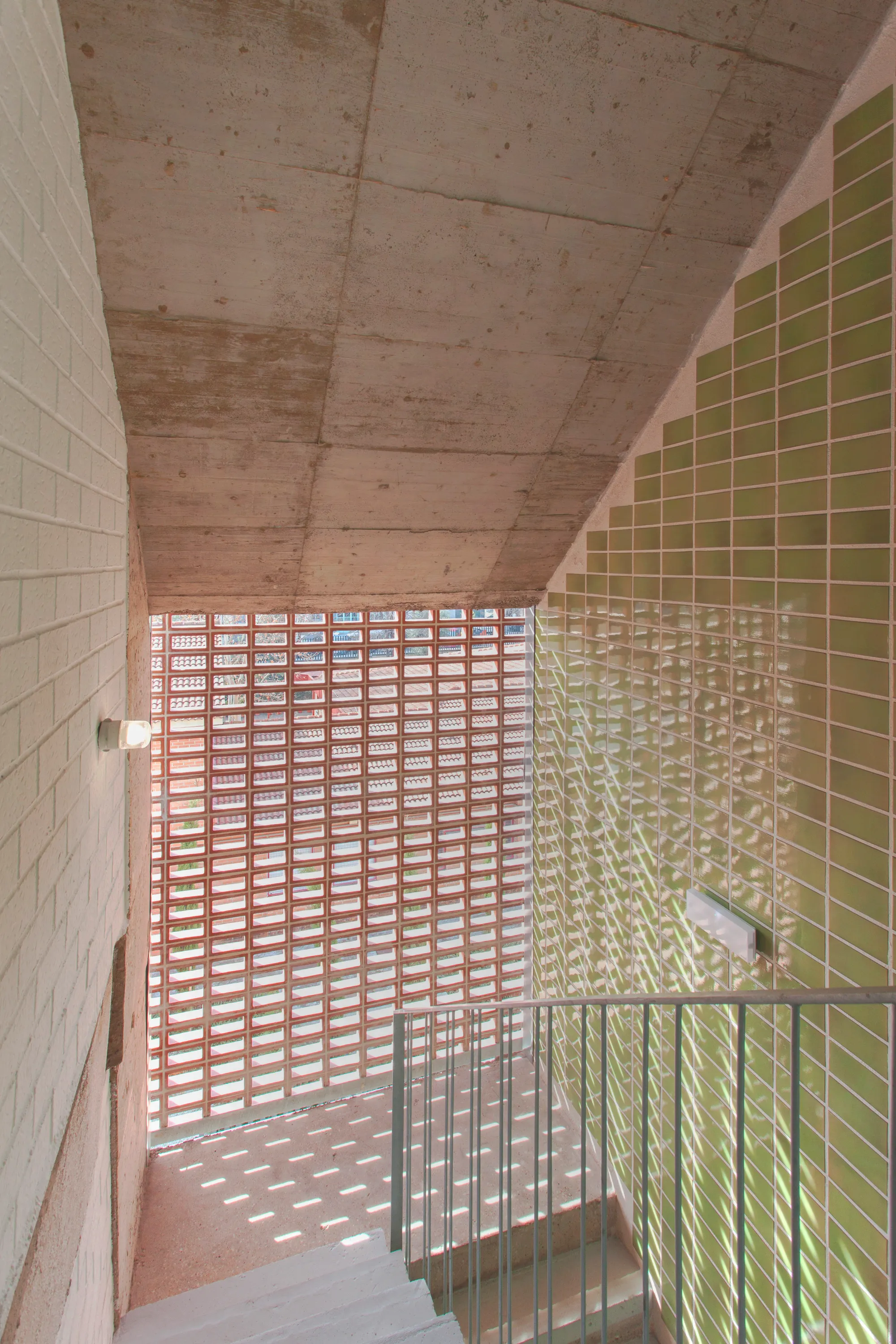
The staircase is proposed as a continuity of recreation and relational activity among the inhabitants of the different dwellings.
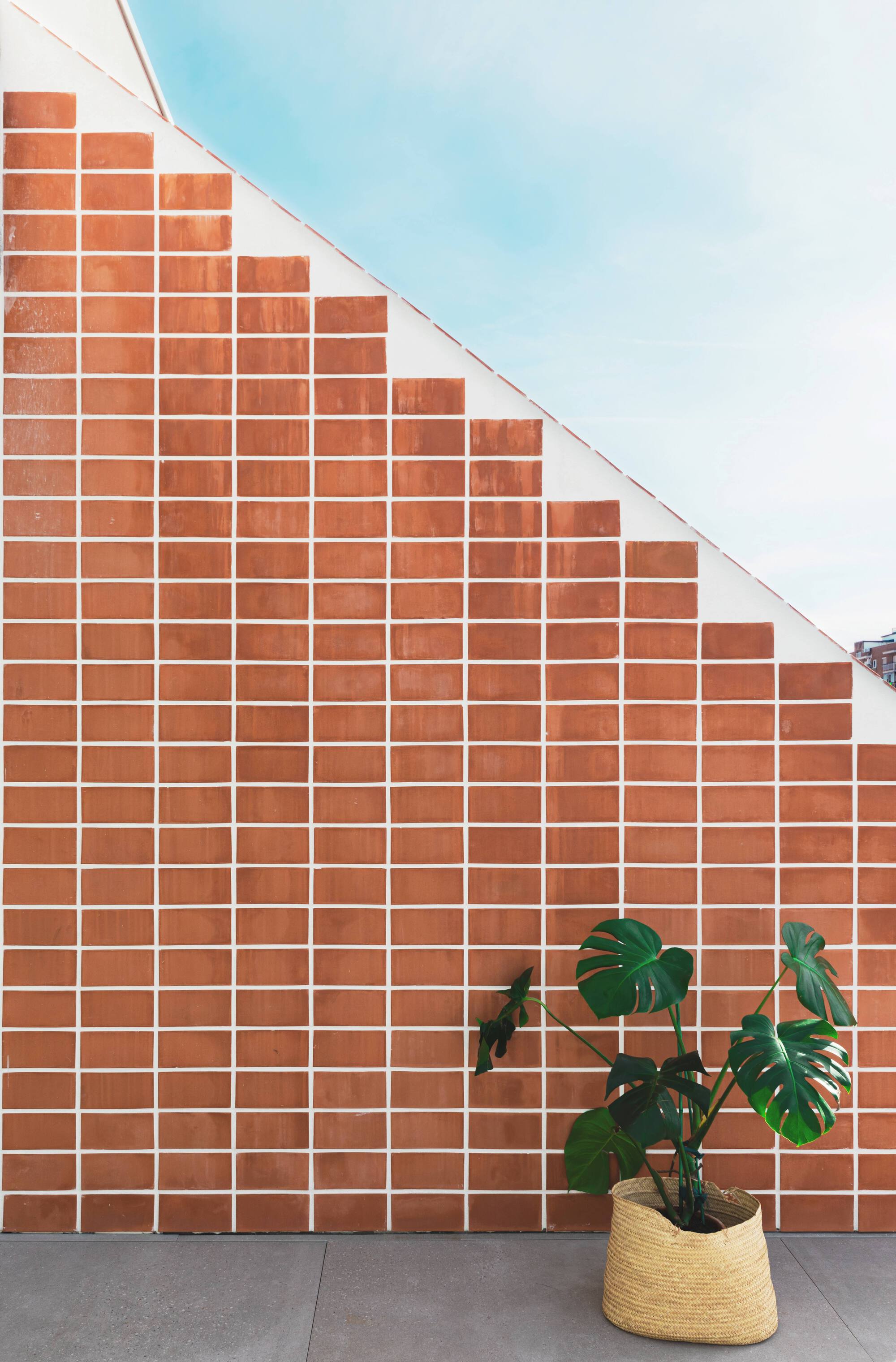

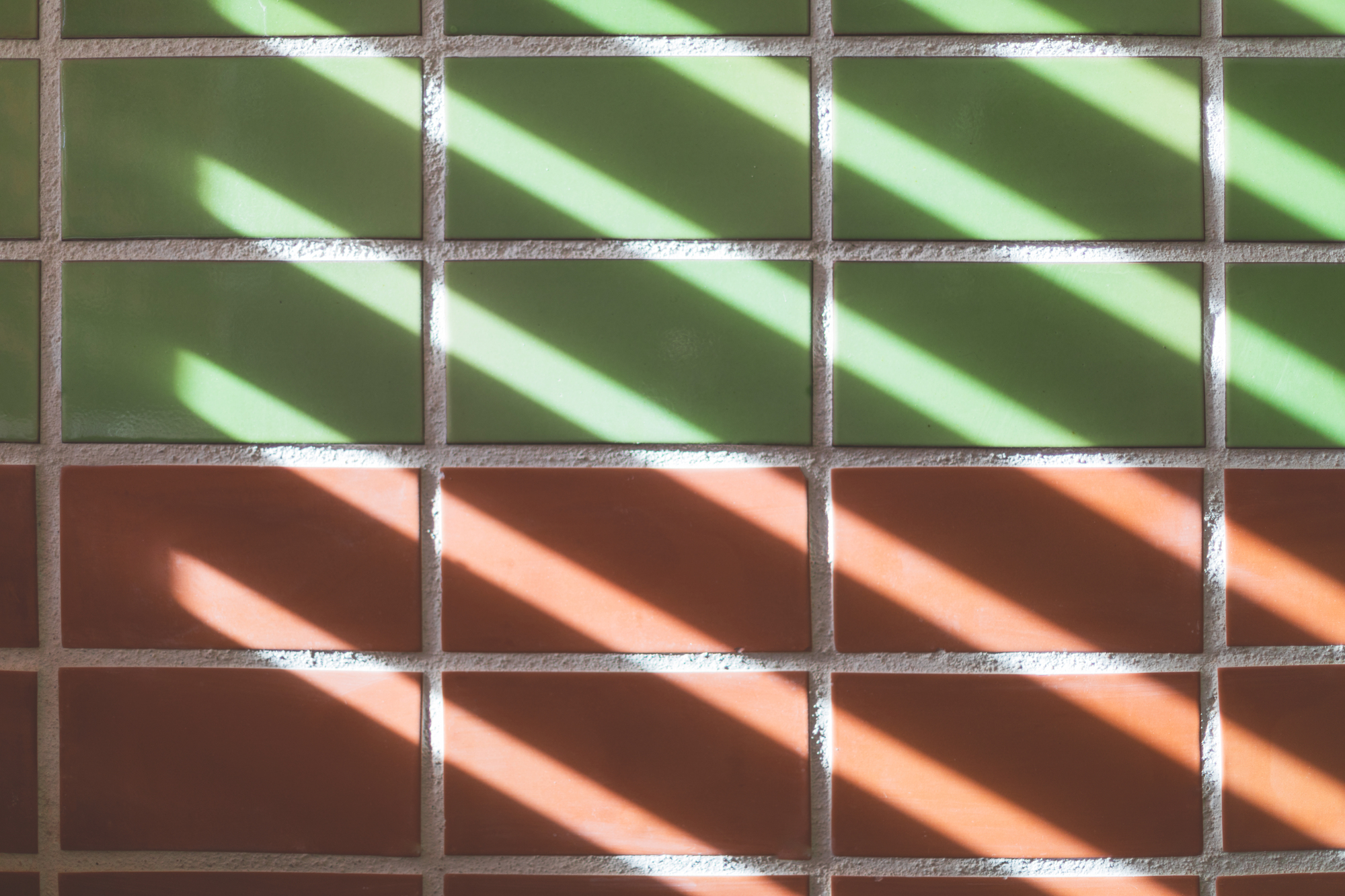
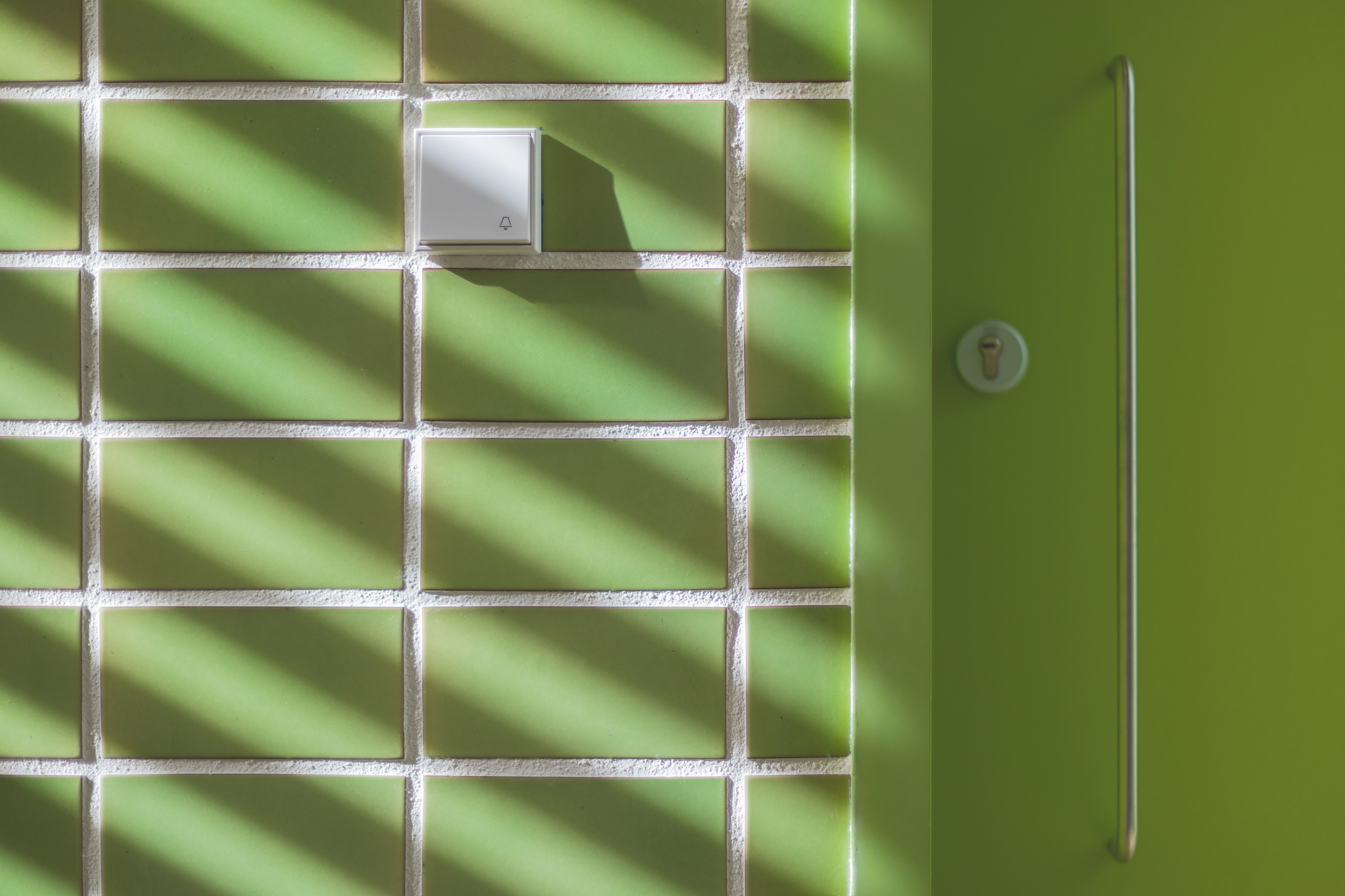
The latticework protects from the direct hit of the sun, allowing filtered light to enter and create dynamic shadows on the interior enameled walls.
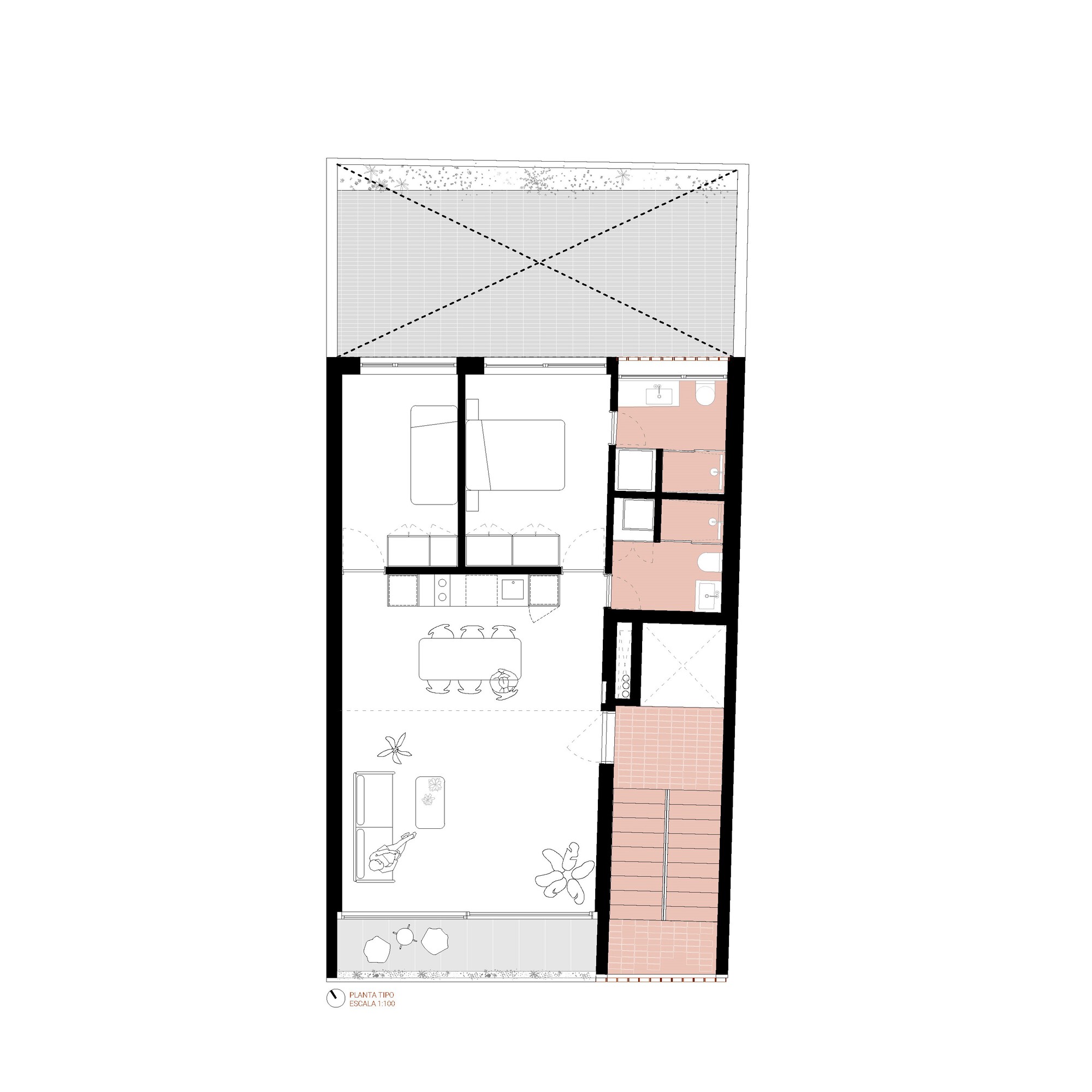
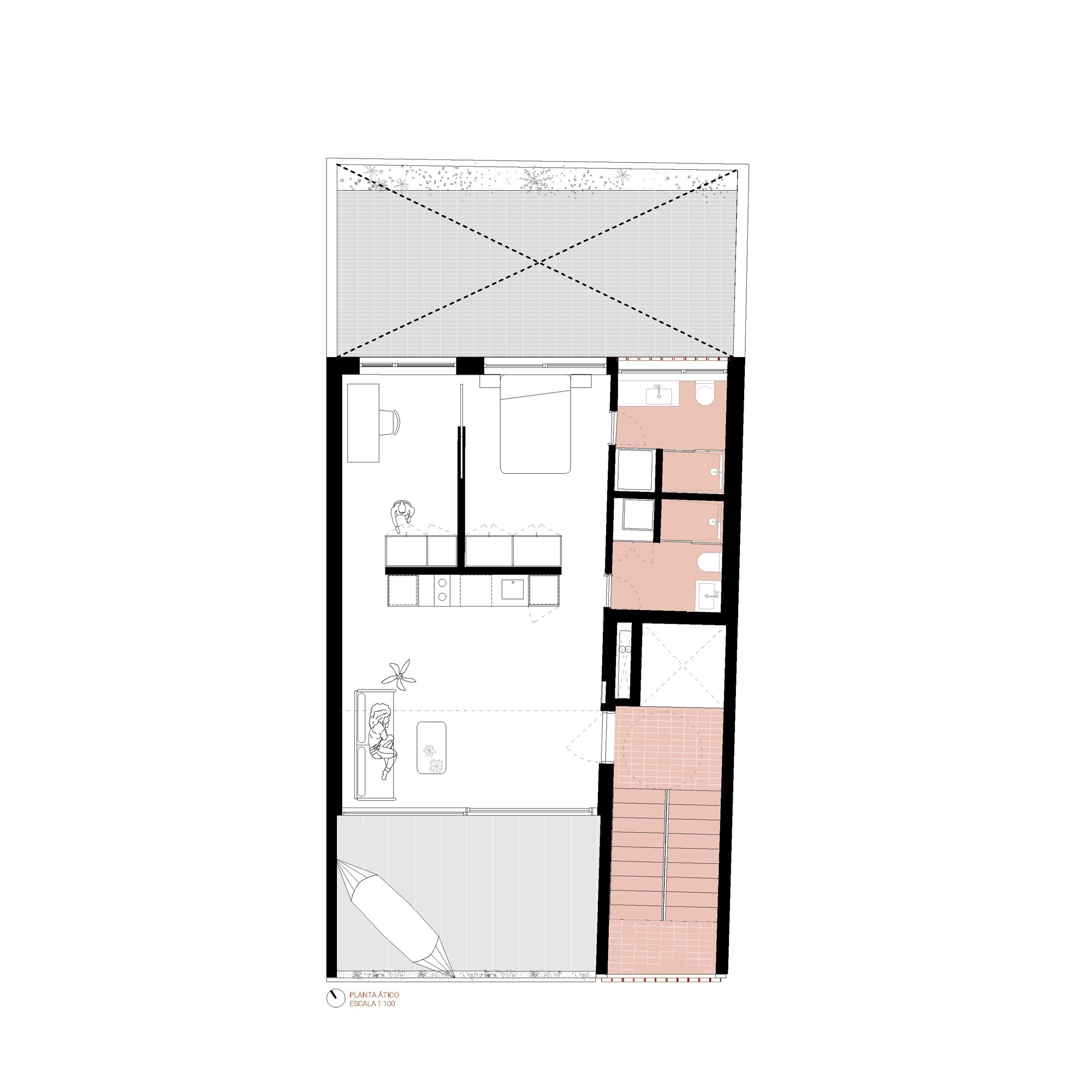
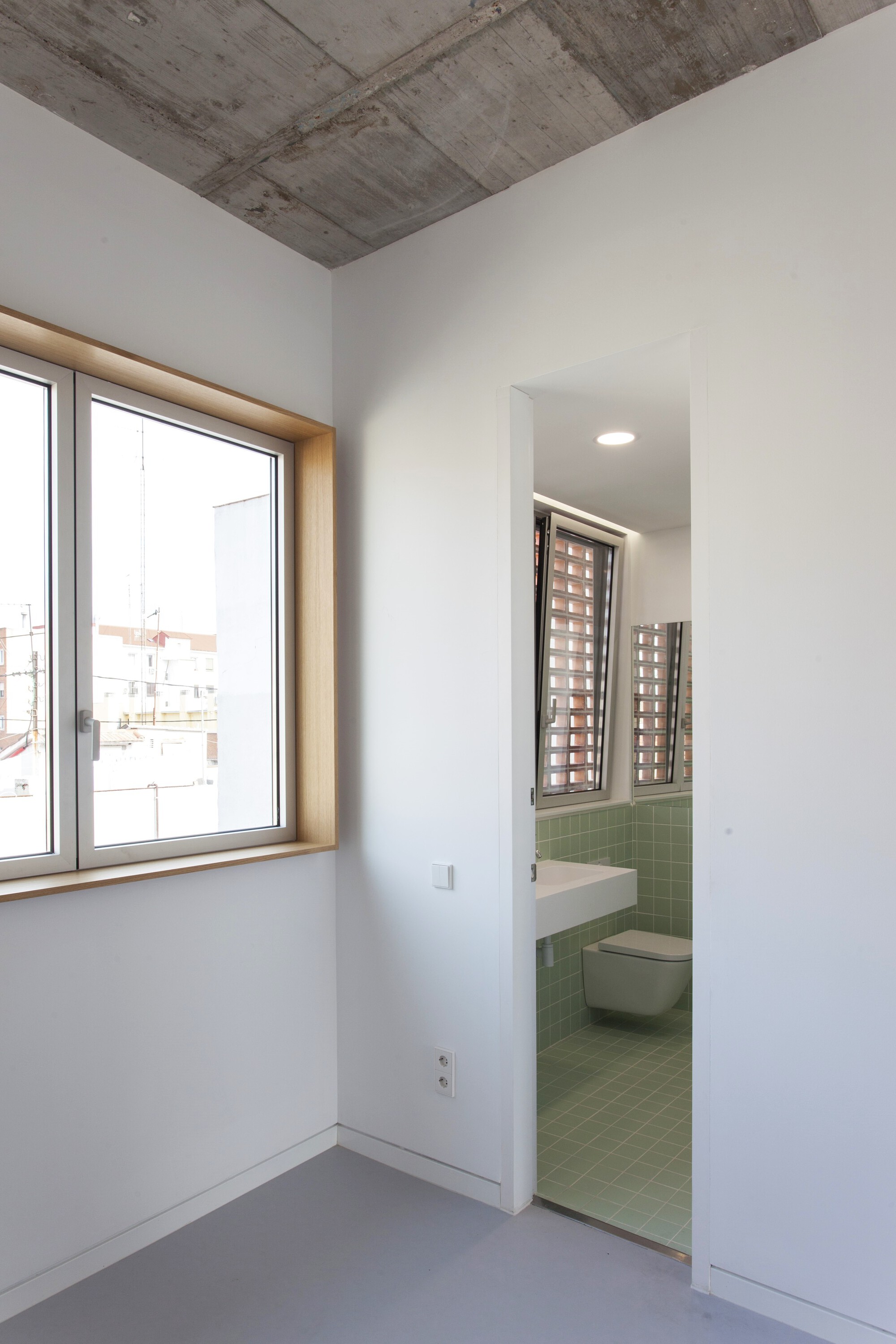
Behind the staircase, the bathrooms are located within a compact band, freeing up the rest of the space of the dwellings.
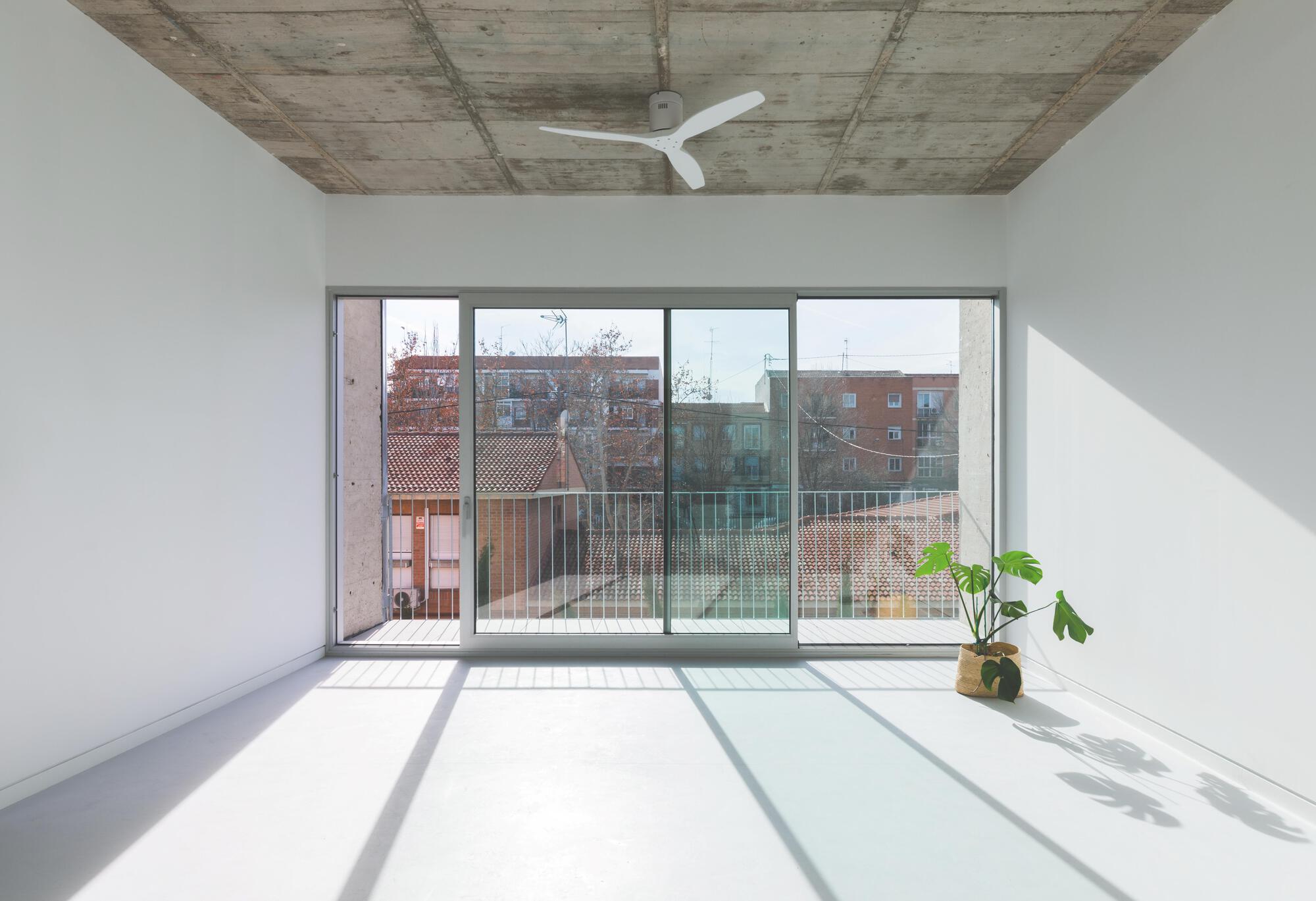
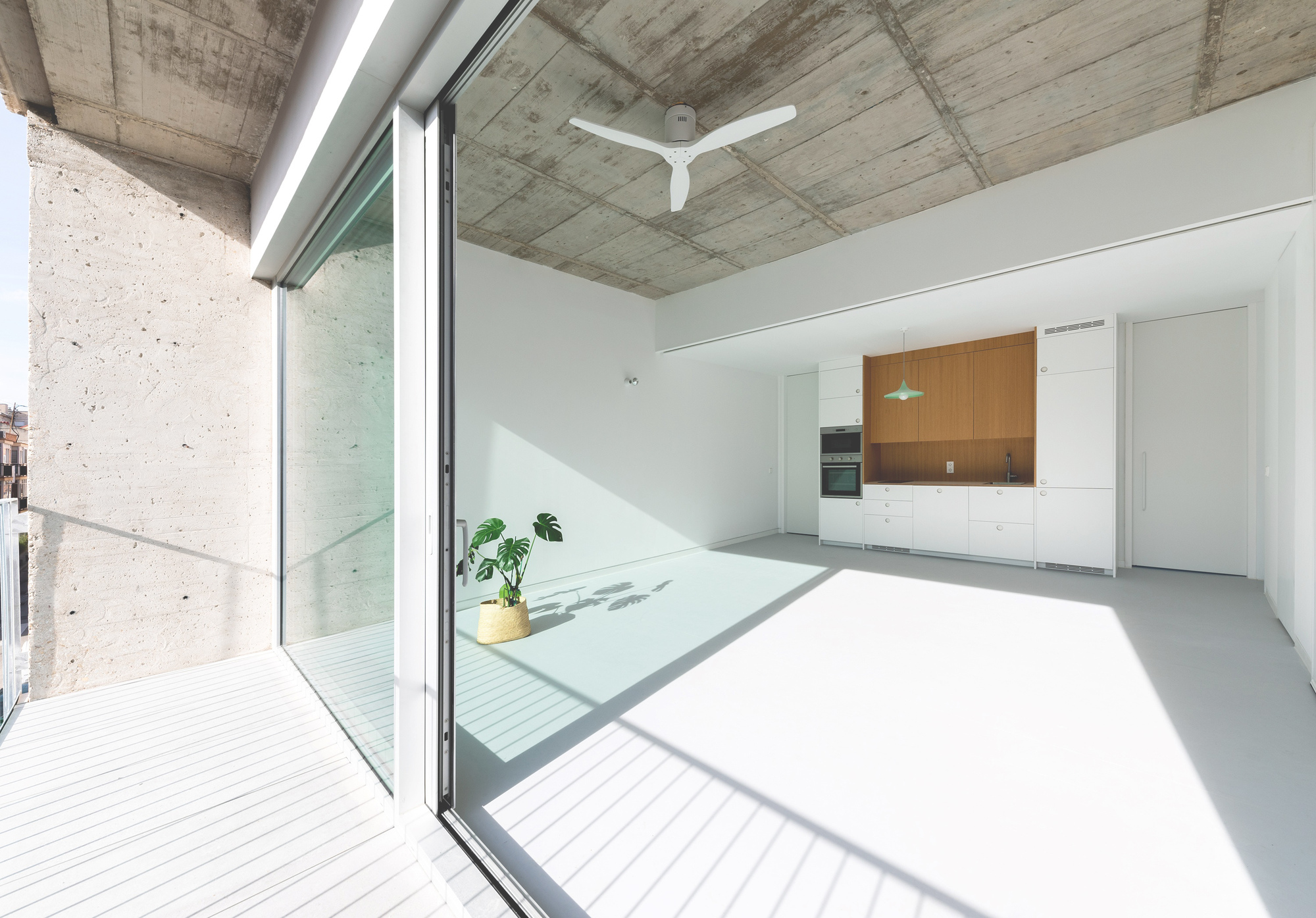
The layout follows a T-shape scheme that organizes three spaces of different dimensions with a lot of flexibility to inhabit and change them over time.
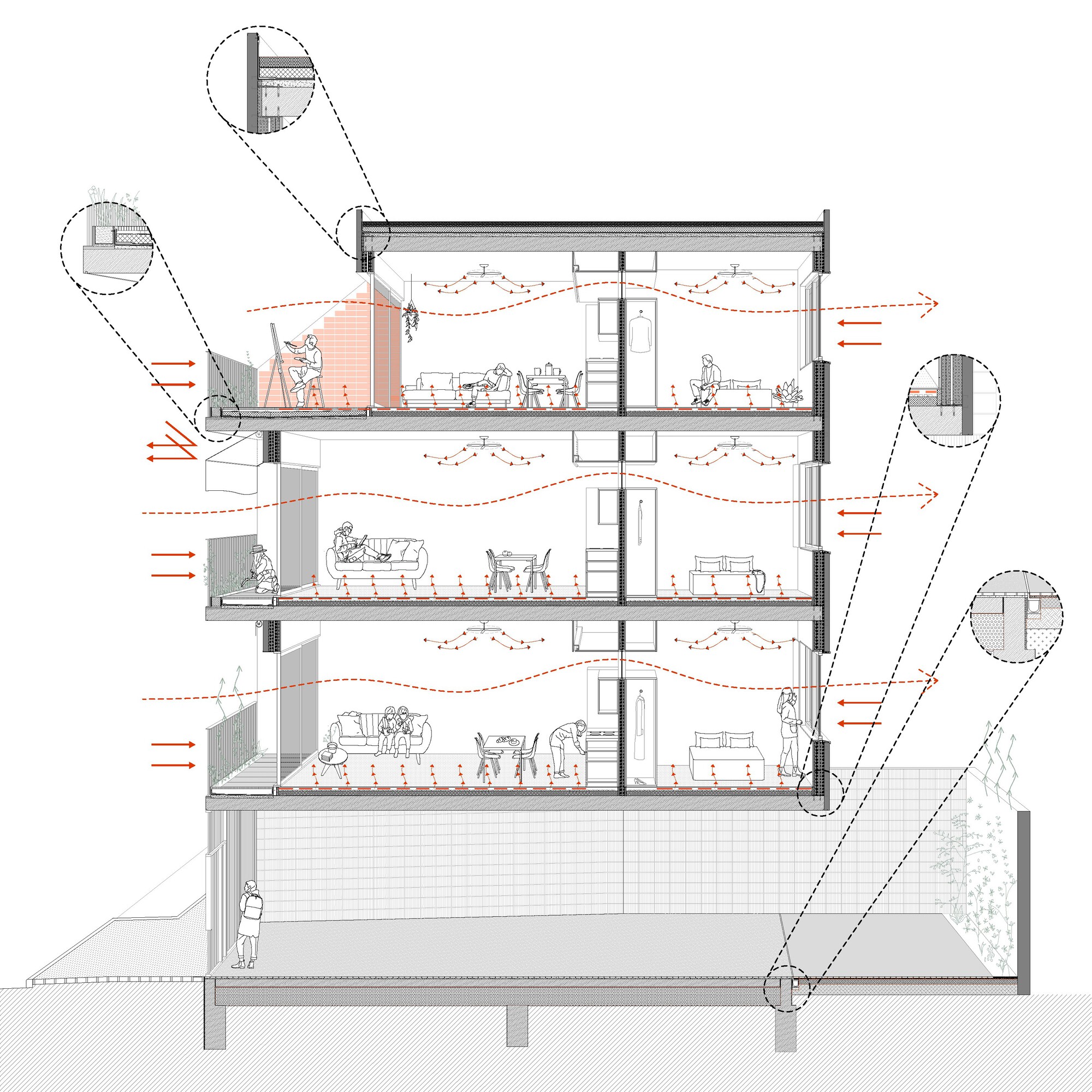
The roof of the dwellings, finished with concrete reaches a height of 3.20 meters. This free height provides a greater sensation of spaciousness and also facilitates the airflow for cross ventilation.
A large window that occupies the entire frontage of each house catches the southern light and heats the main room. The intensity is reduced with a roll-up awning imitating those of the neighboring buildings.
Each house also has a terrace. In the interior of houses, the linoleum flooring and wood finishes contrast with the concrete, brick, and galvanized steel characteristics from the exterior, and give warmth to the rooms.
The high thermal inertia of the complex, thanks to the more than 10 cm thick insulation of the envelope and the thermal resistance of the carpentry; the natural cross ventilation that runs from north to south in each house and,
thanks to the height, completes the air renewal cycle more quickly and efficiently; the access of light in all rooms together with the adjustable solar protection; or the use of a radiant-cooling floor with aerothermal energy production, guarantee both low energy consumption and reduced demand.